
Acceptance of VRV: 5 decisions that need to be finalized before handover
Machine-translated from Vietnamese. Read the original in Vietnamese

Before signing the VRV system, the project owner needs to know which items have been reached, which parts are missing evidence and who is responsible for handling. CEO Đoàn Văn Hoàng – HRT propose 5 decisions that help organization acceptance testing clearly.
Acceptance testing VRV: 5 decisions to finalize before handover

When preparing to sign the minutes acceptance testing VRVThe project owner needs to get clear answers: which systems have been tested, how well the results have met and what tasks remain to be completed.
A report that says “installed" does not fully reflect this information. Each conclusion should be associated with the device, its location, figures and validator.
From an HRT management perspective, I want acceptance testing meetings to make specific decisions. The construction team knows what to do. The supervisory engineer knows what to verify. The operator understands the system he or she is about to receive.
To... fault control VRV installation before handing overI suggest we focus on the five decisions below.
Decision 1: Determine the exact scope of acceptance testing

Each conclusion must be tied to a specific system
Before going to the site inspection, the project team needs to agree on the equipment list and scope of assessment.
At least:
-
System code and outdoor unit model.
-
Indoor units connect to the same system.
-
Service area of each device.
-
Pipeline diagram and controls are applied.
-
The drawing version for comparison.
I suggest marking directly the positions that have changed during construction. When the indoor unit is moved or pipeline must go round, the engineer in charge should clarify the effect of the change before confirming as-built documentation.
Test range should reflect the correct connection configuration
A single floor can use multiple VRV systems. In contrast, one system can serve multiple areas.
Therefore, the inspection of some rooms should be recorded in the right scope. The rooms with the same circuit of the solvent or the same control configuration must be considered in the relationship of the whole system.
Work to be closed: The project team uses the same scheme to determine which equipment has been tested and which equipment is missing results.
Decision 2: Clarifying evidence before reaching conclusions
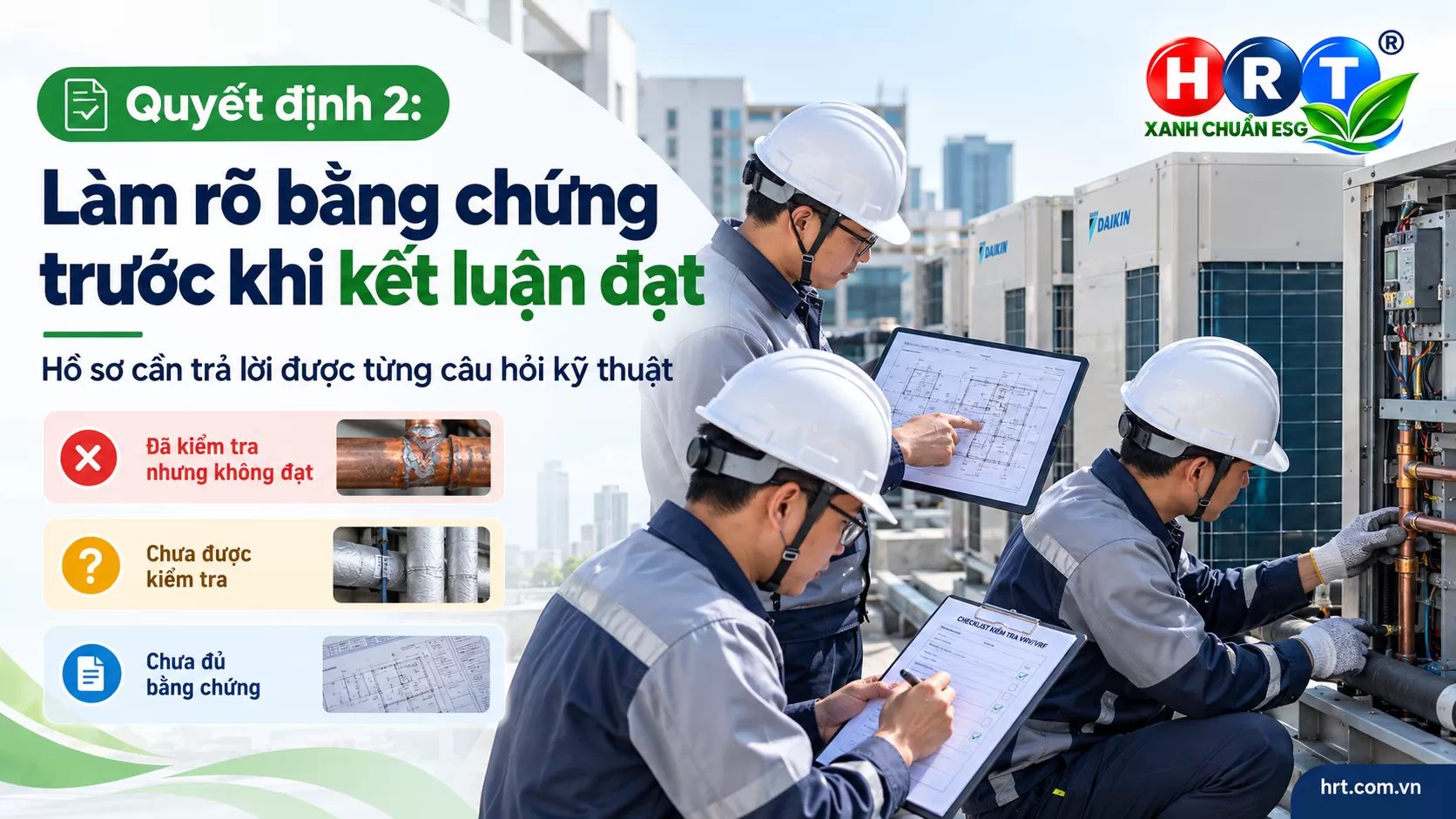
The profile should answer each technical question
I recommend that the engineer in charge review the evidence in the following workgroups:
-
Equipment layout: Outdoor unit has suitable suction and exhaust conditions? Indoor unit has leveling, returning wind and servicing space that meet the design?
-
Copper tubing and branching unit: Actual configurations have been collated in terms of size, length, height difference, type and how to install the splitter?
-
Construction quality: Is there a ground for checking the joint, the protection of the pipeline during construction and the continuity of thermal insulation?
-
Condensate Exit: Each indoor unit has been tested for proper drainage, including pump operation if available?
-
Electric And Control: Connections, power supply, grounding, control configuration and BMS connection if any have been checked?
Particularly for the fluid circuit, there must be leak testing results, vacuum evacuation and additional fluid volume records. Daikin installation documentation shall specify these tasks; the order and conditions of performance must comply with the equipment flow used.
Clearly distinguish three unconfirmed completion states
| Status of the | The work to be done |
|---|---|
| Tested but failed | Identify the cause, fix it, and re-examine. |
| Not tested yet | Arrange conditions, personnel and schedule. |
| There's not enough evidence to conclude. | Supplement the dossier or verify the missing part. |
A single record is not sufficient to confirm that the equipment has been installed incorrectly. However, the project team also needs grounds before recording the satisfactory item.
With the hidden part, the construction photos help identify the location and current state of the record. The engineer in charge needs to evaluate the photo to prove what contents, which tests still have to be done and the appropriate approach.
Decision 3: Assign responsibilities until existence is confirmed complete
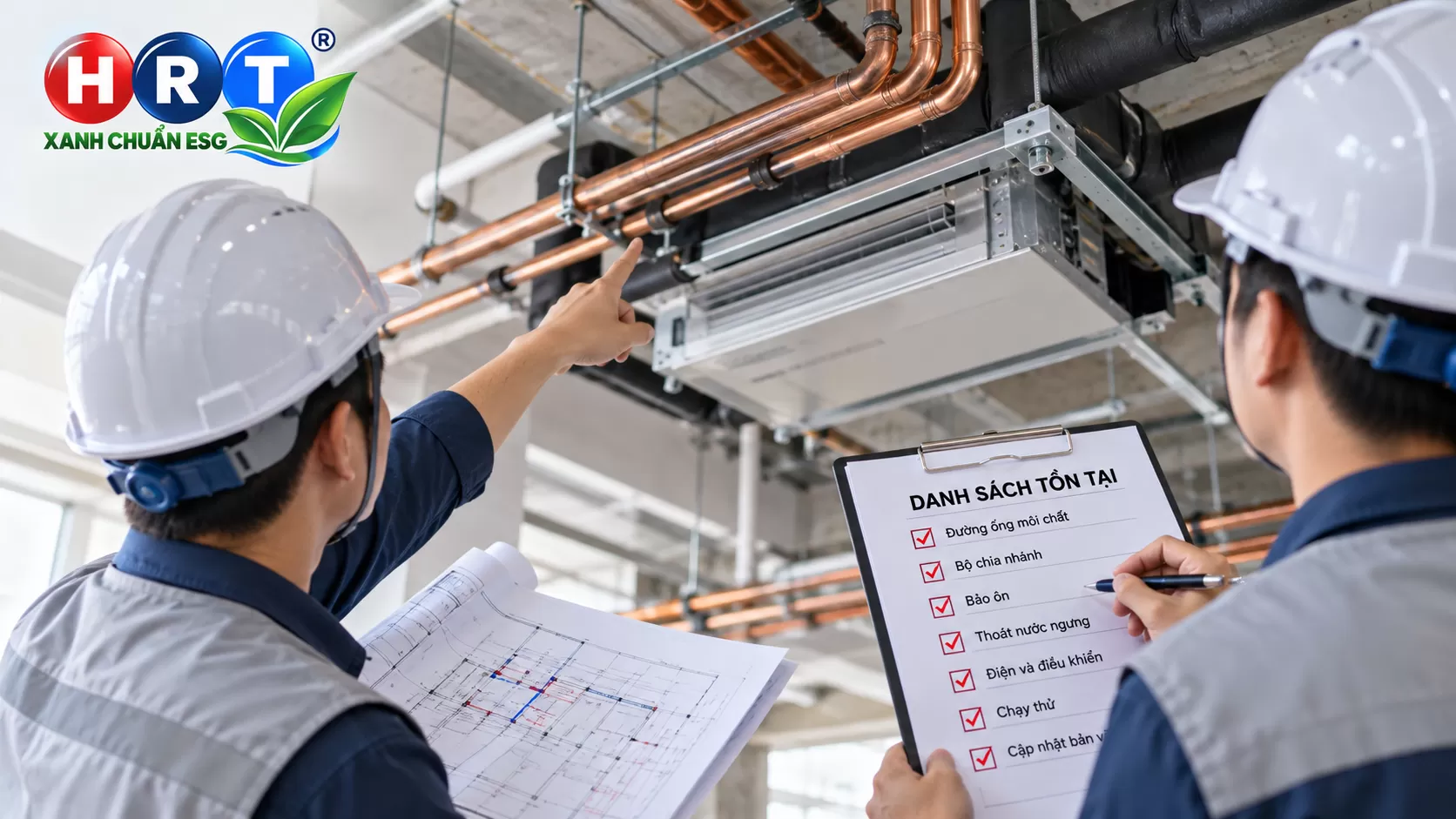
Each error requires a testable head
The existing list will be difficult to follow if only “pipe inspection”, “condensate treatment” or “control completion” are written.
I want each item to show enough:
Location → Problem → Handler → Deadline → How to recheck → Validator.
The project team should prioritize the issues affecting safety, commissioning conditions, operational capabilities and near-obscured locations. The order of handling must be agreed with the relevant construction plan.
Example: Pipeline changed but profile not updated
Suppose at one site the fluid pipeline is routed to avoid texture. Existing drawings still represent the original scheme.
The tasks to be assigned include:
-
Survey and record the actual route.
-
Review affects pipeline configuration, splitter and amount of additional solvent.
-
Confirm the technical plan according to applicable documents.
-
Update drawings and related test results.
The person in charge of the report is finished when the contents have been confirmed. This management helps the project team know exactly how much of a existence has been dealt with.
Decision 4: commissioning as planned and specifying limits on results
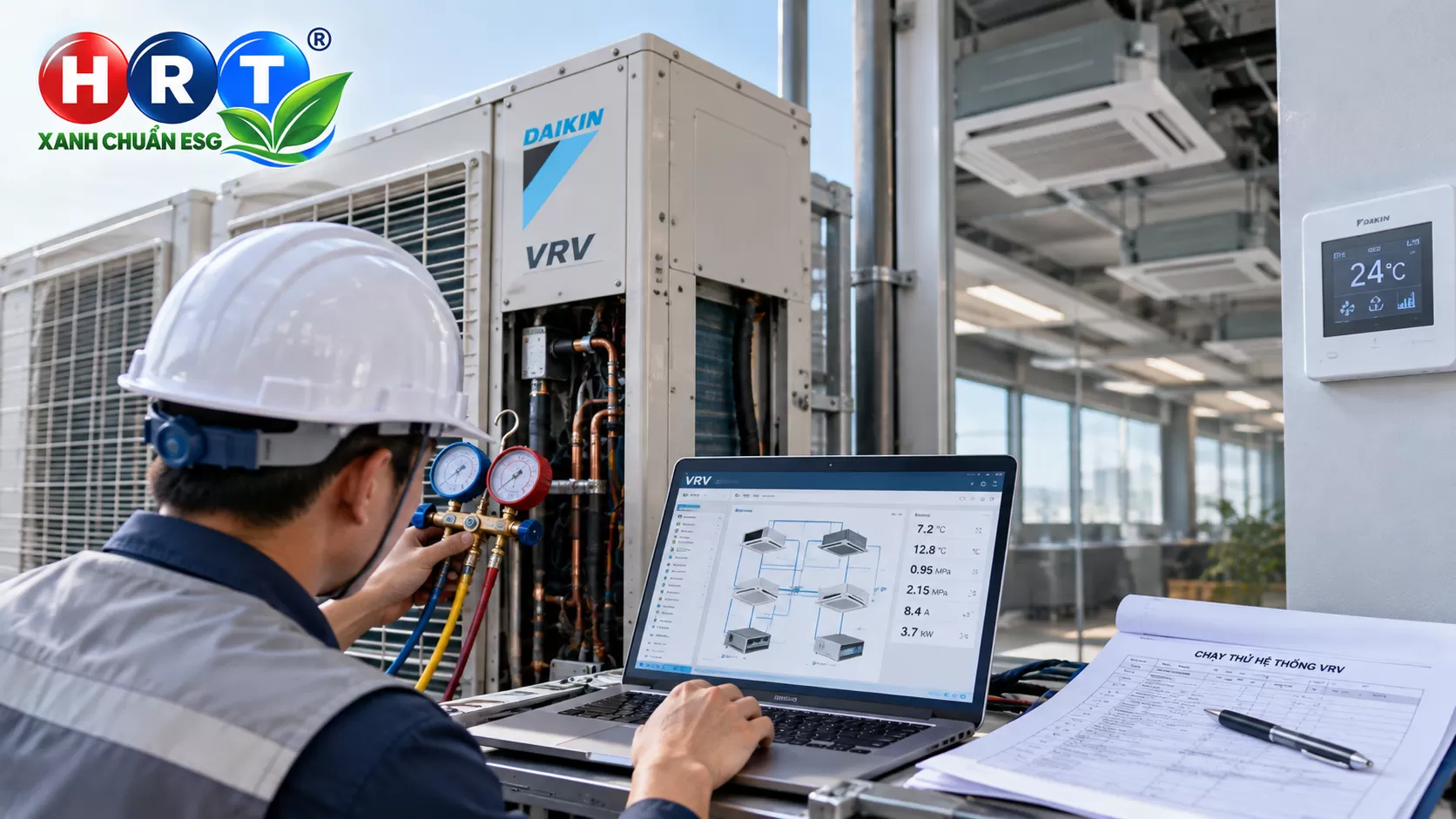
Commissioning plan should be associated with the way the work is used
Before the commissioning, I ask the engineer and operation representative to agree on what to observe:
-
Equipment and test area.
-
Operating mode, setting temperature and conditions at the time of test.
-
Ability to respond at the use location.
-
Operation of local control, central control and BMS according to project scope.
-
Parameters to be measured, recorded and compared.
With indoor unit connecting air duct, attention should be paid to flow rate, wind distribution and fan configuration accordingly. For areas with many rooms using the system, it is necessary to check the control way by group and feedback of each device.
System testing and inspection of each indoor unit must be coordinated
Daikin guidelines for some VRV series require inspecting each indoor unit in normal operation mode after completing commissioning of the system. This helps clarify abnormalities in each device that may not be fully assessed by general commissioning.
If the project has not yet had the expected conditions for use, the report should clearly state the conditions already tested and the remaining part to be certified.
I also suggest saving the results before and after fixing the error. This data helps the examiner to evaluate the effect of the treatment measure.
Conclusion acceptance testing must correspond to the scope of verification. The assessment of electricity efficiency should have its own measurement basis.
Decision 5: Draw clear conclusions for the operation team to take over
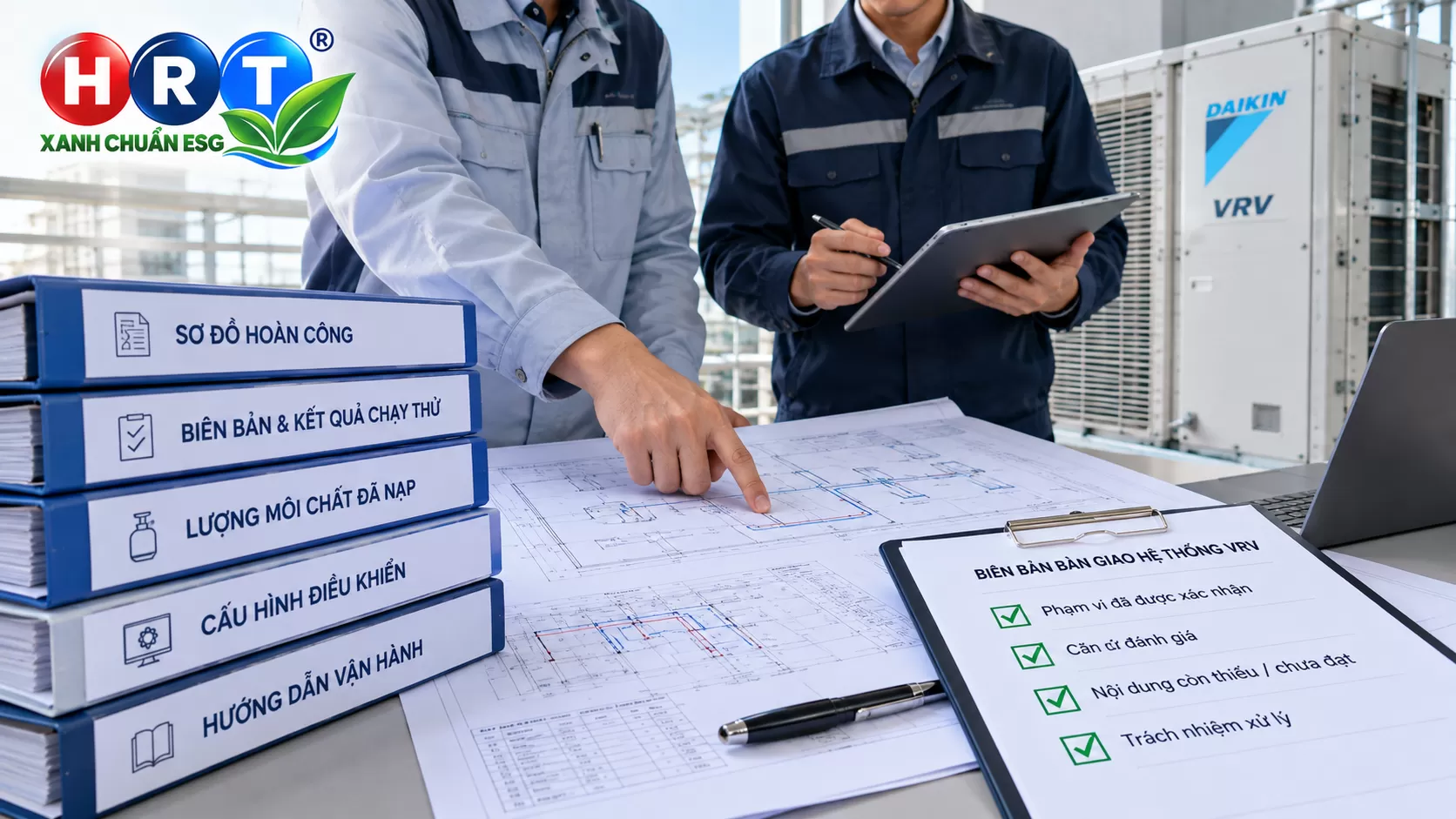
The conclusion should help the recipient know what to do next
Before I sign the handover, I want each VRV to have four easy - to - find information:
-
Confirmed Range: Equipment, areas and related items.
-
Bases for assessment: Drawings, records, figures and commissioning results.
-
The contents which are insufficient or unsatisfactory: Specify the impact and what you will do next.
-
Responsibility for handling: - The persons who perform the tasks, the time limit and the re - examiners.
The acceptance testing, handover and putting into use must be considered according to the requirements of the project and actual results.
Organize records in a way that the operationsperson can use
I suggest we organize the files by system code, consistent with equipment labels at the scene.
The recipient should find the as - built diagram, test data, loaded solvent amount, control configuration, user manual and supporting clues.
The handover should also include a live action section: using the controller, recognizing warnings and recording incidents to transfer to the unit in charge.
When the operator finds the right equipment and the right information, the takeover is more obvious.
CEO's view Đoàn Văn Hoàng: Quality is key by specific responsibility
For me, quality management VRV installation demonstrated in the ability to interpret each acceptance testing conclusion.
Understand Correctly is to determine the correct requirement and scope of inspection. Clearly is to have data, to have status work and to have people in charge. Dedicated is to monitor until the fix is verified and the operation team receives sufficient information.
Before the handover meeting, ask the project team to prepare three documents: actual system diagram, commissioning check records and updated existence listFrom there, each decision can be made on a specific basis.
HRT is ready to work with project owner to review the current status, determine contents to verify and plan the processing before acceptance testing.
CEO Đoàn Văn Hoàng – HRT
True – Clear – Dedicated
HRT – Green Breath for All Buildings
Website: hrt.com.vn
Professional Sharing: doanvanhoang.com
Source: Publisher’s English edition · Vietnamese original on doanvanhoang.com