
Air-cooled chiller warranty service: checks before replacing a sensor
Machine-translated from Vietnamese. Read the original in Vietnamese
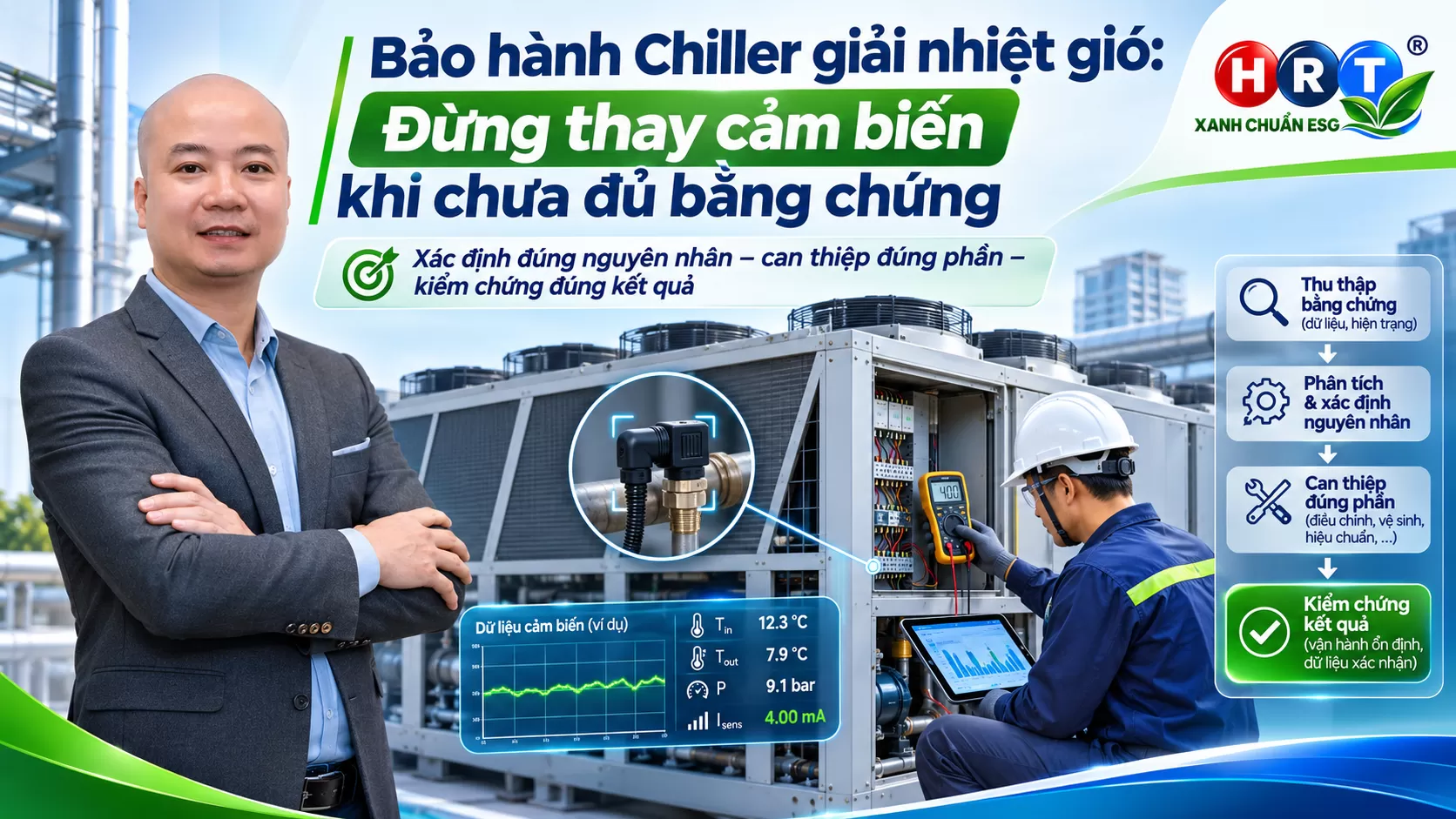
CEO Đoàn Văn Hoàng – HRT share how to check and replace air-cooled chiller sensors properly procedure, from diagnosis of cause to commissioning and confirmation of post-repair results.
Air-cooled chiller warranty: Do not change sensors when there is not enough proof
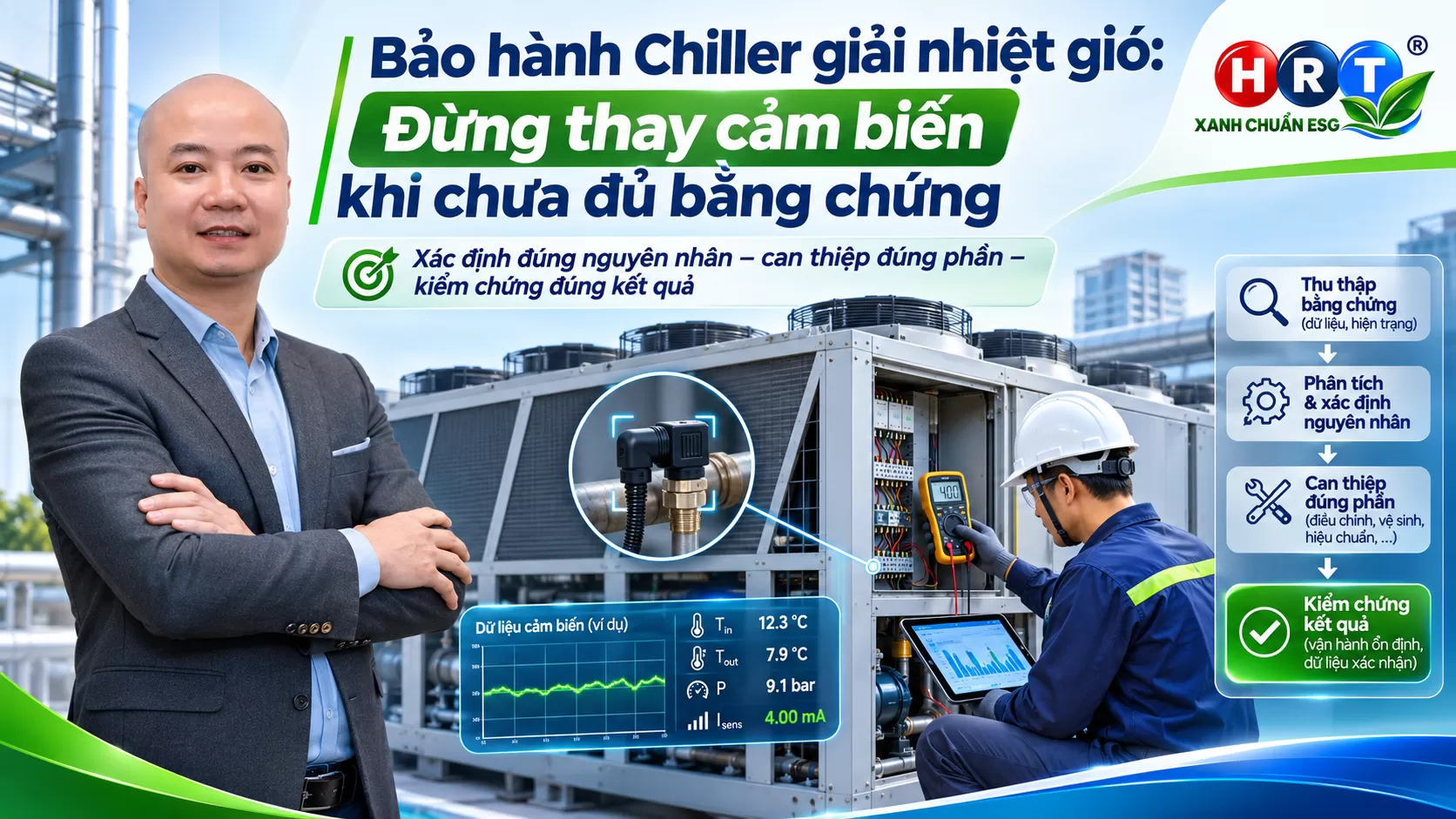
Imagine a situation at work.
Air-cooled chiller appears warning regarding refrigerant level.
The controller displays abnormal signals.
A quick suggestion is given:
“Change sensors”
I won't approve it now.
I would like to know:
What's the actual signal of the sensor doing?
Has the lead and jack been checked?
Is the power supply correct?
Does the controller receive the signal?
What was the condition of cold circuit at the time of warning?
That's how I approach my work. warranty air-cooled chiller.
A warning regarding the sensor has not automatically proved the sensor is broken. HRT also notes that the cause may lie in the sensor, signal wire, connector, control board or the operation condition of the cold circuit itself.
For me, the goal is not to change components quickly.
The goal is to:
Determine the right cause - intervene the right part - verify the right result.
The sensor is just a link in the control system
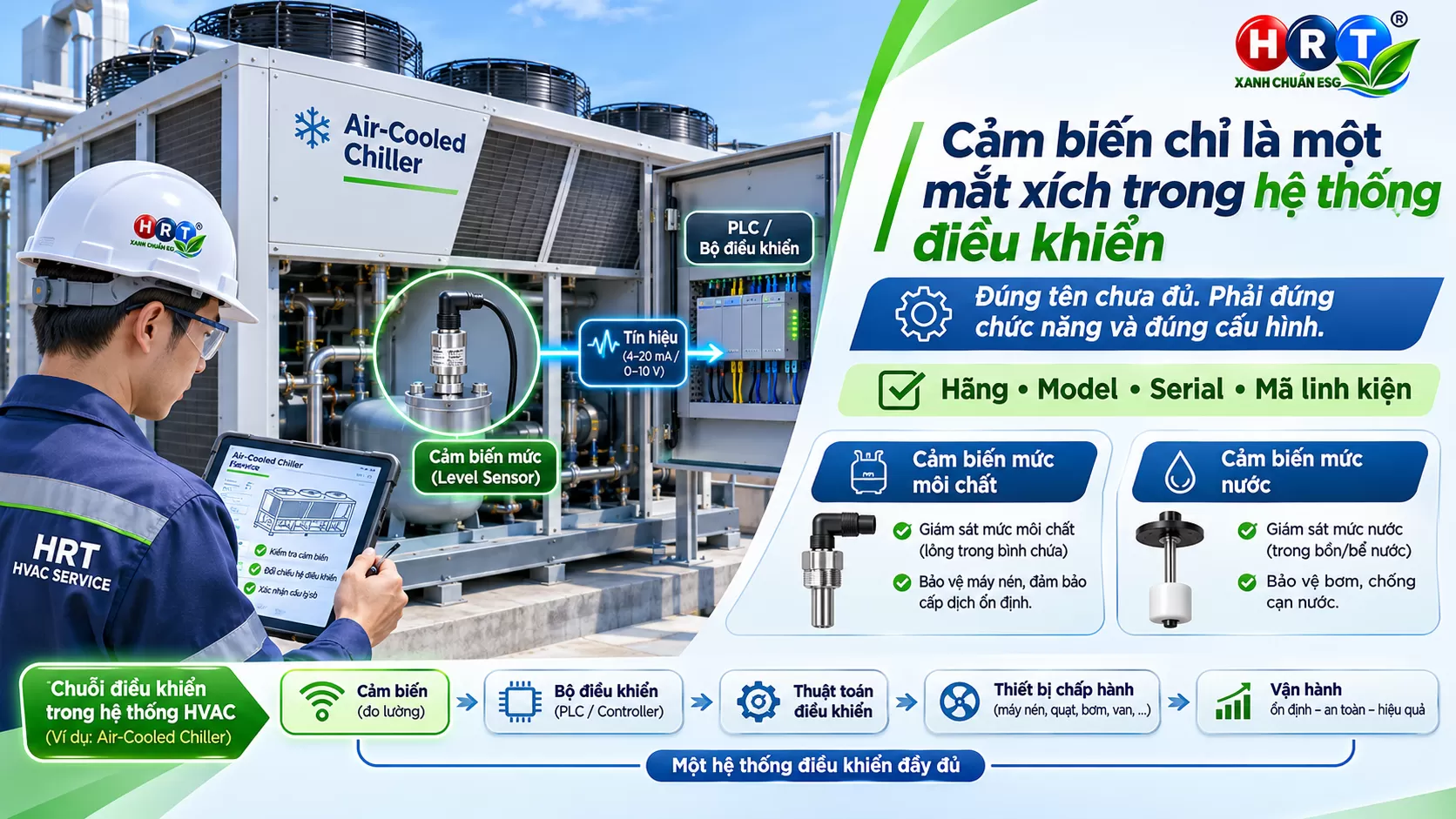
Liquid level sensors are used on some Chiller configurations to monitor refrigerant levels at the manufacturer designed location.
Signals from the sensor are sent to the controller for monitoring or control logic of the device.
What is important is the sensor location and function not the same on every Chiller.
Depending on the design, the sensor can be located in a container, flash tank or another part of the cold circuit. Therefore, it is not recommended to look at the shape of the components and default to the process of one model that applies to another model.
I want the engineering team to start with four pieces of information:
The company.
Model.
Serial.
Parts code.
Then open the correct service document.
Do not confuse the liquid level sensor with water level sensor
The two devices may be named “level sensor”, but the object of monitoring is completely different.
A device for monitoring the refrigerant in a circuit.
Other water level monitoring devices.
The selection of spare parts must go from the part code, diagram and documentation of the right machine, not from the common name or external appearance.
The right name is not enough. It must be the right function and configuration.
I didn't change the sensor just because of the error screen
This is the first point I want to change in how I handle incidents.
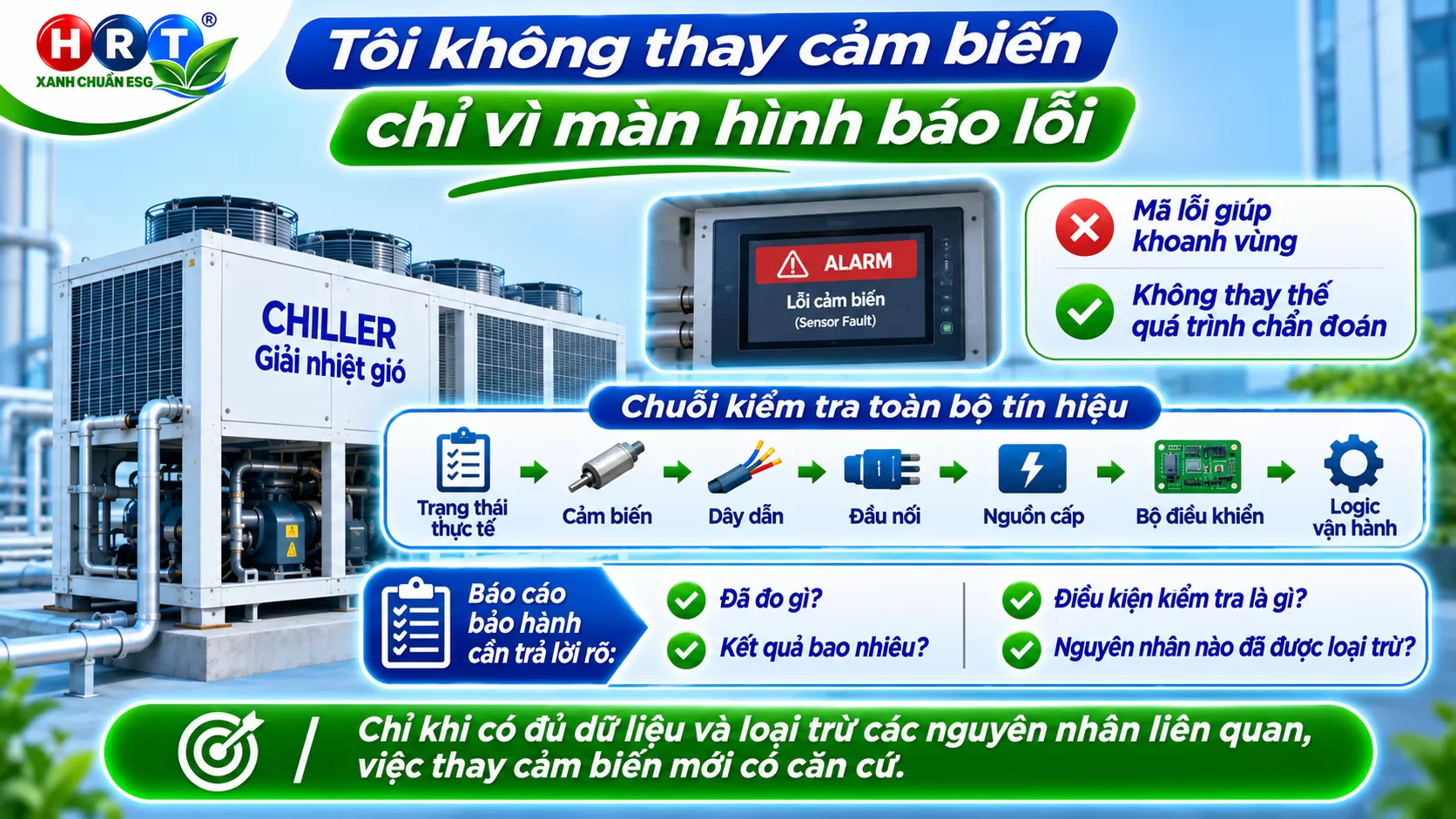
The bug code is supposed to help the tech team stash out.
It does not replace the diagnostic process.
When the sensor-related warning appears, place the sensor in the whole signal sequence:
Actual status → Sensor → Conductor → Connector → Power supply → Controller → Logic operation.
If a part of that sequence is problematic, the signal may eventually become abnormal.
HRT also determined that in addition to the sensor itself, wires, jacks, power, and control boards should be checked; some alerts about the level of the solvent may even be related to the cold circuit state rather than the sensor failure.
So in the warranty report, I don't want to just see:
“Sensor fault alarm – recommended replacement”
I want to see:
What's been measured?
How many results?
What is the test condition?
What causes have been ruled out?
When this information is clear enough, the alternative decision is well - grounded.
Signals are more and more needing data.
There are problems that are very easy to handle because of the equipment's constant failure.
But there are groups of errors that only appear in some load states or some operation times.
Machine running normally when technician arrives.
Then the warning came back.
In this case, I want the engineering team to see:
Alarm history.
The time of error.
Load Chiller.
Compressor status.
Related parameters on controller.
Recent changes.
If you just delete the alarm and then restart it, you can make it disappear without knowing what's causing it.
The more intermittent the problem requires historical data, the less conjecture it requires.
Before ordering components, check the spare part code
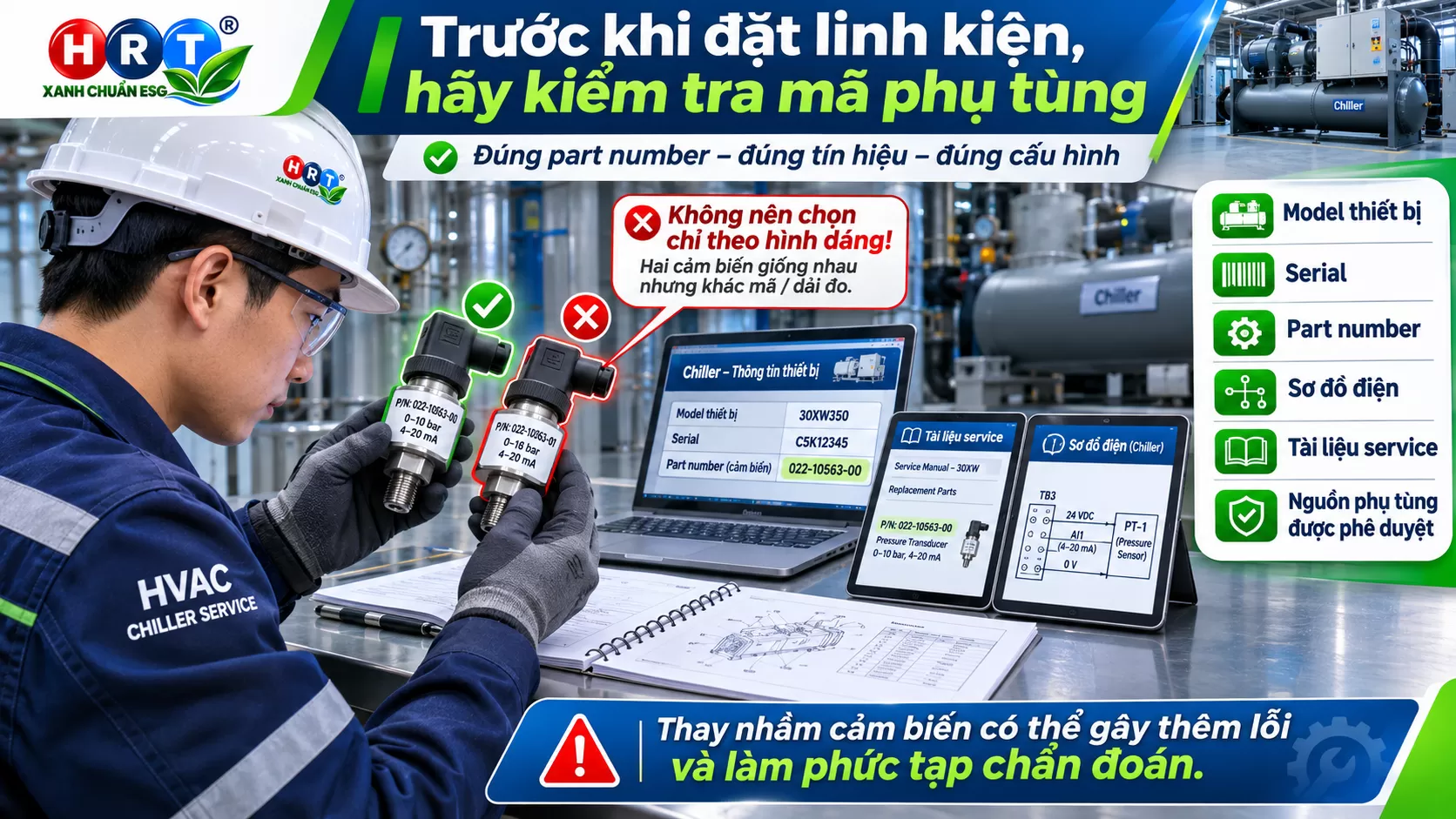
Two sensors that look similar are not likely to be interchangeable.
The supply voltage may be different.
The signal type may be different.
Control configuration may be different.
The mounting method may also be different.
Therefore, I would like spare parts to be compared with:
Device model.
Serial if needed.
Part number.
Electrical diagram.
Service documentation.
Information of the manufacturer or approved spare part source.
HRT sources also stress the choice of sensors only by shape or size because electrical and signal characteristics may differ.
From a management perspective, this is a very important step.
Changing a sensor is not just a waste of time.
It can also create a new error that makes the diagnosis more complicated.
Isolate the device before intervention
When there are sufficient grounds for sensor replacement, the work moves from diagnosis to technical intervention.
This is where safety requirements must be ahead of schedule.
Before disassembling, it is necessary to isolate the power supply and locking measures – hanging warnings according to the procedure applied at the work.
If the sensor location is directly related to the refrigerant container, the technical team must also determine the cold circuit processing requirements of correct model.
This is an absolute no - mechanical point.
Source HRT leads examples of Trane RTAC documentation that in some cases require circuit isolation and recovery of the solvent or oil in the relevant part before removing the sensor assembly. Meanwhile, the composition and procedure of other models may not be the same.
So, I don't want to see a generic writing process:
“Changing Chiller Sensor = Gas Recovery”
Also do not want to conclude:
“Changing sensors is not related to the substrate”
The right answer should be:
See where the sensor is and what the documentation of the model itself requires.
Remove old components is also time to check the cause
When the old sensor is removed, don't just set it aside and install new components.
Look at the mounting position.
Is the connection surface abnormal?
How is the gasket or seal?
Is the lace showing signs of damage?
Is the jack oxidized or liquid?
Is the rope stretched?
Any sign of previous interference?
This information can help confirm the cause or detect another problem that needs to be addressed.
I want the status image recorded before cleaning or repositioning.
A photo at the right time is sometimes worth a lot more than a line of description after everything has been removed.
Installing new sensors does not have to end the job
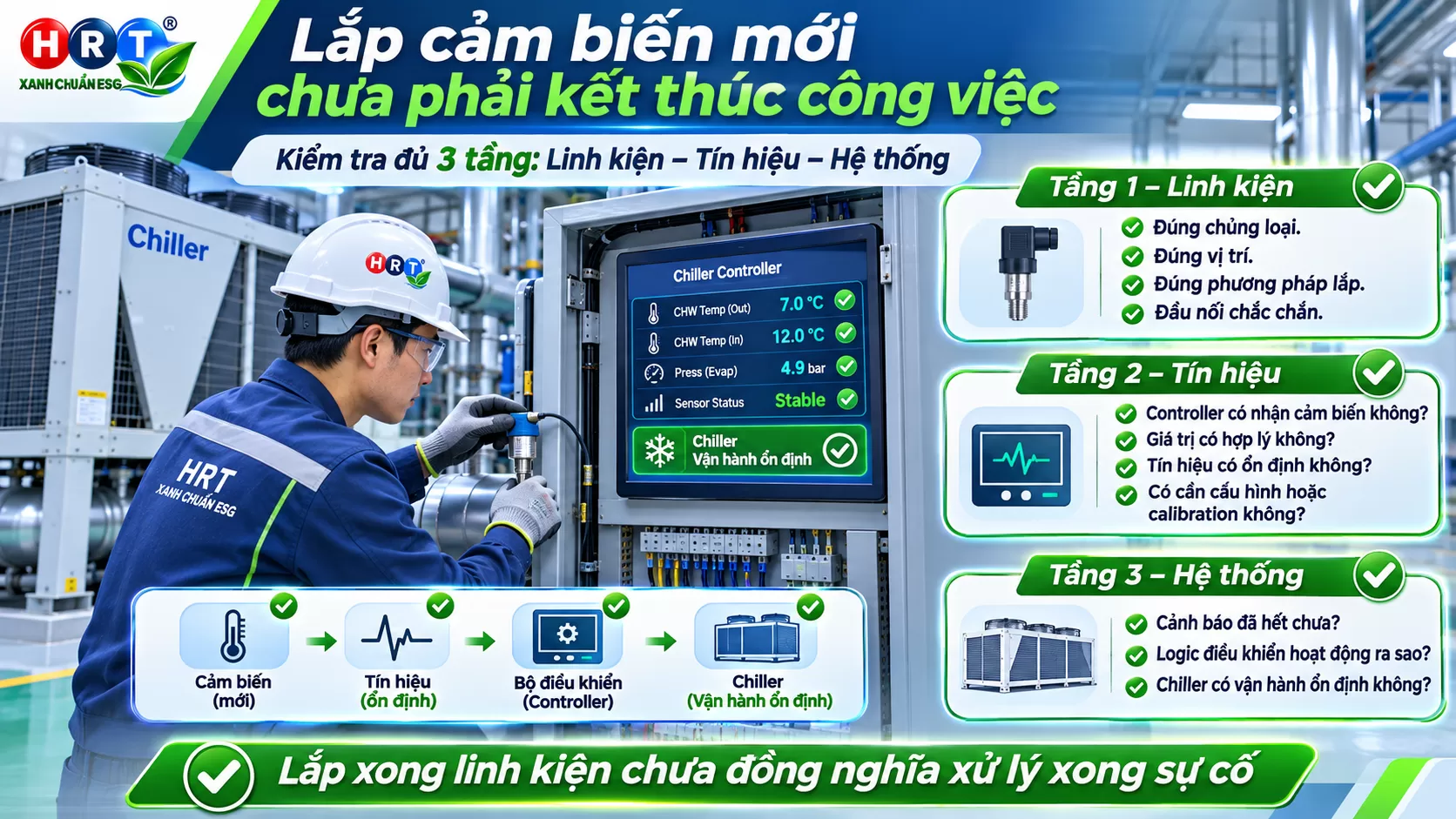
This is a point I'm particularly interested in.
There are models that require configuring or assigning a sensor type to the corresponding circuit on the service software.
If the technician replaced the components correctly but the controller was not configured properly, the signal may still not be properly recognized.
HRT source also note that some Chiller models need to perform the configuration step after installation and require manipulation according to the documentation of the actual model.
So after mounting, I want to test three floors.
1st Floor – Components
The right sensors.
Right place.
The correct mounting method.
Connector is solid.
2nd Floor – Signal
Does the controller recognize the sensor?
Is the value reasonable?
Is the signal stable?
Is there a need for configuration or calibration according to the document?
3rd Floor – System
Is the warning over?
How does logic control work?
Is the chiller running smoothly?
A component that is not installed does not mean that a problem has been solved.
If cold circuit is opened, it must be closed by cold circuit procedure
If the sensor replacement work interferes with the containing liquid, the cold circuit recovery part must be fully done according to the requirements of the equipment.
Depending on the scope of work and model, may involve testing airtightness, vacuum treatment or media before putting the system back into operation.
HRT sources emphasize that not every sensor replacement requires recovery or refill of the solvent; specific requirements depend on the location of the sensor, Chiller configuration and service documentation.
This is why I want the file to state:
Is there a cold circuit?
If there are:
What steps have been taken to restore the pulse?
Do not use the phrase “changed sensor” to hide the more important technical part behind.
Chiller boot is not enough to acceptance testing
After replacement, the first thing many people are interested in is:
“Is the machine running yet?”
I would like to ask more:
Did the controller get the right signal?
Warning coming back?
Is the signal stable when the load changes?
Are the relevant operating parameters reasonable?
If there is a cold-vascular intervention, has the airtightness status been confirmed?
The equipment should be commissioning under the right conditions and the result should be recorded. The Chiller startup is only demonstrated that it can start at that time, not yet demonstrating the whole work has been reached.
I want the following correction record to be answered:
Pre-treatment: What expression system?
Causes: confirmed by what data?
Intervention: What part of the job did you do?
After treatment: What measurement results and status prove the work reached?
That's how you close a technical job.
If the sensor is replaced and the machine still reports errors, do not replace the components according to the feeling
This is a situation that requires diagnostic discipline.
If new components are installed but warnings still appear, return to the sequence.
Connect the power.
The wire.
Configure.
Control pad.
Cold circuit conditions.
Don't keep replacing the parts just because the first one didn't fix the problem.
The HRT source also determines whether the Chiller still reports an error after sensor replacement that may be related to signal lines, controller configuration, control board or actual abnormalities of the chiller circuit.
A new component doesn't make a hypothesis the right cause.
Warranty must clearly distinguish responsibility and scope
Not every damage that appears during the warranty period automatically falls under the same responsibility.
I would like the profile to specify:
Warranty period.
Components range.
Conditions apply.
Operation history.
Earlier interventions.
Responsibilities of suppliers.
Responsibilities of the operation unit.
HRT also emphasized that the warranty scope must be based on the contract, warranty conditions, supplier policies and actual handover records.
Clear from the beginning helps project owner and contractor focus on technical solutions instead of arguing responsibility when the machine is stopped.
The file must help the next processing faster
After an incident, I don't want the whole experience to be in the technician's memory.
Records to save:
Model and serial.
Old sensor code.
New sensor code.
The time of change.
Warn before repair.
Pre-measurement results instead.
The work is done.
Configure later instead.
Commissioning parameters.
Final state.
HRT sources also consider the saving of model, component code and state first – after as data necessary for warranty, maintenance and management of equipment later.
When a similar warning comes in after several months, the engineering team does not have to start from scratch.
They have a history to compare.
That's how technical data creates long - term value.
CEO's view Đoàn Văn Hoàng: I don't approve sensor replacement, I approve a valid conclusion.
When viewing the warranty proposal, I do not want to read only:
“Sensor error – need to change”
I want to see the connection between phenomena, data and decisions.
What warnings appear?
What's the sensor signal like?
Has the lead been checked?
Has the controller been collated?
Are cold circuit conditions abnormal?
Is the new spare part code for the correct model?
Does the intervention range require environmental treatment?
After replacement, what is acceptance testing?
That's how I apply the spirit:
Understand - Clear - Dedicated.
Understand Correctly before removing components.
Clearly about the data, causes and scope of warranty.
Dedicated follow up until Chiller is commissioned and the results are verified.
With... warranty air-cooled chillerI don't want success to be measured in sentences:
“Sensors have been replaced"
I want the conclusion to be:
“The cause has been confirmed, the correct components have been replaced in accordance with the procedure and the Chiller has been checked back in clear condition”
That's the end of a warranty job.
Warranty exchange and Chiller testing with HRT
When Chiller appears alarm related to sensors, enterprises should prepare model, serial, error code, alarm history, controller photos and information of previous processing.
If there are technical documents or handover records of the equipment, it is recommended to provide them together for comparison.
From that information, the engineering team can determine the scope of inspection before deciding to replace components, intervene cold circuit or take further repair steps.
CEO Đoàn Văn Hoàng | HRT
True – Clear – Dedicated
Right from the beginning – Clear to the end – Sustainable Green.
HRT Contact: 0909 326 888
Source: Publisher’s English edition · Vietnamese original on doanvanhoang.com