
Central Air Conditioner
Machine-translated from Vietnamese. Read the original in Vietnamese
Air conditioner Center: Definition, Configuration, Classification, Advantages and Applications
1. Central air conditioner definition
Central air conditioner is an air conditioning system designed to cool and heat the entire building or large area. Different from local air conditioners, this system regulates temperature evenly and efficiently throughout the entire space.
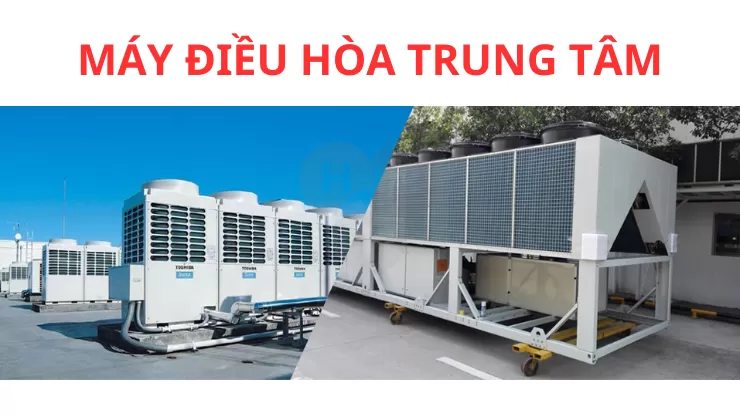
2. Central air conditioner configuration
The central air conditioner system consists of two main parts:
- Outdoor unit: Installed outside the building, it is responsible for cooling the environment.
- Indoor unit: Installed inside the building, is responsible for distributing cold or hot air to the rooms.
Other ingredients include:
- Air Hose: Connection between outdoor unit and indoor unit, help transport air that has been cooling or heating.
- Central Controller: Allows adjustment of the system temperature and operating mode.
3. Classification of air conditioner Center
3.1. Daikin VRV Center
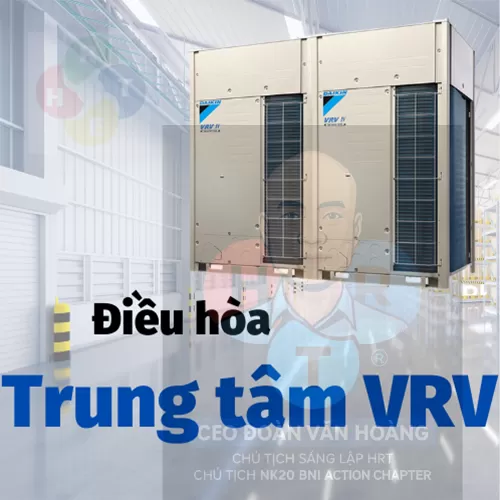
Daikin's Variable Refrigerant Volume (VRV) central air conditioning system has a power range from 8HP to 60HP, meeting the cooling and heating needs of various space types. Indoor unit models include:
- Ceiling Cassette
- Concealed ceiling connector air duct
- Wall Mounted
3.2. Regulating VRF Center
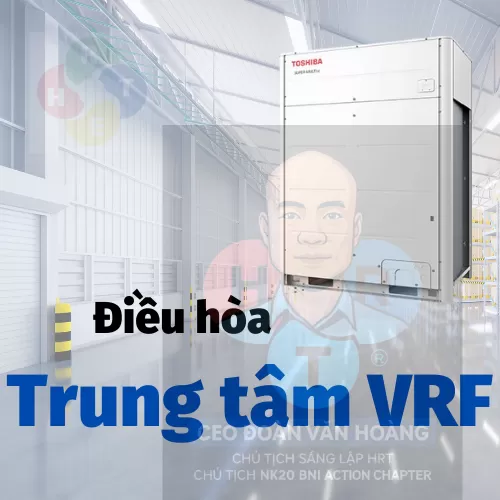
Panasonic, Mitsubishi, LG, GREE, Toshiba, Aqua and Hisense provide VRF (Variable Refrigerant Flow) central air conditioning system with a power range from 8HP to more than 100HP. The variety of indoor units include:
- Ceiling Cassette
- Concealed ceiling connector air duct
- Wall Mounted
3.3. Chiller Central Air Conditioning

Chiller systems have two main types:
- Air-cooled chiller: Capacity equivalent to VRV / VRF, suitable for office buildings, commercial centers.
- Water-cooled chiller: Very large capacity, up to millions of BTU / h, suitable for large factories and industrial parks.
4. Advantages of air conditioner Center
Advantages air conditioner Center
- High Performance: Uniform cooling and heating capacity for the whole building.
- Energy saving and energy efficiency: The system can adjust the capacity according to the needs of use, helping to save electricity.
- Flexible design: Easy to install and integrate into modern interior designs.
Disadvantages air conditioner Center
- High initial investment cost: Requires higher installation and maintenance costs than local air conditioning systems.
- High technical requirements: Need a technical team with expertise for installation and maintenance.
5. Application of air conditioner Center
Central air conditioner is widely applied in high-rise buildings, commercial centers, hotels, hospitals and large industrial parks. This system ensures to provide a comfortable working and living environment, stable temperature and humidity, and energy saving.
The selection and installation of appropriate central air conditioner will bring high efficiency in air conditioning, meet the needs of users and enhance business efficiency.
Source: Publisher’s English edition · Vietnamese original on doanvanhoang.com