
Energy-Efficient HVAC Solutions: Comprehensive Strategy From Design to Operation
Machine-translated from Vietnamese. Read the original in Vietnamese
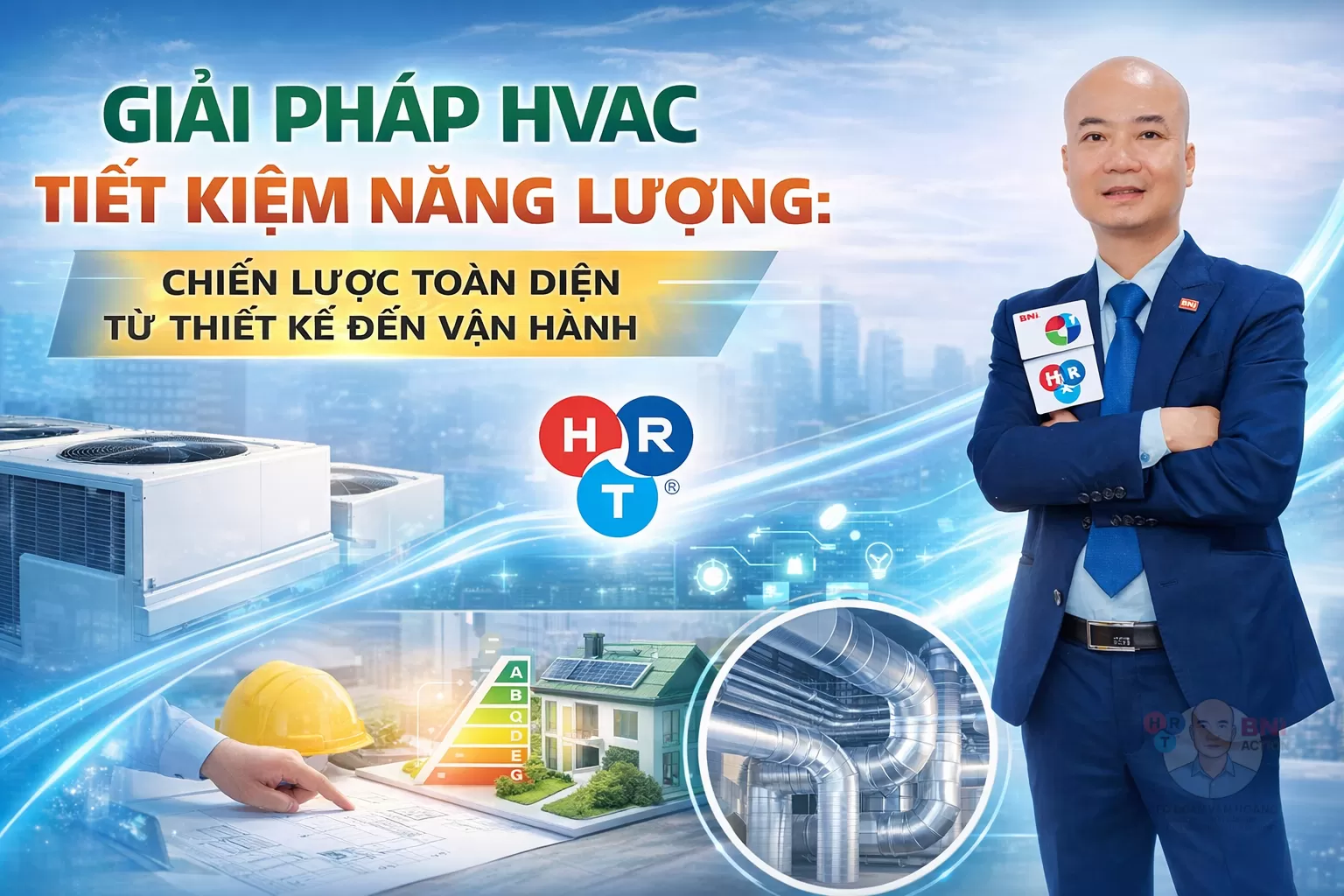
HVAC costs account for 40–60% of enterprise power. In the face of electricity price pressures and sustainable development, energy optimization is imperative. HRT shares a comprehensive, practical saving solution.
Electricity costs for HVAC systems typically account for 40-60% of the total electricity bill of the business. With the continuous increase in electricity prices and the pressure for sustainable development, optimizing the energy efficiency of air conditioning systems is no longer an option but has become a mandatory requirement for all businesses who want to compete and develop sustainably. HRT, with more than 10 years of experience in construction and operation of hundreds of HVAC systems in Vietnam, shares in this article the most comprehensive and practical energy saving solutions for business air conditioning systems.
1. A Right Understanding of HVAC Energy Costs
Before finding a cost-effective solution, it is important to understand the energy cost structure in the HVAC system. This helps to identify the right intervention goals and prioritize solutions with the highest ROI (Return on Investment).
1.1. Electricity consumption structure in HVAC system
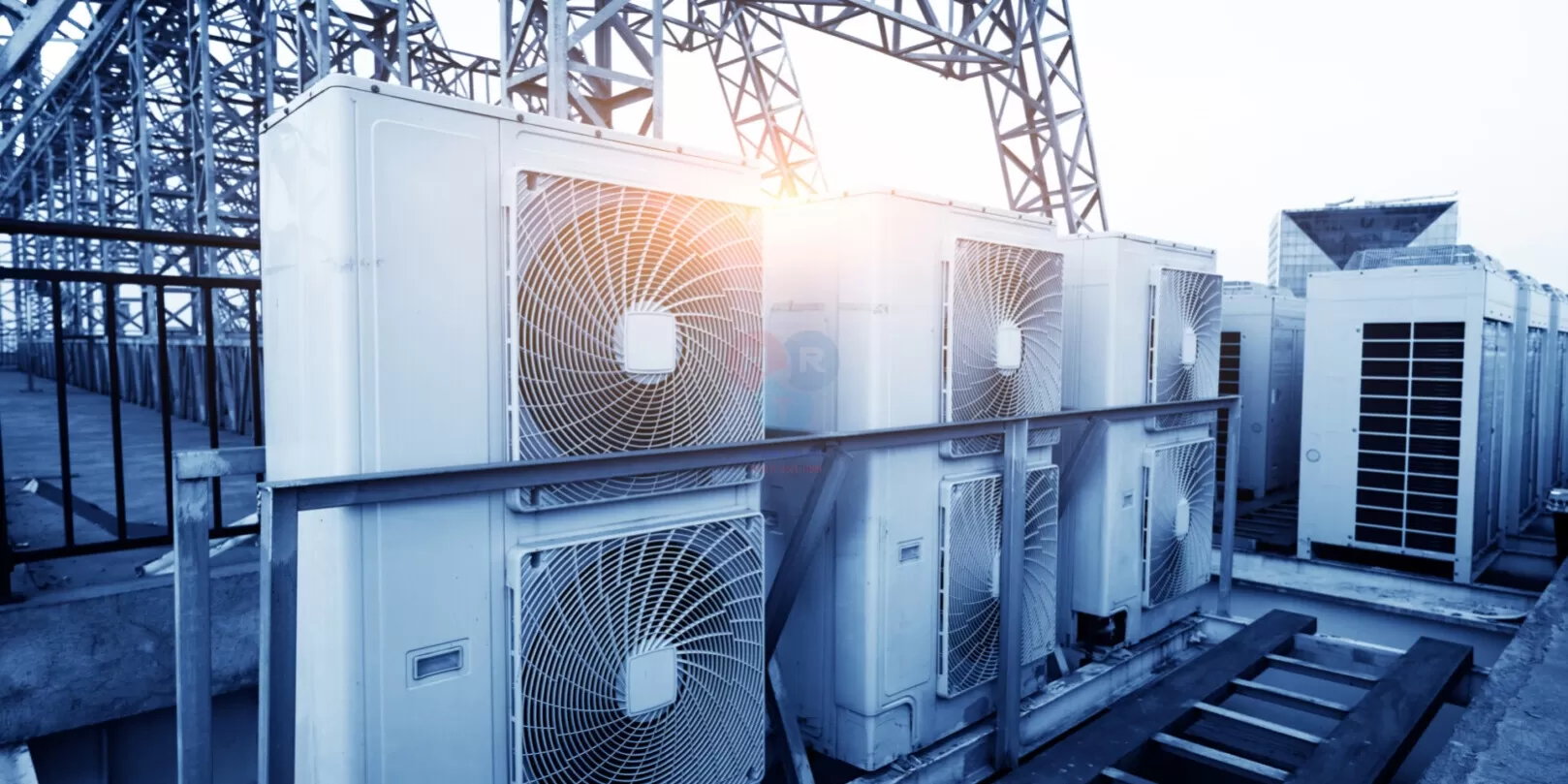
In a typical HVAC system, power consumption is allocated as follows: refrigeration compressor accounts for 55–65 percent of total HVAC power, fan accounts for 15–25%, pump in Chiller system accounts for 10–15%, cooling tower accounts for 3–5%, and other auxiliary equipment accounts for the rest. This suggests that optimizing compressor and fan are the two highest priority goals when looking for energy savings.
1.2. Why do many HVAC systems waste electricity?
There are three main causes of power waste in HVAC. The first is oversizing: many systems are designed with too large safety factor, resulting in the unit running at constant low loads—this is the least efficient mode of operation of a fixed-speed compressor. Second is the operation is not optimal: no on/off schedule according to working hours, setpoint too low, no seasonal adjustment. Third is poor maintenance: dirty air filters, dusty indoor units, and lack of refrigerant — all of which increase power consumption by 10 to 30%.
2. Group 1: Upgrading of high - tech equipment
These are the group of solutions with the greatest impact but also require the highest initial investment. However, with significant electricity savings, payback periods are often very attractive.
2.1. Conversion to Daikin inverter VRV system
If your building or construction is using traditional ON/OFF (compressor-speed) air conditioning systems, upgrading to VRV Daikin with variable-frequency drive inverter technology can save 30-50% of air conditioning power. compressor inverter automatically adjusts the speed according to actual load, no longer cycle ON/OFF wasting energy. Daikin VRV X—the latest generation HRT delivered— achieves COP up to 5.0 and superior IPLV (variable load efficiency index), making it the first choice for buildings that want to optimize energy.
2.2. Upgrading Chiller to Inverter
For buildings using old fixed-speed compressor, upgrading or replacing with the latest Daikin, Trane or Carrier variable-frequency drive (inverter chiller) can save 20-40% of Chiller power. Modern inverter chillers reach IPLV 7.5-9.0 kW/kW compared to only 5.0-6.0 kW/kw of old fixed-speed chillers.
2.3. Install variable-frequency drive (VFD) for fans and pumps
Even without changing the entire chiller system, installing variable-frequency drive (Variable Frequency Drive) for AHU fans and chilled-water pumps can save 20-40% of fan and pump power. This is because the power consumption of the fan and pump is proportional to the third power of speed—a 20% decrease in speed means a nearly 50% reduction in power. variable-frequency drive allows for precise adjustment of airflow rate and water flow rate according to actual load instead of 100% continuous operation.
2.4. Integrated ventilation heat recovery (HRV/ERV) equipment
In a current ventilation system with no heat recovery, all the heat of the air conditioning is being released out with the old air. Installing additional HRV/ERV equipment to recover 70-85% of this energy can reduce the load on the air conditioning system by 20-30% in Hanoi conditions. HRT provides and installs a full range of ventilation heat recovery equipment suitable for all sizes of projects.
3. Group 2: Optimize operation
This group of solutions does not require equipment replacement but can save 10-20% HVAC power just by changing the way of operation. This is the group with the highest ROI because of its low or almost zero investment cost.
3.1. Optimize temperature setpoint and operation schedule
Each 1°C increase of air conditioning setpoint (for cooling system) saves about 3-5% compressor power. In many Vietnamese offices, setting temperatures of 20-22°C are obvious waste — according to ASHRAE 55, 24-26°C is perfectly comfortable for people wearing office clothes. Programming the correct operation schedule—to shut down completely outside of work hours instead of running all night—can save 15-20% in HVAC power monthly.
3.2. Optimal Start — A Smart Start Strategy
Instead of turning on the air conditioner at the same time every day, the BMS system with Optimal Start automatically calculates the optimal start time based on outdoor temperature, current room temperature and time to reach setpoint. On cooler days, the system starts later, saving significantly more electricity than the fixed schedule.
3.3. Demand Control Ventilation — ventilation according to actual demand
Instead of providing a fixed outdoor air flow rate according to the maximum design (100% design capacity), Demand Control Ventilation (DCV) system adjusts the outdoor air flow rate based on the actual CO2 concentration in the room. When the meeting room is only 3 people instead of 20 people designed, the system automatically reduces outdoor airflow, saving fan power and reducing thermal moisture load for air conditioning. Research shows that DCV can save 10 - 20% of ventilation energy depending on operation characteristics.
3.4. Chiller Sequence Optimization
For multiple Chiller parallel systems, the order of starting and stopping the Chiller according to actual load (chiller sequencing) greatly affects overall performance. One Chiller running at 80% load is much more efficient than two Chillers running at 40% load. BMS with Chiller Order Optimization algorithm can save 5-15% Chiller power.
4. Group 3: Improvement of building covers
HVAC systems only handle thermal load that the building cannot insulate itself. Improving the building envelope to reduce thermal load is the most basic and sustainable strategy.
4.1. Wall and roof insulation
External walls and roofs that are not fully insulated are the largest source of thermal load, especially in the west and flat roofs that are directly exposed to sunlight in Vietnam. Installing additional polyurethane or rock wool insulation for external walls and roof can reduce the thermal load transmitted through the structure by 50-70%, correspondingly reducing air conditioning power significantly.
4.2. Low-E glass and sunshade system
Heat from the sun through windows and glass curtain walls is a major thermal load component in greenhouses. Replacing ordinary glass with Low-E (low emissivity) glass or installing sunscreen, outdoor sun shade can reduce Solar Heat Gain Coefficient (SHGC) significantly, reducing the load for air conditioning especially in the west afternoon.
5. Solution Group 4: Periodic Maintenance — Energy Saving Platform
Poor maintenance is one of the most common causes of HVAC systems consuming 10-30% more power than designed. This is the simplest solution but is often overlooked.
5.1. Cleaning filter and heat exchanger
The dirty air filter clogs down the airflow rate, causing the fan to work harder and the power consumption to increase. Indoor unit dust mount reduces heat exchange capacity, causing compressor to operate at higher pressure and consume more electricity. Cleaning the filter monthly alone can maintain its designed performance and save 5 - 10% of the power compared to a dirty filter.
5.2. Refrigerant additional inspection and loading
VRV or Chiller systems that lack gas (due to small accumulated leaks) are less efficient and consume more electricity. Periodic gas checks and replenishment ensures the system is always working at design specifications. HRT provides genuine industrial air conditioner refrigerant charging service with experienced technical team, ensuring the correct type and right amount of charging.
5.3. Cleaning cooling tower and condenser
The cooling tower clings to residue and the condenser is not treated with water resulting in an increased condensing temperature, which reduces Chiller efficiency significantly. Additional water treatment and periodic cooling tower cleaning can maintain Chiller performance at design level and extend equipment life.
6. Evaluate And Plan HVAC Energy Savings
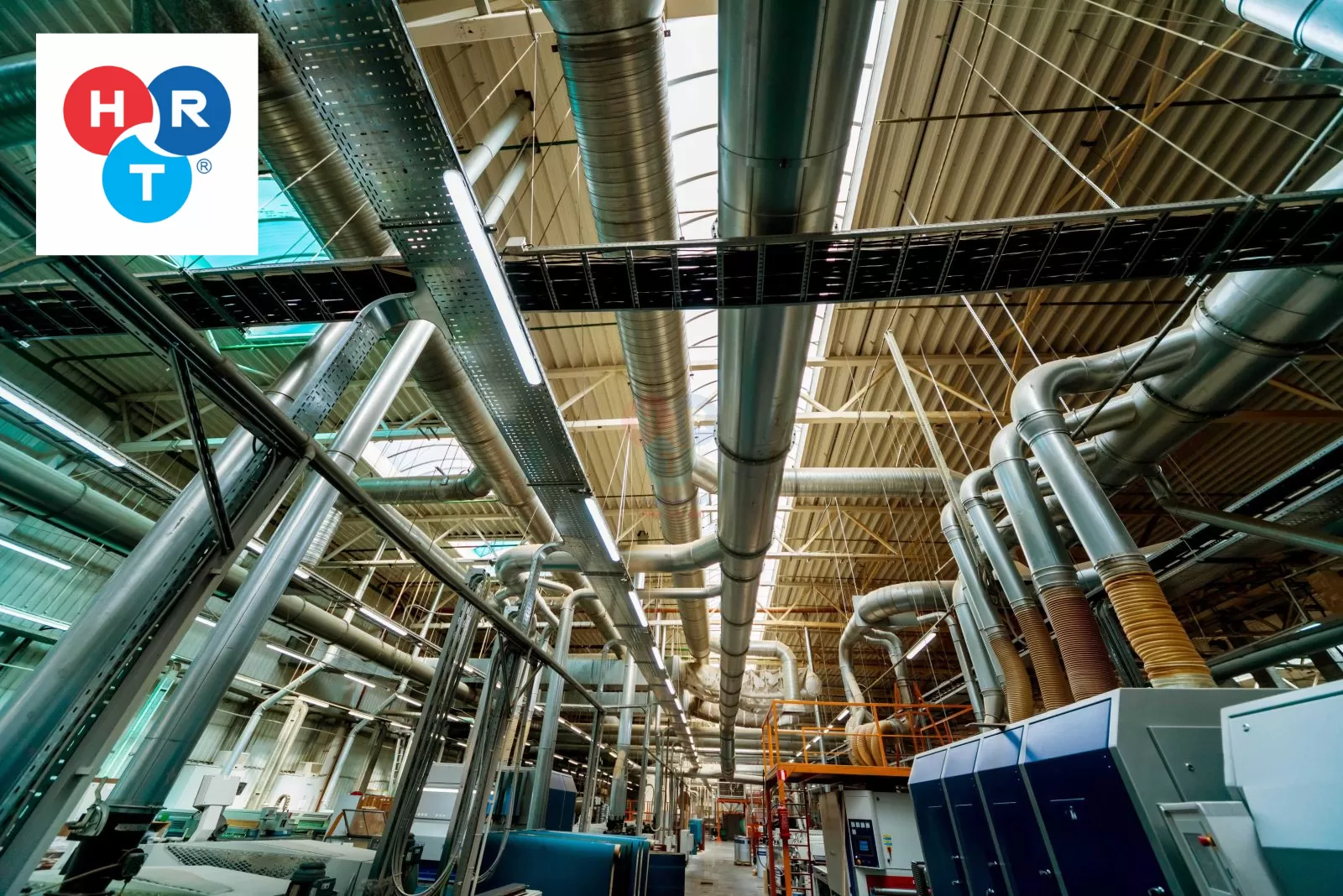
Before investing in any energy-saving solution, the first and most important step is an energy audit to understand the current electricity consumption of the HVAC system.
6.1. HVAC energy audit procedures
1.
2.
3.
4.
5.
6.
6.2. HRT's HVAC energy saving consulting services
HRT provides auditing and consulting services for HVAC energy optimization for businesses. With experience in operation and maintenance of hundreds of HVAC systems, our team of HRT engineers are capable to accurately identify waste points and propose the most suitable improvement solution for each specific system.
7. Aggregate Solutions and Expected Savings Rates
|
Solution |
Investment cost |
Power Savings Expected |
Payback period |
|
VRV inverter Daikin |
Medium - High |
30 - 50% |
4 - 7 years |
|
Chiller Inverter Upgrade |
Cao |
20 - 40% |
5 - 8 years |
|
Install variable-frequency drive fan/pump |
Low - Medium |
20 - 40% fan/pump |
2 - 4 years |
|
HRV/ERV Integration |
Average |
15 - 30% System |
3 - 5 years |
|
Built-in BMS + optimized operation |
Average |
15 - 25% |
3 - 5 years |
|
regular maintenance in accordance with the process |
Very low |
5 - 15% |
< 1 year |
|
Optimize setpoint + operation schedule |
Almost zero. |
10 - 20% |
< 6 months |
|
Improved insulation cover shell |
Medium - High |
15 - 30% |
5 - 10 years |
=> Maybe you are interested: What Is ASHRAE Standard? A Comprehensive Guide And Application In HVAC Design
8. Frequently Asked Questions
Where to start when you want to save HVAC power?
The first and most economical step is to optimize operation: check and adjust temperature setpoint, schedule on-off on time, and ensure periodic maintenance processes. These actions are almost inexpensive but can save 10 - 20% on electricity right away. Then, audit the energy to determine the next investment opportunity with the best ROI.
Does HRT support energy efficiency assessments for existing HVAC systems?
Yes. Engineer team HRT ready to survey the current HVAC system of the business, assess the status and propose energy optimization solutions in accordance with the budget and goals of each customer. Contact HRT via hotline 0916 181 080 to book a free survey.
|
Want to reduce HVAC electricity costs for business? HRT Energy saving solution advice! Hotline: 0916 181 080 | Email: CEO@hrt.vn Address: No. 9TT7 Foresa 7A Street, Tasco Ecological Urban Area, Xuan Phuong District, Hanoi |
Source: Publisher’s English edition · Vietnamese original on doanvanhoang.com