
Error E3-18 Daikin VRV: When is it eligible to run again?
Machine-translated from Vietnamese. Read the original in Vietnamese
CEO Đoàn Văn Hoàng – HRT share how to control Daikin VRV E3-18 fault handling, verify cause and evaluate condition for system re-run.
E3-18 Daikin VRV Error: When is the machine eligible for re-running?
When the air conditioning system appears E3-18 Daikin VRV faultThe question managers want to be answered is usually: “When will the machine work again?”
I understand the pressure. An area where guests are being entertained, an office floor where workers are working, or a building that is about to be handed over all require a clear plan for handling it. However, when considering repair options, I wanted the engineering team to answer one more question: What grounds do you have that the system is eligible for re-operation?
To me, the new “deleted error, running machine” report reflects the status at the time of the test. To approve the result, I need to understand what condition has been detected, what work has been done and under what conditions the result is confirmed.
That's how I approached the VRV incident from an executive perspective: organizing to restore operations while keeping clear technical grounds and monitoring responsibilities.
The goal is not just to deactivate the alert, but to have enough grounds to put the system back into service.
Understand the E3-18 code correctly before deciding to repair
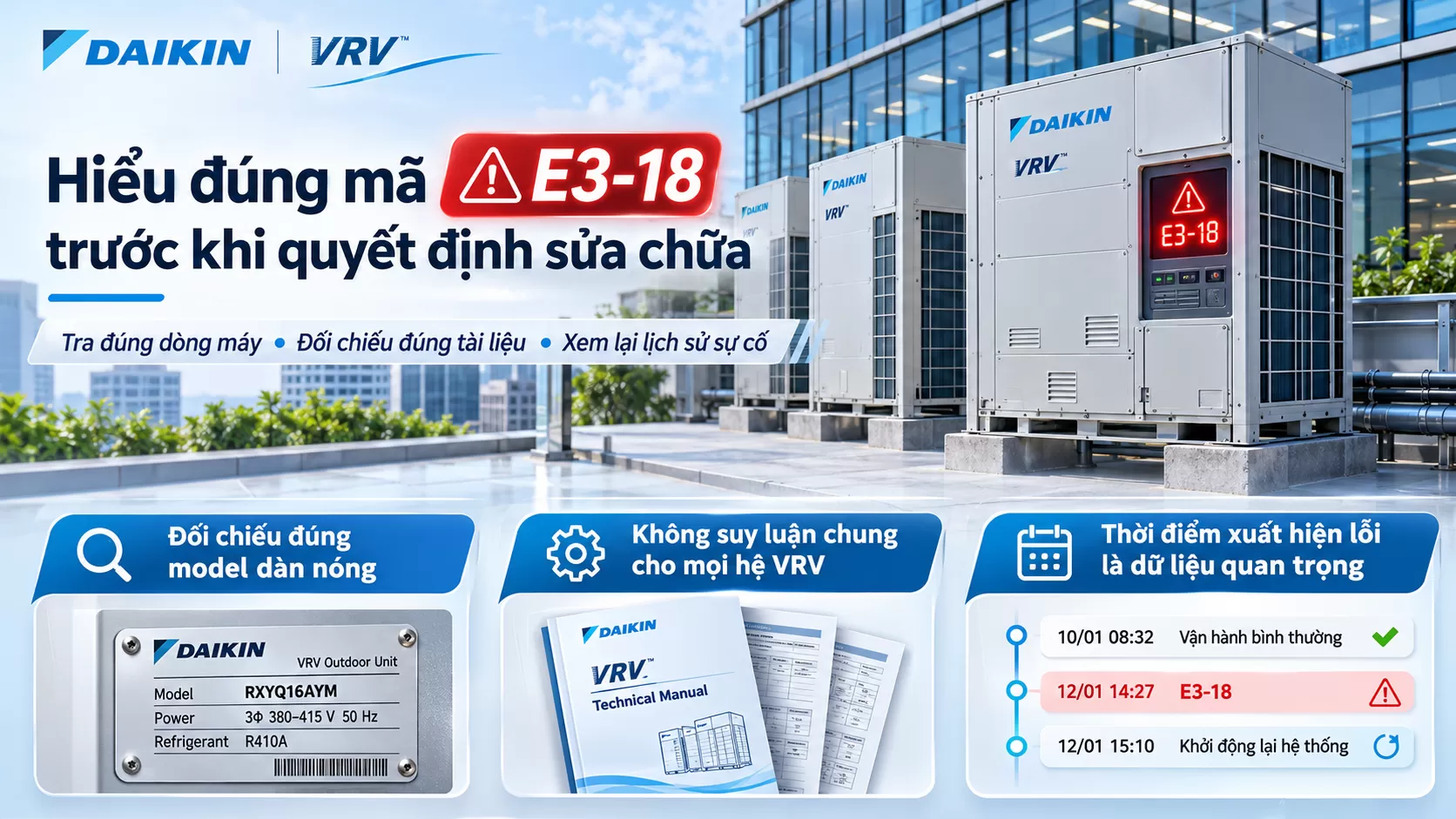
Error codes should be matched with the correct model
In the Daikin service literature for the REYQ-XA/XB series, the E3-18 is described as “Overall retry of high pressure switch”, referring to the mechanism by which the overall retry of the high pressure switch is protected. This is diagnostic guidance information, not a conclusion that the switch has failed.
In the instructions for REYQ-T/REMQ-T series, the E3-18 processing table refers to the possibility of refrigerant overload or closed stop valve. This indicates that the code check should be tied to the documentation of the device being tested, rather than applying a general interpretation to every VRV system.
So, before viewing the repair quotation, I suggest that the person in charge of confirming the outdoor unit model, system configuration and full fault code. If the work has multiple assemblies, the record must clearly indicate the scope being tested.
I do not want one conclusion of one system to be used to decide another just because they share the Daikin brand.
The manager does not need to replace the engineer with a full readout of service documentation. But the manager needs to know which document the proposal is based on and whether it is suitable for the equipment at work.
The time of error is part of the incident record
When receiving the report, I want to know if the error occurred during initial commissioning, after a maintenance or when the work is in normal use.
If there was any previous intervention in the system, the person in charge should regroup the work content. What components have been replaced? Is the amount of solvent adjusted? What positions have been manipulated?
This is not a way to hold the blame until we have a conclusion. I want the engineering team informed enough to choose the test course.
For the newly installed system, I recommend reviewing commissioning preparation records and unconfirmed jobs. For the currently in-operation system, I would like to have an operation log with information about the last intervention.
A good troubleshooting record should tell you what went on before the error occurred, not just the code that's on the screen.
The treatment plan must explain what is really abnormal
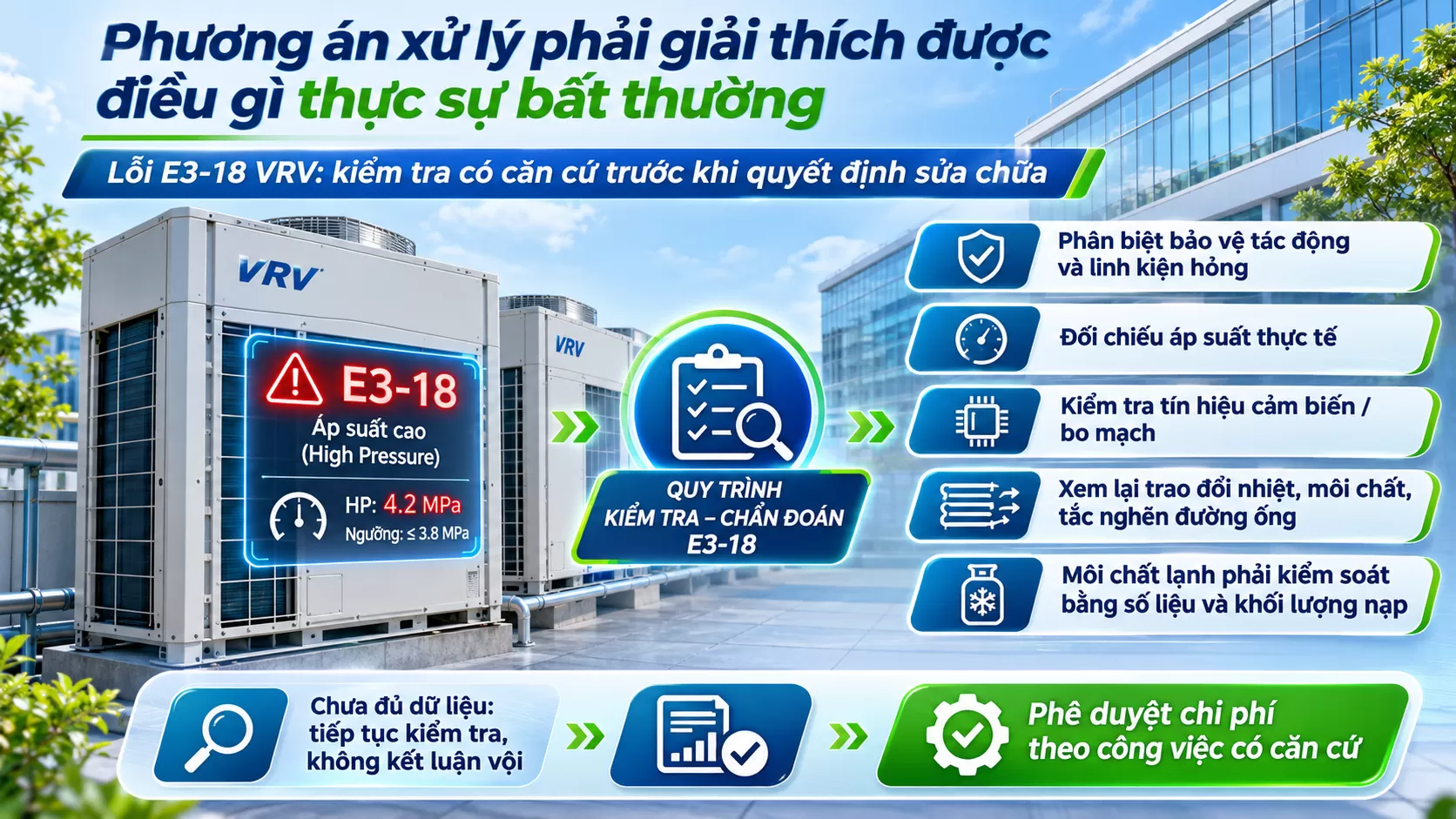
Distinguish protective is acting with broken components
Daikin Vietnam identified E3 as a high pressure switch condition. The factors listed in the lookup instructions include heat exchange, residual fluid load, pipeline clogging or poor contact at the switch jack. Therefore, warnings related to high pressure switches are not enough to decide to replace the switch.
In the troubleshooting meeting, I want the engineer to distinguish what's being measured from what's being suspected.
If the actual pressure is abnormal, suggestions should be directed towards the condition causing the pressure to rise. If signal lines or components are suspected, appropriate testing should be done for confirmation before replacement.
Daikin's E3 diagnostic documentation is intended to check for the correlation of actual pressure measurements with sensor and system data. The goal is to distinguish a true elevation from abnormalities in the sensor or control board.
From an approval perspective, I don't require a long report. I need one that is clear enough to understand why the engineering team chose that option.
A proposal for replacement of components should be accompanied by the test results indicating that the components do not meet the requirements. A proposal for cold circuit treatment should indicate the grounds for determining the work to be intervened.
If you don't have enough data, write that you need to check again. I don't want a preliminary statement to be converted into a definitive conclusion just to complete the quotation.
Refrigerant quantity is not an item to adjust according to guesswork
When the option referred to refrigerant adjustments, I asked the person in charge to compare equipment documentation with pipeline records and previous loading information.
In Daikin's guidelines for the RXYSQ8–12 series, the amount of additional solvent is determined according to configuration requirements; the loading process using scales and in case of overloading are recalled. This is not a job based solely on how much or how little the unit is cooling.
I recommend that all environmental interventions be documented in terms of volume and content. If the old dossier is incomplete, the technical team should clearly state how to verify it before proposing adjustments.
Similarly, when a blockage or abnormality inside the cold circuit is suspected, the runner must explain the basis of the test. It should not be a direct transition from an error code to a decision to remove the pipe or replace the valve.
Repair costs should be approved according to grounded work, not according to the number of components proposed for replacement.
Operational recovery requires a plan, not just an appointment
Clarify the affected area before committing to a time of completion
Imagine an illustrative situation: the VRV system serving the meeting room arises a warning right before the event date. Users need to know if the room can operate or must move to another area.
In that situation, I want two clear coordinating clues. The technical person determines the scope of inspection and handling conditions. The operation manager prepares a plan to use the ground in accordance with the confirmed condition.
I don't want every decision to wait until the techs have reported it.
If the completion date cannot be determined, please close the deadline for updating the next inspection result. When new information is available, the operator will decide on personnel, supplies and customer service plans.
A specific feedback point is more useful than an appointment to “try early” but does not tell you where the work is.
Do not trade protection function to keep operation schedule
My point is that I don't approve of the splicing off or disabling of high-voltage switches to keep them working. I don't want to use constant resets as a diagnostic alternative.
In the E3 diagnostic literature, Daikin places the restart operation in a conditional check sequence, after reviewing the valve, connection and switch status. This is the operation for professional examination, not proof that the cause has been dealt with.
Electrical, valve and fluid work should be performed by qualified personnel according to applicable documentation. Daikin's maintenance guidelines also require electrical hazard control and compliance with safety conditions before intervention.
It was my responsibility as operator to deal with the pressure by organizing my work. When technical conditions were not confirmed, I preferred to adjust the mining plan rather than have the repair team find a way to get the machine running at all costs.
The warning is not final.
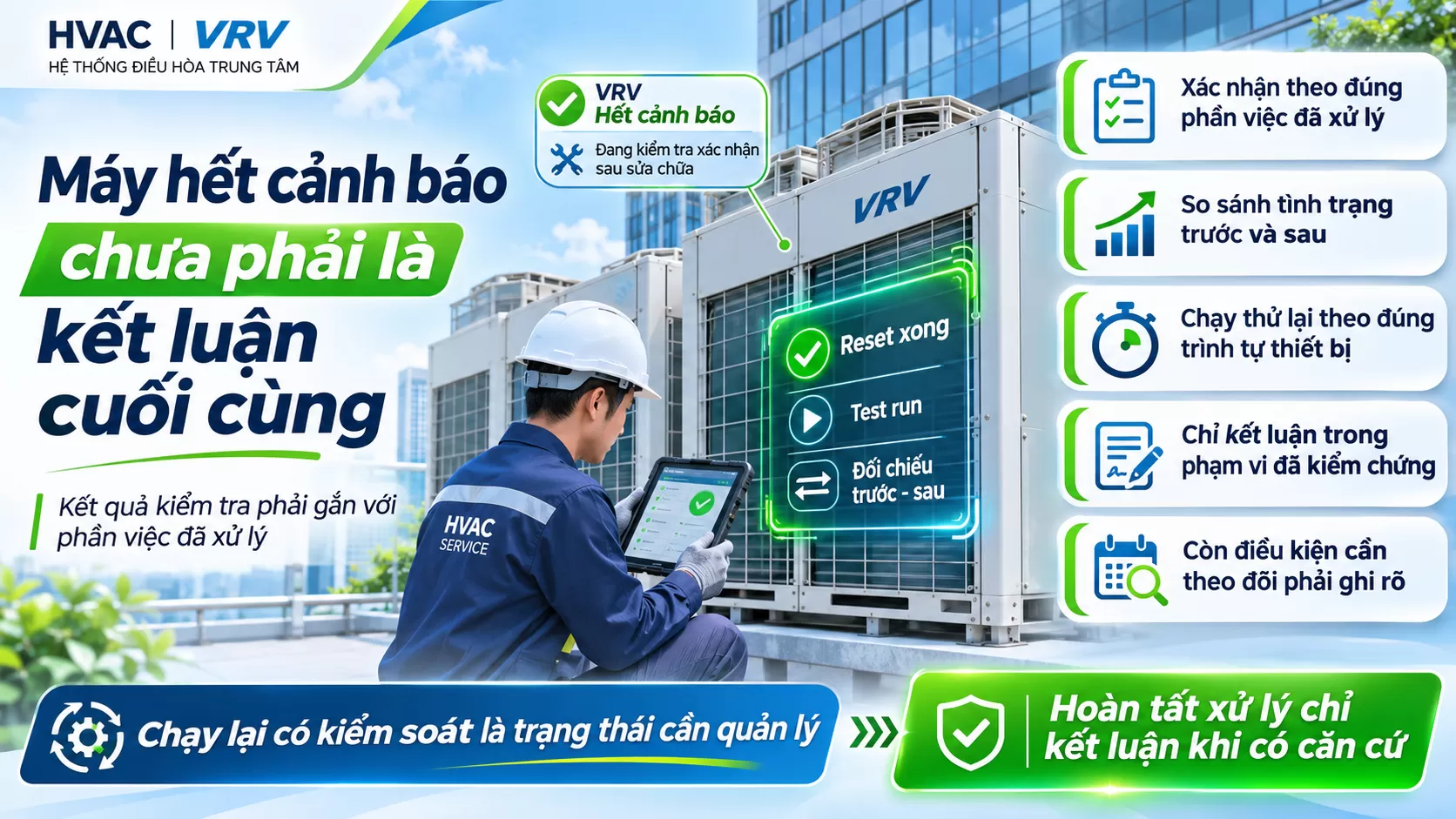
The inspection results must be associated with the work already handled
Before approving the repair plan, I want the engineering team to clarify how to confirm the results after implementation.
If a component is proposed to be replaced, the relevant inspection should be determined. If an operational condition is handled, a pre- and post-condition reconciliation should be made. If the work affects other parts of the system, the scope of re-inspection should be clarified.
I do not require a fixed follow-up period for all incidents. The professional in charge should select the inspection conditions suitable for the model, intervention contents and developments recorded.
In Daikin commissioning instructions for the RXYSQ8–12 series, when testing is abnormally completed, it is necessary to fix the error and re-execute it to confirm that the abnormality has been resolved. The commissioning must be completed in the order of the device, not just based on the screen status after the code is deleted.
For me, post-repair reports must demonstrate the connection between detection status, work done and inspection results.
Conclusion only within the scope of actual verified
Suppose the previous error occurred when multiple areas were in use, but a post-repair check was made when only a part of the work was working. I suggest that the record clearly state this difference.
That's not the basis for making a self - defeating corrective decision, but it's also important not to overlook the limits of the test.
The person in charge should explain what the current results have confirmed and what conditions need further monitoring. The additional plan must be consistent with the technical instructions, not try to reproduce abnormal conditions or exceed the operation limits for testing the machine.
I want this to be agreed before the engineering team leaves the site. Operations must know when to report and who to receive information.
Controlled rerun is a state that needs to be managed; completion of processing is a conclusion that needs to be grounded.
Handover records must help the operator to handle next time
Record enough so that others can continue the work
After processing E3-18 Daikin VRV fault codeI suggest the records be saved by system code and device location.
The recipient should understand the circumstances under which the defect occurred, what the technical team has examined and what data is based on. Replaced components, adjusted amount of solvent or changed settings should be clearly stated when they arise.
I don't want the journal to have only one line “fixed".
When changing operation shifts or replacing maintenance units, the next person must be able to read records to continue monitoring without finding the person who handled the previous time.
For the part that does not qualify for confirmation, specify the status of the open. Users need to know which content is complete and which remains the responsibility of the technical team to monitor.
Return processing results to maintenance plan
I suggest that the post-incident conversation not end with a settlement agreement.
If the inspection process detects a weakness in the management of the device, include the correction in the appropriate plan. It may be necessary to clarify the provisions of the log, add equipment information or tighten control over changing settings.
If the report does not confirm the cause, the monitoring plan must remain that caution. It is not recommended to write “treated thoroughly” while the new record shows that the warning has not reappeared during the check period.
I want each repair to leave useful information for the next operation, instead of just leaving a service ticket.
CEO view Đoàn Văn Hoàng: Only approve reruns when understanding the grounds
When considering how to handle the E3-18 Daikin VRV failure, I did not place a manager in the role of a repairman. I placed the manager in his or her proper responsibilities: requesting explanations, arranging resources and making decisions on confirmed information.
The engineer is responsible for the diagnosis and professional plan. The team must record the work that intervened. The operation department needs to receive the results and conditions that must be continued to monitor.
If the cause is not identified, state it clearly. If data is lacking, assign an additional person. If new results are tested in a certain range, conclude that the range is correct.
That's how I want to maintain accountability throughout every HVAC repair job.
With the project owner having problems, the requirements should be set as soon as receiving the proposal: “Explain why the system is error-reporting and what results it uses to confirm re-runability."
When that question is answered, the new repair decision has the basis to protect equipment, control costs and reorganize the operation of the building.
Đoàn Văn Hoàng | CEO HRT
Right from the beginning – Clear to the end – Sustainable Green.
HRT – Green Breath for All Buildings
Source: Publisher’s English edition · Vietnamese original on doanvanhoang.com