
Industrial Air Conditioner
Machine-translated from Vietnamese. Read the original in Vietnamese
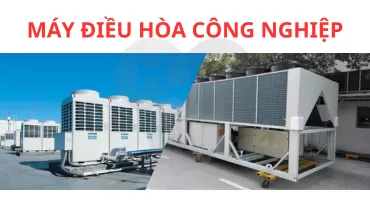
Air conditioner Industry: Definition, Configuration, Classification, Advantages and Applications
Air conditioner Industry: Definition, Configuration, Classification, Advantages and Applications
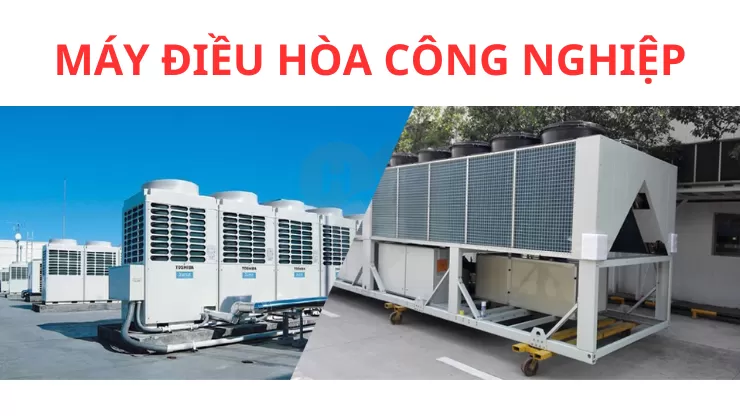
Industrial air conditioner definition
Industrial air conditioner is a dedicated cooling system, designed to control temperature and humidity in large spaces such as factories, enterprises, office buildings, shopping malls, and manufacturing facilities. These systems have high capacity and continuous operation capability, meeting the cooling needs in harsh environments and high requirements for air quality.
Industrial air conditioner configuration
Industrial air conditioner usually consists of the main components:
- Outdoor unit: dissipate heat and release heat to the external environment.
- Indoor unit: Absorbs heat from spaces that need cooling.
- Compressor: Compressed cooling agent to produce differential pressure and temperature required.
- Expansion valve: Adjustable flow rate and cooling agent pressure.
- Controllers: Manage and control the whole system, ensure efficient and safe operation.
Classification of air conditioner Industry
-
Daikin VRV industrial air conditioning
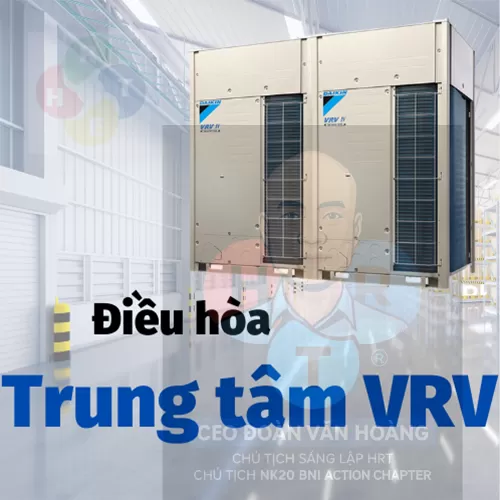
- Power Range: 8HP to 60HP.
- Type indoor unit: Recessed Ceiling Cassette, concealed ceiling connector air duct, wall mounted and other types.
- Characteristics: Flexible in installation, energy saving and capable of independent control for each area.
-
VRF Industrial Air Conditioner
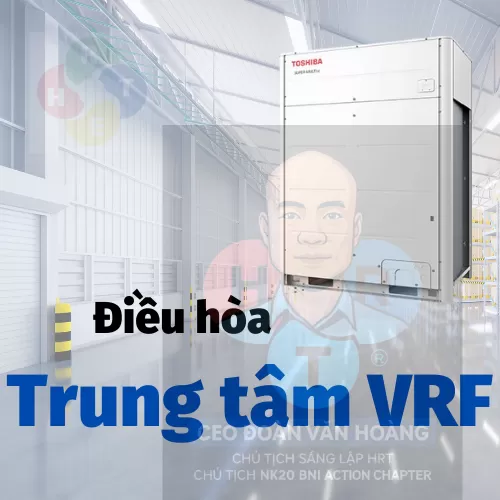
- Manufacturers: Panasonic, Mitsubishi, LG, GREE, Toshiba, Aqua, Hisense.
- Power Range: 8HP to over 100HP.
- Type indoor unit: Recessed Ceiling Cassette, concealed ceiling connector air duct, wall mounted and other types.
- Characteristics: Features flexibility, high performance, suitable for large and complex buildings.
-
Industrial Air Conditioner Chiller
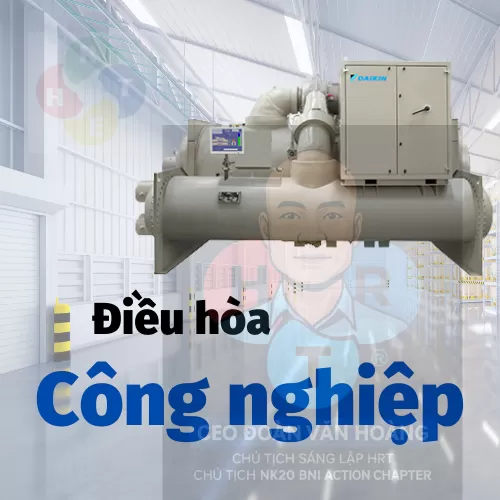
- Air-cooled chiller: Capacity equivalent to VRV/VRF.
- Water-cooled chiller: Very large capacity, up to millions of BTU/h.
- Characteristics: Suitable for large production facilities and places requiring strict temperature control.
-
Industrial Air Conditioner Packaged
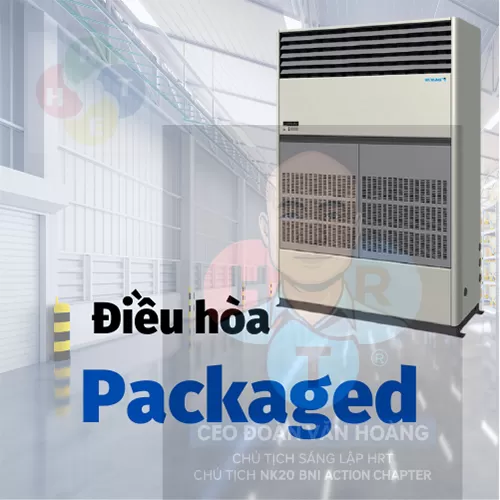
- Floor-mounted and concealed ceiling connector type air duct.
- Power Range: 50,000BTU/h to 600,000BTU/h.
- Characteristics: Easy to install, maintain, and can be used in areas with limited space.
Advantages Of Industrial air conditioner
Advantages: air conditioner Industry
- High Performance: Fast and efficient cooling for large space.
- High durability: Rugged design, durable operation.
- Flexible: Wide choice of capacity and indoor unit styles to suit different needs.
- Energy saving and energy efficiency: Advanced technology to reduce power consumption.
Disadvantages: air conditioner Industry
- High initial investment cost: Requires large investment in equipment and installation.
- Requires periodic maintenance: Need regular servicing to ensure the performance and lifespan.
Application Of air conditioner Industry
Industrial air conditioner is widely applied in many fields such as:
- Factory and factory: Ensure optimal working conditions for workers and machines.
- Office Buildings: Create a comfortable working environment, increase work efficiency.
- Business Center: Keep shopping space cool, attract customers.
- Food and pharmaceutical manufacturing facilities: Ensure product quality and hygiene safety.
Conclusion air conditioner Industry
Industrial air conditioners are the ultimate solution for controlling temperature and air quality in large spaces. With a wide selection of capacities and designs, these air conditioning systems not only improve work efficiency, but also help save energy and ensure safety for people and equipment.
Source: Publisher’s English edition · Vietnamese original on doanvanhoang.com