
Investing in factory Packaged air conditioners: 5 decisions | HRT
Machine-translated from Vietnamese. Read the original in Vietnamese

A Packaged conditioning investment decision needs to clarify more than capacity and equipment price. From the CEO's perspective Đoàn Văn Hoàng, the article proposes five decisions that help the business to correctly determine the cooling range, control the budget and evaluate the post-installation results.
Factory Packaged Air Conditioner Investment: 5 Decisions to Close Before Deployment
When discussing about Packaged factory air conditioning investmentI want to start with a question: After the system goes into operation, what results do businesses need to receive?
This may be suitable working conditions at a production line, stable temperature in the packaging area or the ability to operate separately from each area according to production shifts.
Each goal needs to be translated into a specific requirement. Only when the requirement is clear, we have a basis for equipment selection, budget allocation and determination of implementation responsibilities.
Do not close capacity without a condition to be met. Do not close price without knowing what the quotation includes.
From the perspective of HRT technicians and operators, I suggest that businesses clarify the following five decisions before implementing the system.
Decision 1: What area to cool, when and to serve whom?
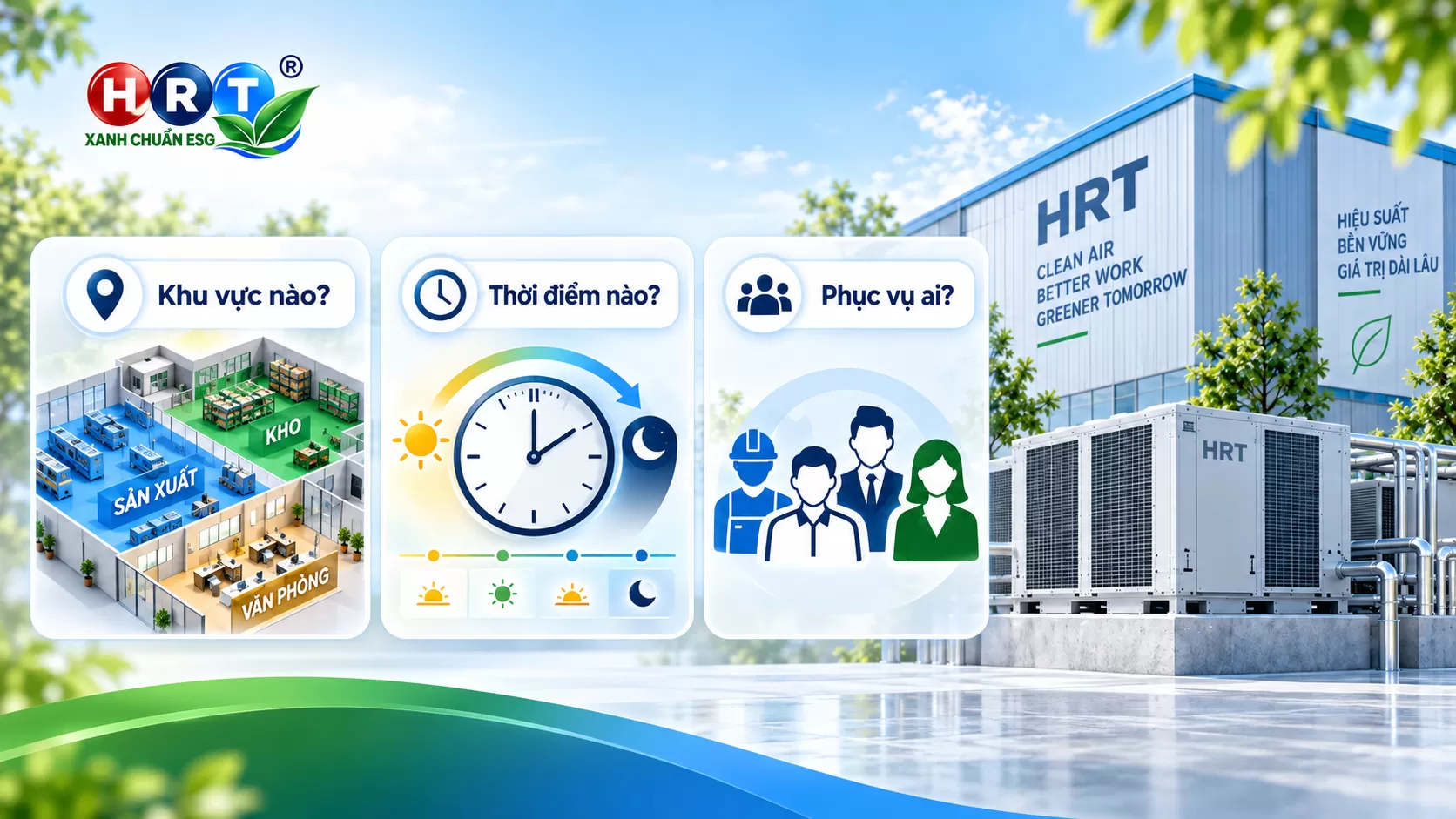
Turn “factory must be cool” requirement into a testable target
“Factory cooling” is not a clear enough design task.
I would like to request investment to indicate the area to be served, operating time, desired conditions and location for checking results. For areas with specific requirements on humidity or air quality, those requirements should also be noted from the beginning.
For example, instead of just saying “air conditioning for the production area”, specify:
What operating area, in what shift, with the use of machinery and how many people are expected?
At the same time, it is necessary to distinguish the immediate deployment from the future expansion needs. I don't want an unconfirmed projection to be the reason for adding capacity without explanation.
Output Need Latch: - The investment request enclosed with the site plan showing the service scope and conditions for evaluation of the system.
Partition according to operation needs, not only according to the partition wall
A zone should be considered according to thermal load characteristics and usage. The aggregation of different load areas into a single zone control system can make it difficult to maintain the desired conditions. Trane's Rooftop Partitioning System design document also notes this issue.
So I suggest to put the production schedule next to the site drawing when discussing the plan.
Which area runs all day? Which area operates only one shift? When a line is off, which part of the system still needs operation?
These are questions to answer before deciding whether to use a large server or multiple servers.
Decision 2: Is the Packaged Plan technically sound to meet the requirements?
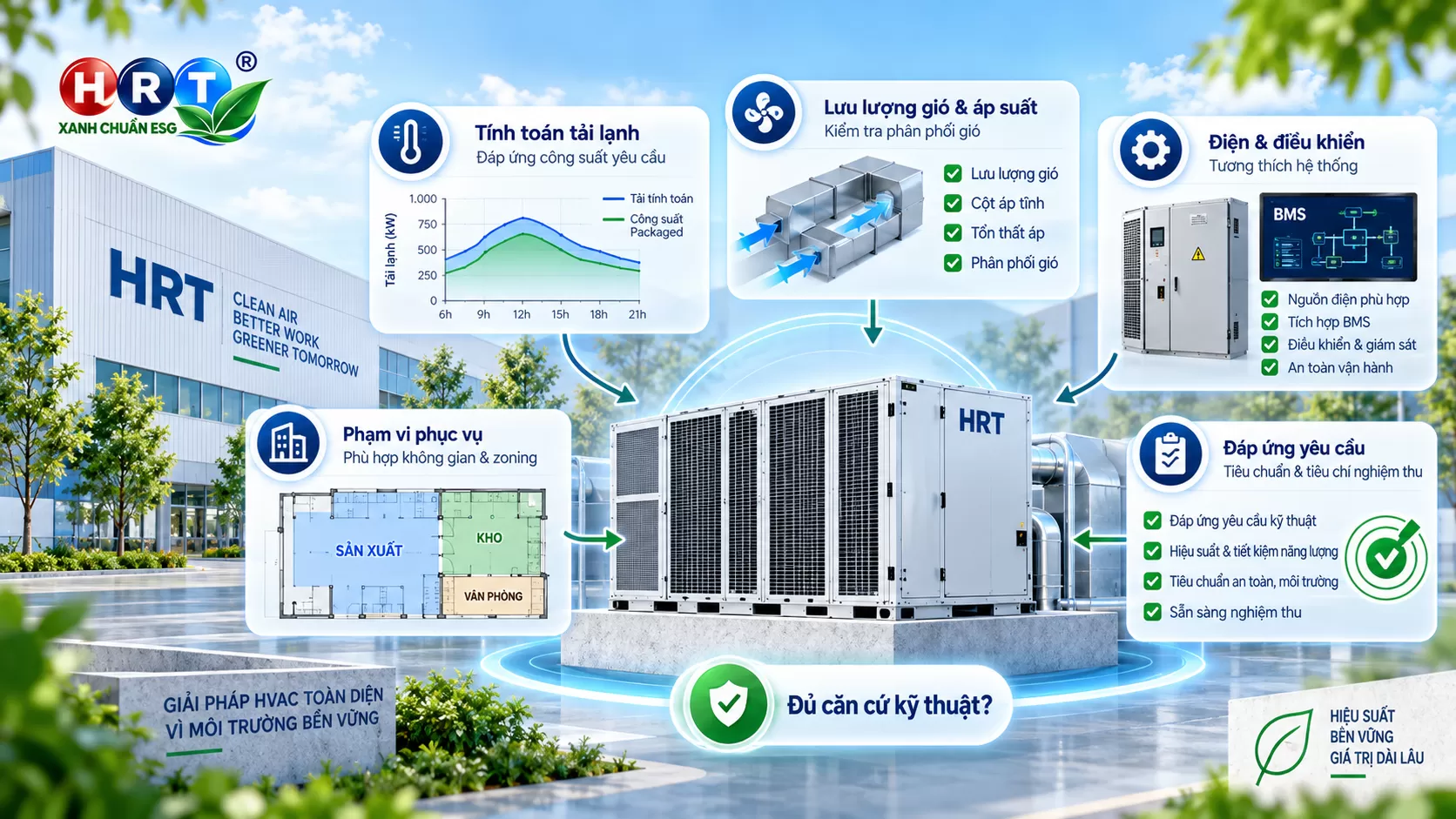
Do not select devices only from product line names
The name Packaged is not enough to define the entire system configuration. Daikin's official catalog in Vietnam has different Packaged models, including air-cooled and water-cooled products. Therefore, installation location, heat discharge method and auxiliary equipment must be confirmed according to the model.
In the proposal, I would like to see the equipment code, accompanying configuration and selection conditions, instead of a generic description line such as “large capacity industrial air conditioner".
For contents where the model has not been identified, it should be specified that it is at the preliminary option level. An incomplete choice should not be used to commit to operational efficiency.
Check cooling load before deciding to increase capacity
Floor area is only a part of the data. Heat sources from machines, people, roofs and walls, doors and operation conditions should all be considered when choosing air conditioning for the factory. Two spaces with the same area do not necessarily need the same cooling capacity.
I propose to request the technical unit to clearly state the data source, calculation assumptions and contingency in the plan.
What is the redundancy for? Increase people, add production equipment or expand service range? Each additional part should have a reason that can be explained.
With Packaged Rooftop, choosing too large a unit is not a safe solution in any case. Trane warns that selecting excess power can lead to temperature and humidity control issues. Trane
My principle: Lack of data adds data, not default solved by a bigger machine.
Compare the wind supply capacity with the wind road system
For air duct connection configuration, it is necessary to check the flow rate and pressure loss win capability of the fan at the actual option. Trane's Airfinity documentation determines the external static pressure for bringing air through both the supply air line and the return air line. Therefore, it is not recommended to evaluate the ability to distribute wind only from cooling capacity.
Selection profile should show the required flow rate, calculated pressure loss and suitable working point of the fan.
I also want the solution to a very specific question:
Which way will the processed air be delivered to the work area and returned to the equipment by which way?
Don't wait until you've installed the air outlet to find a way to add it to an area that isn't being properly serviced.
Clarification of outdoor air, dust and exhaust treatment responsibilities
Cooling should not be used as a substitute for emission source control. For local suction systems, it is necessary to determine the substance to be controlled, the generation process, operating conditions, compensation options and how to test efficiency. These are also the contents emphasized by HSE in the guidance on testing and validating the effectiveness of local suction systems.
When discussing Packaged option, I propose to clarify the boundary between air conditioning, outdoor wind supply and exhaust. What items are done by HVAC contractor? What items belong to technology line? Who is responsible for coordination?
If the works need to control humidity tightly, it must be separately checked the capacity of moisture treatment and control strategy. Specialized outdoor wind treatment systems, such as Trane's DOAS series, are designed to control dew point air supply at both full load and sectional load conditions; this capability should not be inferred solely from the cooling capacity of a conventional unit.
Output Need Latch: The plan dossier has grounds for selection of equipment, wind distribution solution and responsibilities boundary between the systems.
Decision 3: Is the budget buying a device or a system usable?

Bring quotations to the same range
I do not propose to compare two quotes just by the sum of money on the last page.
First of all, check that they meet the same investment requirements. Equipment, controls, wind lines, power supply, condensate drainage, transportation, lifting, commissioning and handover records should be clearly defined by the scope of each party.
A quote that does not state an item does not mean that the item is included.
Instead of arguing immediately about the discount, ask for clarification on what is included, what is excluded, and what conditions may arise.
Only negotiate prices after you understand that you are negotiating for the same scope of work.
Put operation cost into the same discussion
When evaluating budgets, I suggest considering three groups of costs:
- Cost of putting the system into use: Equipment, materials, installation, related infrastructure, inspection and handover.
- Operating Maintenance Cost: Electrical power, maintenance, consumables and components expected.
- Costs associated with interruptions: Business accounts to consider when an area has to reduce or shut down.
For power, ask for a schedule that specifies the running time, production schedule, operation mode, and equipment data used.
I don't consider a separate savings rate sufficient grounds for approval. It is necessary to know which option it is against, under what conditions and how it will be checked.
A tentative number with a clear assumption is more useful than an attractive promise but there is no way to reconcile.
Distinguish machine division from having redundancy
A two - machine option does not necessarily have a backup capability.
If both machines must be in operation to meet the requirements, stopping one machine will lose a part of service capacity. This is something that should be discussed right from the configuration selection.
I recommend that you determine the minimum level of activity to keep in case of an incident. Is it possible to suspend an area? Is it necessary to maintain the entire line or only protect one important stage?
Output Need Latch: Table comparing plans on the same scope, same operational assumptions and the same production retention requirements.
Decision 4: How can I not change the working environment to interrupt production?
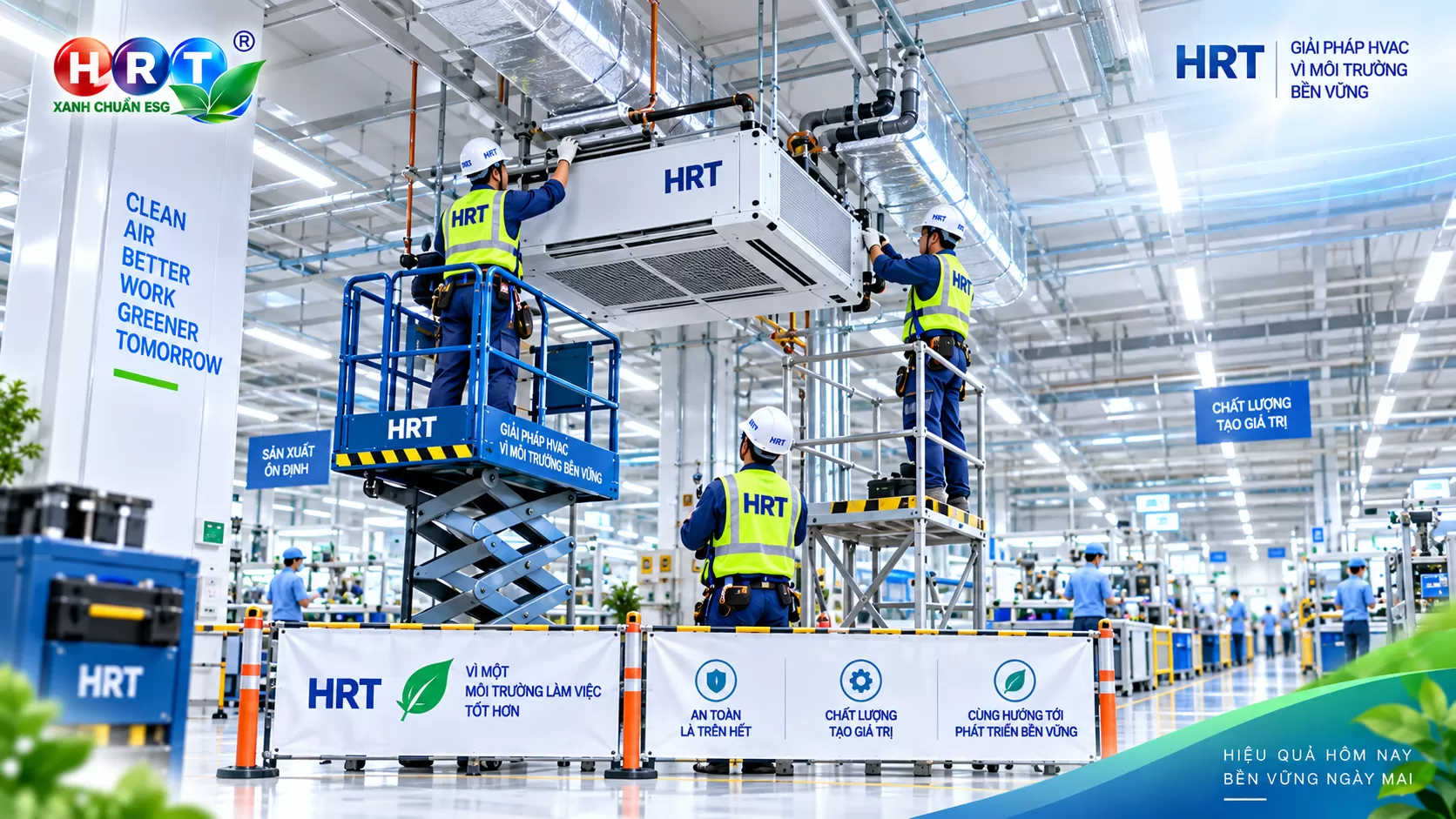
Approval of installation locations and approaches
I want equipment locations reviewed along transport routes, lifting work, maintenance accessibility and related systems.
A location only marked on the drawing is not a complete deployment plan. It is necessary to determine who checks the structural conditions, who prepares the power supply, who hands over the ground and when it can be constructed.
For the parts that are not grounded, specify what you need to accomplish before doing it.
Don't bring your equipment to the site before you begin dealing with pre-identified problems.
Mount the installation schedule with the landmark handover
For the factory in operation, I propose a construction plan specifying the work area, time allowed to intervene and conditions for handover to production.
Milestones should be described by specific results: complete installation, qualified power supply, qualified commissioning or ready to test with a plant representative.
At the same time, it is necessary to agree on the person who has the right to certify the change. When the field is different from the drawing, the adjustment must be recorded before becoming the work under construction.
Output Need Latch: The implementation plan is associated with the plant operation, has a coordination focal point and conditions for completion for each milestone.
Decision 5: What evidence do I have to confirm that the system is satisfactory?
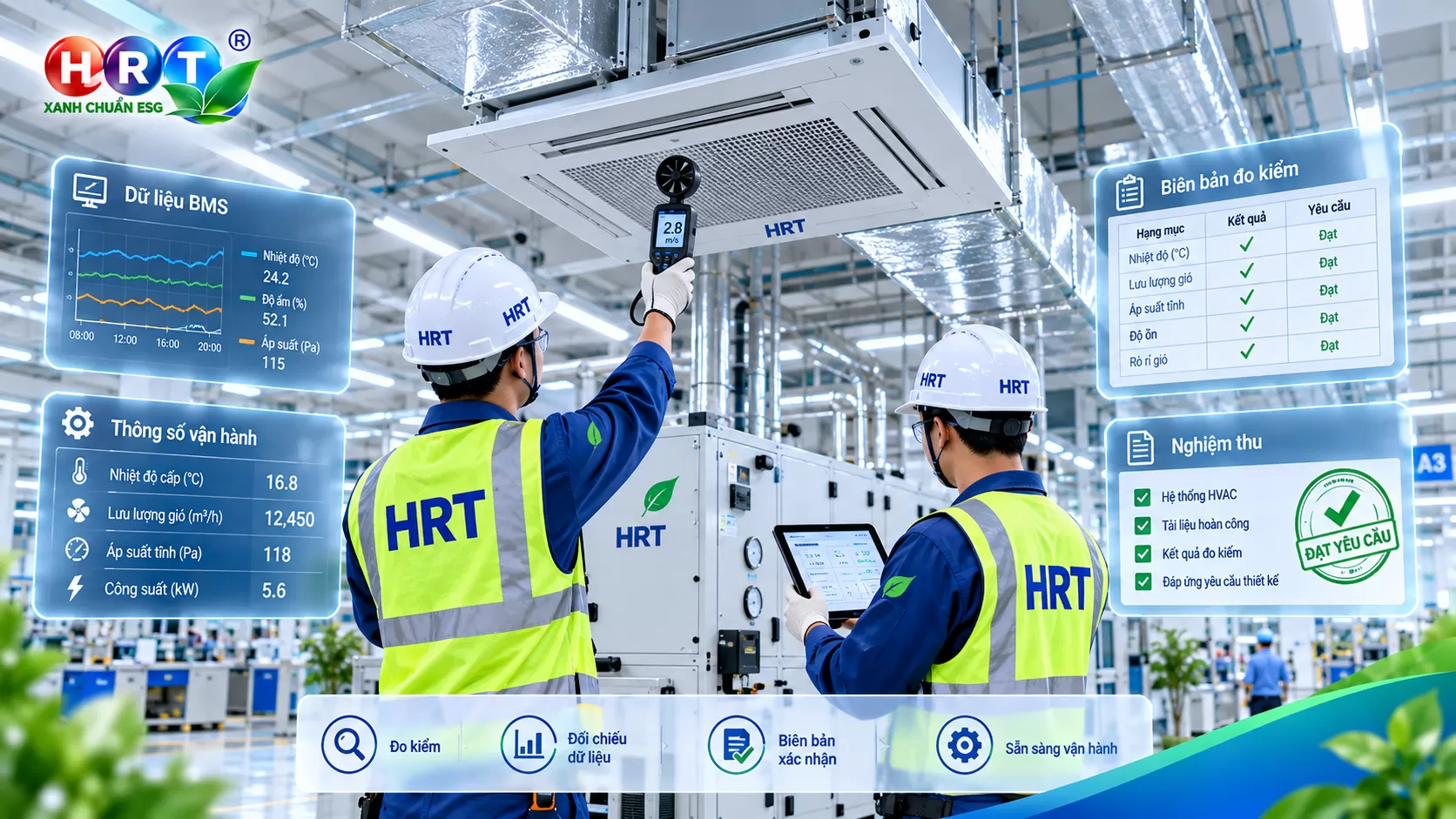
Unified way of acceptance testing before installation
I do not want to come to the handover date to appear the exchange: “Is that cool enough?”
The way of inspection should be agreed in advance, including the measuring position, measuring time, production status and evaluation criteria.
The following table is a proposal framework for project owner and contractor to complete according to design, equipment documents and scope of contract:
| Content to confirm | Evidence should require |
|---|---|
| Conditions in the service area | Measurement results at agreed points, together with the time and status of the workshop |
| Wind Distribution Capability | Record of measurement, adjustment and comparison with design requirements |
| Control function | Test results of modes, schedules, alerts and interlocking within the range |
| Installation Status | Inspection records of technical items according to the manufacturer's design and instructions |
| Operational reception capabilities | As-built drawings, user manuals, equipment documents and training records |
It is not recommended to fill in the acceptance testing thresholds by feeling. Each value should be grounded and agreed with the professional responsible party.
Specify the limit of commissioning results
If commissioning when the line is not fully operational, it should be recorded as such.
A result under low load conditions should not be expressed as a commitment to have demonstrated full serviceability at all conditions.
The way I propose to handle it is to clearly separate the part that has been checked, the part that cannot be checked and the plan for additional confirmation. What is open must have a person in charge and the expected deadline.
Acceptance testing is clearly not trying to conclude everything is done, but confirming exactly which part has been reached.
Keep data after handover for further evaluation
In the early stages of use, I propose to maintain a shift log, recording running hours, power, conditions in the service area and feedback from the production department.
When comparing between periods, it is necessary to set the data in the corresponding context. A month of decreased production hours cannot be used exclusively to prove that the system has saved more electricity.
Output Need Latch: Acceptance records have data, lists exist that have a handler and an initial set of information to track the operation.
Example assumption: One factory premises, two investment directions to compare
Suppose your business has a two - shift assembly line, a one - shift packaging line, and a discharge line with a variable history.
Before I decide to buy the equipment, I propose asking for two alternatives to compare.
Option one. organize a wide-range service system. The profile needs to clarify how the control when only part of the workshop works.
Second option Service scope is divided by region and production schedule. Records should clarify the number of equipment, individual control capabilities, deployment costs and corresponding maintenance work.
It is not recommended to conclude that the latter option is always better. Let's put both on the same requirements for use conditions, operation schedule and budget.
The lesson here is not “efficient division". The lesson is: Ask the contractor to demonstrate why the organization of the system is consistent with how the plant actually works.
CEO's view Đoàn Văn Hoàng: HVAC investment must be clear from requirements to responsibilities
As a technician and HRT operator, I want each proposal to answer three questions: Why this option? How will the results be confirmed? Who will follow the work until it is completed?
Understanding Correct: Do not protect a solution before understanding the work
I don't want Packaged to be the default answer just because the team is used to deploying.
Survey, verify requirements and compare actual conditions. When a plan is not sufficient grounds, it should be clearly stated the part to be further checked.
Understanding correctly is also about being willing to adjust your choices when data suggests a different direction is more appropriate.
Clear: Turn promises into collable content
Clear scope of service, configuration, expenditure, progress and completion criteria.
I want the customer to know what he or she is getting; the engineering team knows what to hand over; the manager knows what is awaiting decision.
Do not let phrases such as “package”, “synchronous” or “save” stand alone without explanation.
Dedication: According to the time when the user receives the system
Dedicated to not only being present on commissioning day.
It also guides the operator, explaining limitations of use, handling the work that remains and responding clearly when problems arise within the scope of responsibility.
A well - handed system must come with a team that knows how to use it and a mechanism for coordination when support is needed.
Frequently Asked Questions When Investing in Packaged Air Conditioner Factory
What should you prepare before requesting a quote?
The site plan, cooling range, production schedule, heat generation equipment list and requirements should be prepared. The undocumented part should be recorded for addition through survey, instead of letting each contractor make a different assumption.
How can I assess the reliability of my electricity savings proposal?
Ask for a comparison, runtime assumptions, load conditions, and validation after deployment. I prefer a proposal that explains the calculation methodology and the conclusion limit to an unsubstantiated rate of savings.
Should I invest in stages?
It is possible to include the divergence plan in comparison. However, it is necessary to determine the scope of the initial stage, the need for expansion and the prepared infrastructure in advance. It is not recommended to use the word “expansion after” to ignore the coordination requirements that need to be decided at present.
Correct latching required for well-founded Packaged air conditioning investment
An investment decision should not end with a firm and a consensus on the price.
In my approach, you need to have a scope of service, technical bases, budget, implementation plan and proof of acceptance testing.
When these five points are clear, the project owner and contractor can discuss them on the same basis, rather than each understanding different outcomes.
HRT provides survey, consulting, design, supply, construction and maintenance services of HVAC, including Packaged solutions according to the appropriate conditions of the project. HRT
Businesses are preparing to invest in factory conditioning, start by clarifying requirements with HRT: where to serve, what to achieve and how to check the results.
HRT – True Understanding – Clear – Dedication.
Green Breath for All Buildings.
Source: Publisher’s English edition · Vietnamese original on doanvanhoang.com