
Investing in HVAC and logistics warehouses: 6 things to close from the beginning
Machine-translated from Vietnamese. Read the original in Vietnamese

One option HVAC cho kho logistics It is necessary to clarify the service conditions and how to verify the effectiveness. CEO Đoàn Văn Hoàng – HRT proposed 6 key tasks for enterprises to control investment, acceptance testing and changes in the mining process.
HVAC logistics warehouse investment: 6 things to close from the beginning
One option HVAC kho logistics The project owner needs to see three things clearly: what the system must meet, how many resources it needs to maintain and who is responsible for when the operation results are not achieved.
Model, capacity and unit price are necessary information. However, to decide on investment, businesses also need to know how it is suitable for the type of storage goods, how to organize shifts and development plans of warehouses.
For me, a good profile helps managers make decisions.
I want each HVAC investment to be tied to a clear operational requirement, a specific verifiable way and a person responsible.
From that perspective, before approving the plan and budget, I suggest that the project owner and the project team close the following six things.
Task 1: Unify how a satisfactory warehouse operation
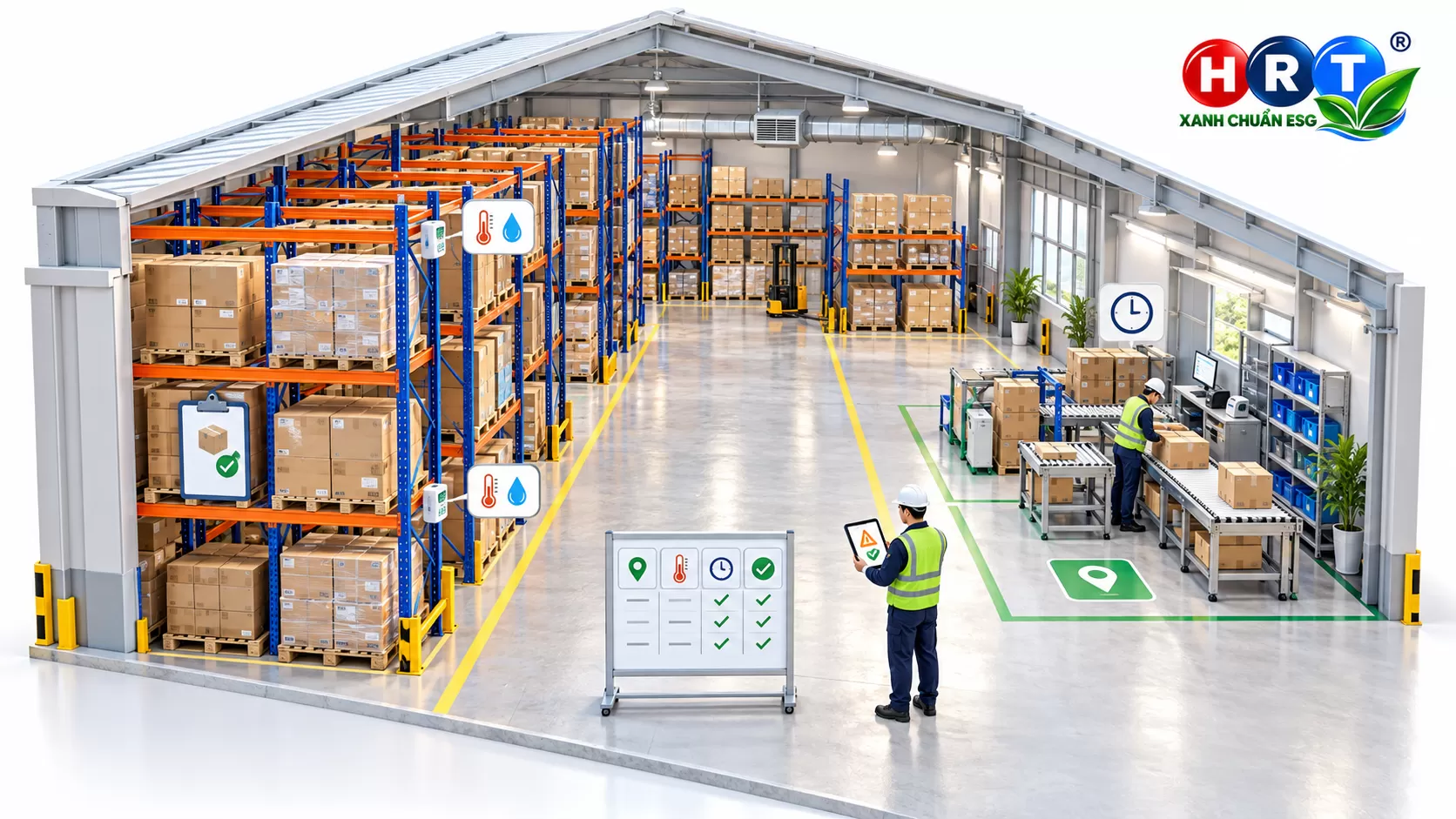
Convert desires into testable conditions
Requirements such as “warehouses must be cool”, “good storage" or “systems must save electricity” need to be specified before design.
I suggest we start by talking to the person who directly manages the goods and who organizes the warehouse operation.
Need clarification:
-
Which group of goods has its own requirements for temperature and humidity?
-
Is the request from a product document, shipment owner or service agreement?
-
What locations need to be controlled during storage?
-
What shifts does the staff's work area need to be served?
-
When the conditions exceed the agreed limit, who receives and handles?
If the storage data is not sufficient, a verifier should be assigned before finalizing the design norm. Choosing a temperature level by yourself with habit can cause the project team to solve the wrong need from the beginning.
Clearly define the location and time to respond
An operation request needs to be spatially specific.
If goods are stored on multiple shelves, the control plan must consider where they should be protected. If personnel are concentrated in the order completion area, it is necessary to determine the service scope and working time of that area.
I suggest each request is described by four components:
Area to be controlled → Targets to be met → Time to apply → How to confirm the result.
This helps project owners, warehouse managers and design units understand the same goal.
Profile to be latched: - The table of environmental requirements by region, which is used as a basis for determining the norms and a key point for certification.
Task 2: Incorporating the actual mining schedule into the design problem

Describe the operating status of the repository
When evaluating a plan Logistics warehouse air conditionerI want the tech team to see how the warehouse works all day long.
The information to be collected should show different states:
-
Normal operation case: What areas operate and how are they used?
-
Peak delivery time frame: How many doors are used, what is the opening time and how is the flow of goods?
-
Partial Mining Time: Which areas still need to maintain storage conditions?
-
Expected period of increase in operation: Do you plan to add shifts, increase equipment or expand your order processing area?
With an active repository, it is recommended to use forwarding logs, personnel calendars, and existing equipment data to build representative scenarios.
For new inventories, unconfirmed information should be written as design assumptions, with the person in charge checking it again.
Clarify the conditions that come with responsiveness
I ask the project team to describe the system's serviceability in a way that is specific enough to test:
The system serves the area, in the state of exploitation, with environmental requirements and the input conditions.
For example, if the plan is built with a certain delivery schedule, records should recognize that assumption. When the business changes the schedule or the way to use the warehouse door, the operation has grounds to request re-evaluation.
Similarly, the need for expansion should be separated into the current implementation and the preparation for the future. It is necessary to specify where the scalability lies, what items must be added and how it affects the existing activity.
Profile to be latched: Scripting sets exploits, design assumption lists and corresponding service scope.
Task 3: Compare the above plan with the same requirements and scope of work
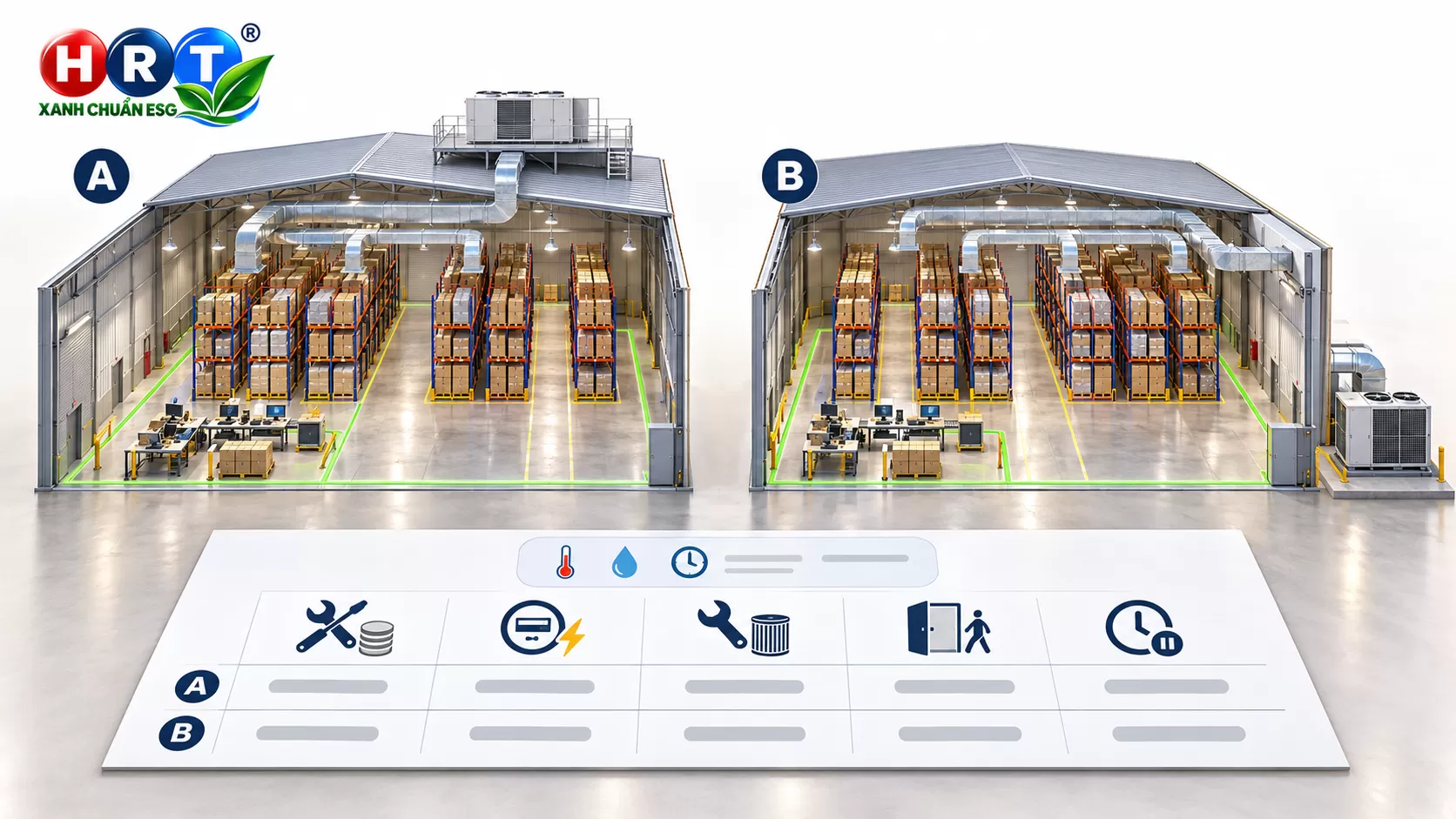
Ask each alternative to explain how it responds
For comparison of proposals HVAC kho logistics, project owner needs to provide the same set of input requirements.
If one plan serves the entire storage area while another only handles the working area, the price difference does not reflect which plan is more effective.
I suggest each proposal clarify:
-
Scope of service and conditions to be committed.
-
How to handle each environmental requirement.
-
Ability to operate by shift or by area.
-
Conditions required for installation and maintenance.
-
How to maintain operation when a part of the system has to stop.
The device name should also be used correctly. Rooftop is a configuration belonging to the packaged device group; when comparing, it is necessary to specify the configuration, layout position and function of each option.
With ventilation options for an area, the design team needs to explain its ability to meet the selected outdoor conditions. For areas with humidity requirements, records need to show how to control and verify this indicator separately.
Evaluate the resources needed to maintain the system
I want a cost comparison to help businesses see the process of use after installation.
Besides equipment and construction, it is necessary to consider the expected power, maintenance work, replacement supplies, accessibility of equipment and the effect of repair stop time.
In particular, projected power figures must be accompanied by calculation assumptions.
The two options should be evaluated with the same mining time, environmental requirements and respective loading conditions. If the calculation is different, it should be explained before using the results for selection.
Each claim about efficiency must answer: what conditions are effective and how are they tested.
Profile to be latched: The comparison table of the above options is required, clearly showing the scope of work, assumptions and costs to be considered.
Task 4: Fastening the system layout with the way of organizing the warehouse
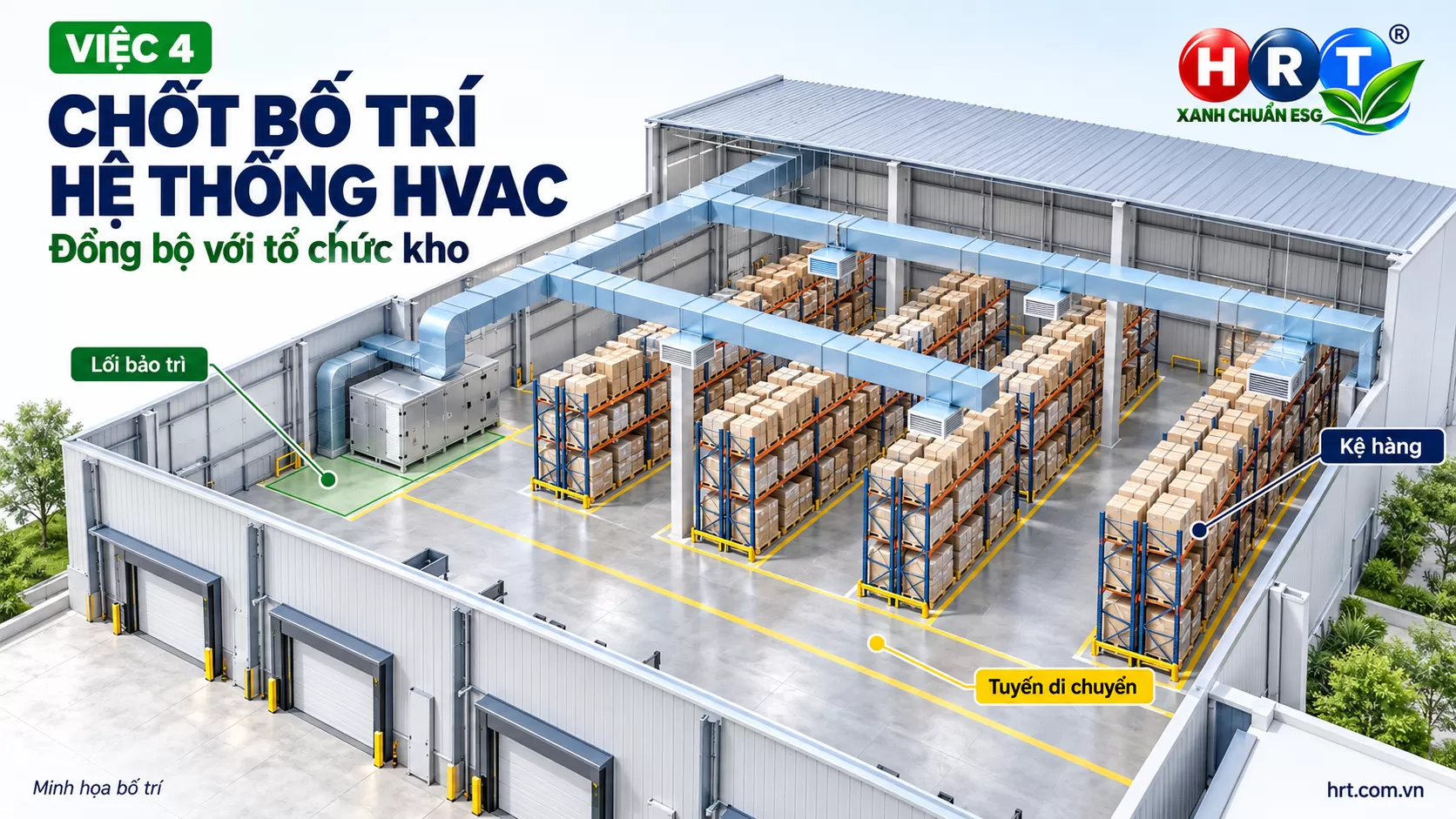
Put HVAC drawing on the same mining ground
Before approving the drawings, I suggest holding a review session with representatives of warehouse management, design unit and parties involved in the site.
The working session should use the same version of shelf layout, manipulation area, transport route and equipment location.
The project team needs to go through specific questions one by one:
Where is the air delivered? How are the goods positions to be controlled considered? When the shelves are fully installed and the goods are sorted according to the plan, is there any point to check again? How does the maintenance access the equipment?
I want these issues handled on the drawings before the construction team deploys.
If there is still an area where the usage is not agreed upon, it should be marked and handed over to the latcher. An unconfirmed assumption should not silently become a construction option.
Clearly define responsibilities and implementation conditions
A technical plan should have an implementation plan in accordance with the operation schedule of the enterprise.
With the warehouse in operation, it is necessary to determine the area of handover, route of material transportation, time allowed for construction and work to coordinate with the operation department.
I propose to establish clear responsibilities for the intersecting parts:
-
Who prepares the site and installation location?
-
Who confirms the electrical conditions and connection points?
-
Who coordinates the items related to structures, roofs and other systems?
-
Who organizes the handover of the area after completion?
-
Who confirms the system can put into operation?
Each job needs clues and milestones to complete. This helps the overall progress stick to the actual conditions of the warehouse.
Profile to be latched: - The agreed coordination drawing, the responsibility assignment table and the implementation plan according to each area.
Task 5: Unify the acceptance testing method as soon as approving the plan
Developing verification criteria before construction
I suggest that the project owner request acceptance testing plan from the solution unification stage.
The plan should answer the following issues:
Measure what, where to measure, under what conditions, how long to follow up and what grounds to confirm the achievement.
For the part on checking equipment and systems, it is necessary to determine the parameters, functions and contents of adjustment under the scope of work.
For the environment in the warehouse, it is necessary to select the measuring point according to the area and location to be protected. The result must be accompanied with information on the exploitation status at the time of inspection.
I want the reader to understand how the warehouse is storing goods, what areas are being used, how the forwarder doors are being used and whether or not those conditions fit into the trial plan.
Specify the verified range
A measurement result is meaningful when tied to the conditions that produced it.
Suppose the warehouse is being inspected at a time of low activity, while the most important requirement is its ability to meet at peak delivery hours. Then the project team needs to determine which parts have been demonstrated and which must be further inspected.
If the progress of putting warehouses into use has not yet allowed for a full assessment, the handover dossier should clearly state:
-
The contents have been completed and have results.
-
The contents are not eligible for verification.
-
Conditions for carrying out the additional assessment.
-
Followers and time of processing.
This record helps the parties to continue working on the same basis, while avoiding differing understandings of the scope of acceptance testing.
Profile to be latched: Verification plan, acceptance criteria and mechanism for monitoring open contents.
Task 6: Handover of data and processing rules when warehouse changes
Helps the operator know what to keep track of
After the handover, the warehouse manager needs to be able to use the information of the system to make decisions.
I suggest the operation profile clarify:
-
The schedule is consistent for each region.
-
The parameters allowed to be adjusted and the person entitled to adjust.
-
The data to track according to the target of the warehouse.
-
How to receive warnings and support.
-
Maintenance work and the conditions to be prepared.
Initial data should also be saved as a benchmark for later tests.
If the business monitors electricity, it is recommended to record the same running time and utilization status. When comparing periods, both weather conditions and usage should be considered.
A period with lower power should be explained by data before concluding it is a system optimal result.
Reevaluate when archive usage changes
I suggest that businesses include HVAC review in their site change and warehouse operation processes.
Changes that need to be notified to the technical responsible person include:
-
Add shelves or change the stacking height.
-
Store goods in groups with other storage requirements.
-
Overtime or extended work hours.
-
Additional equipment, conveyors or order processing areas.
-
Change the way doors and delivery areas are used.
For example, when an enterprise converts a portion of its storage area into a multi-shift work packaging area, it is necessary to review the service requirements of that area before putting it into use according to the new function.
The evaluation form can be brief: what changes, which areas of the site have been affected, what contents need to be checked, and who confirms the results.
Profile to be latched: Initial data set, operation instruction and assessment process when mining conditions change.
Pre-approval review table of HVAC warehouse logistics
Project owner can use the table below to end the meeting with specific tasks.
| Work to close | Results to have | Contacts to join |
|---|---|---|
| Operation Requirements | Table of indicators by region and determination grounds | Project owner, warehouse manager, cargo department |
| Scripts exploited | Schedule of activities, representative status and design assumptions | Warehouse management, design unit |
| Investment Plan | Comparison table of same requirements, scope and basis of cost calculation | Project owner, engineering, procurement |
| Deployment conditions | Coordination drawings, responsibilities and progress by area | Warehouse management, design and construction units |
| Verification method | Testing plan and acceptance criteria | Project owner, operation, supervisor, contractor |
| Post-Delivery Management | Initial data, guidelines and how to handle changes | Operation unit, maintenance department, contractor |
If an item is incomplete, specify the missing information, who added it, and when it will be processed before closing the relevant work.
CEO's view Đoàn Văn Hoàng: HVAC investment needs to be associated with responsibility for results

What I want to see in a plan HVAC kho logistics is the ability to explain each decision.
Why does the site need that treatment? What schedule is the system designed for? What assumptions are the expected costs based on? What evidence will the parties use to confirm the results when handing over?
Spirituality True – Clear – Dedicated HRT needs to be expressed by specific tasks:
-
Understand Correctly: Verify storage needs and operational methods before proposing options.
-
Clear: Unified scope, conditions to meet, responsibility and way of verification.
-
Dedicated: Monitor open content, guide operations and assist with evaluation when needs change.
Before the next approval meeting, I asked the project owner to have the project team prepare all six groups of documents.
A clear investment decision from the beginning will create the basis for design, construction and operation towards a agreed result.
Enterprises who are preparing to invest or renovate HVAC for logistics warehouses can send HRT shelf layout, cargo requirements, operation schedule and existing system data to clarify the problem.
HRT – Green Breath for All Buildings.
Website: hrt.com.vn
Source: Publisher’s English edition · Vietnamese original on doanvanhoang.com