
Packaged or Rooftop: 6 HVAC investment decisions | HRT
Machine-translated from Vietnamese. Read the original in Vietnamese
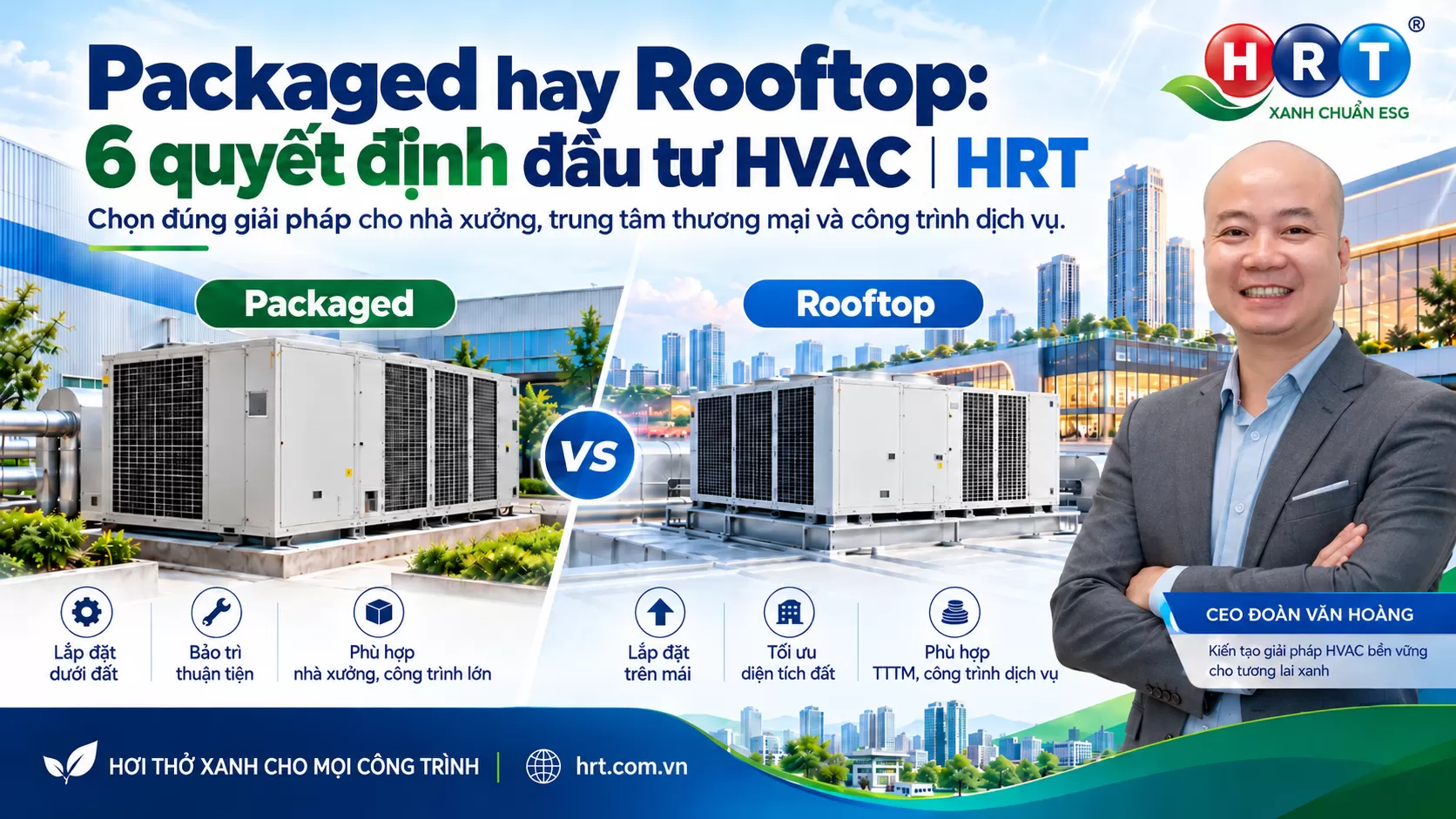
Choice of Packaged or Rooftop not merely comparing two air conditioner lines. From a perspective CEO Đoàn Văn Hoàng – HRTInvestment decisions must start with the need for use, the conditions of the building and the verifiable operation results.
Packaged or Rooftop: 6 HVAC investment decisions | HRT
When a business invests in air conditioning systems for factories, shopping malls or service works, the question is often asked: Should you use Packaged or Rooftop for the best investment?
With more than 20 years of operation in the field of Heat – Cold – HVAC, I think that the question to be solved first is not which equipment is better, but which option is really suitable for the project.
A large capacity device does not necessarily handle thermal load well in each area. A roof-mounted option can save space inside but increases requirements for structure, waterproofing and maintenance.
Similarly, a low quotation does not prove the total cost of investment and operation will be low.
At HRT, I want every decision about equipment selection to answer three questions: Is the system responsive to demand? Is it deployable securely? And how is operational efficiency validated?
Properly Understand Packaged and Rooftop Before Choosing
Should not turn two terms into two opposing alternatives
In HVAC, Packaged describes a device that has multiple key components of an air conditioning system integrated in a single assembly.
Rooftop Unit (RTU) is usually the whole assembly equipment designed for rooftop installation, connected to air distribution system according to manufacturer's configuration.
This means that a device can simultaneously be called Packaged Rooftop Unit.
Therefore, to compare Packaged and Rooftop in a valid way, it is necessary to clearly determine which specific options are being compared.
For example:
-
Option A: Packaged equipment is located in the off-site technical area.
-
Option B: Packaged Rooftop equipment on the roof.
Both can use direct compression cooling (DX) principle, but the installation conditions, ductwork, structural requirements and construction scope will be different.
I do not recommend choosing only from the product name on the catalog.
Actions to be taken: Request the contractor to specify the model, configuration, installation location and scope of the system corresponding to each offer.
Decision 1: How does the building really need to control air conditions?
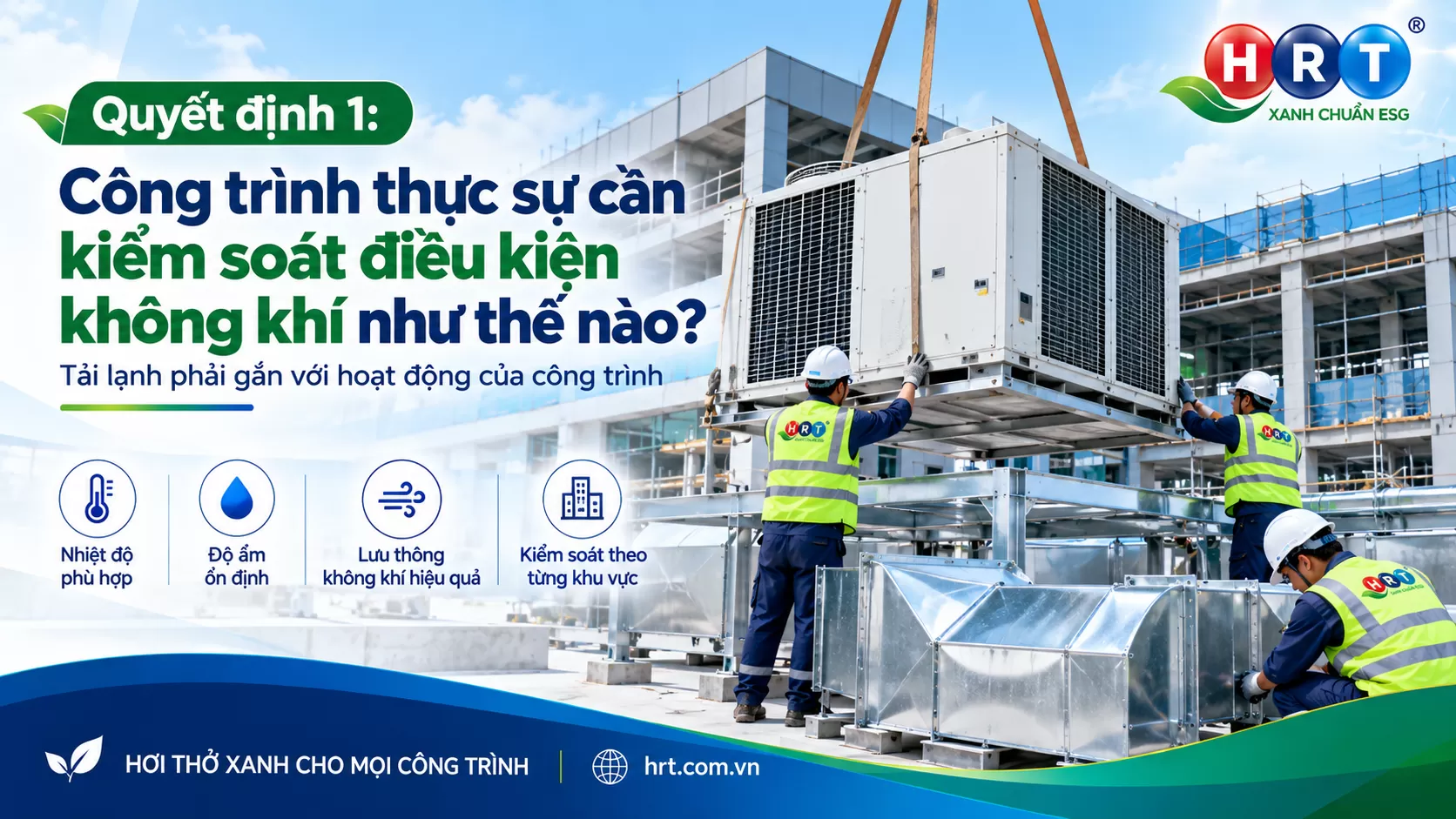
Cooling load must be associated with the operation of the building
Before considering Packaged or Rooftop, I want the technical team to clarify the characteristics of each area's use.
For the workshop, cooling load can vary significantly according to output, machinery and number of labor.
For the mall, crowded area and small area can have different loading mode.
For logistics warehouses, opening and closing doors, delivery and air exchange with the outside can greatly affect temperature and humidity conditions.
Factors to be evaluated include:
-
Temperature and humidity requirements of each area.
-
Heat from equipment, people and lighting.
-
Thermal load through roof,wall and door.
-
The amount of outdoor air to supply.
-
Operating time and shift load variations.
-
Requires independent control partition.
If the building has multiple operating areas not simultaneously, choosing a large device to serve the entire space can reduce the controllability and cause waste when operating at low load.
Conversely, if the building has a relatively homogeneous space and stable history, the whole-cluster conditioning option combined with air duct system may be worth considering.
Not to be confused cooling capacity with humidity control
For the hot and humid climate in Vietnam, this is a matter of particular concern to me.
The device with sufficient total cooling capacity does not necessarily meet the humidity in the room.
When evaluating the selection, it is necessary to consider simultaneously the current load, hidden load, outdoor air volume, supply air temperature and operational capability at actual load levels.
If the area has strict humidity requirements, the contractor must demonstrate proper disposal options instead of just increasing the nominal cooling capacity.
Points to latch: Design documentation must include the load calculation results and target air conditions for each area before deciding on the number, capacity and configuration of equipment.
Decision 2: Where to place equipment to optimize the premises without creating additional risks?

Place Packaged at technical zone: Need to check overall feasibility
With the appropriate design of equipment outside the home or in the technical area, benefits can come from the ability to organize access and maintenance.
However, I would like to test from the outset the heat exchanger and air distribution capacity of the device.
A cluster of machines that is medium in size but not at the clearance distance required by the manufacturer cannot be considered a satisfactory solution.
Technical space must also be sufficient to open the servicing door, remove filters, clean heat exchangers and replace necessary parts.
With air-cooled condenser, the installation location must ensure the appropriate cooling wind intake and discharge conditions, avoiding hot air circulation.
Putting Rooftop on the roof: Structure must be confirmed before approval
A worth considering advantage of Rooftop is the release of the area inside the building.
But that benefit is only really valuable when the relevant technical conditions have been tested.
I ask for clarification:
-
Load capacity of roof and support structure.
-
Operation load, centralized load and impacts should be considered according to the structural design.
-
The suitability of machine pedestal, anti-vibration and alignment position.
-
Position air duct through roof and waterproofing solution.
-
- Plans for lifting and transporting equipment.
-
Safe access to servicing.
Especially for an operating factory, the equipment lifting to the roof should be evaluated with below production conditions.
Points to latch: Do not sign Rooftop plan based on the equipment layout drawings. There must be confirmation of the structure and the corresponding construction plan.
Decision 3: Does the air duct system deliver enough cold energy to the right place?
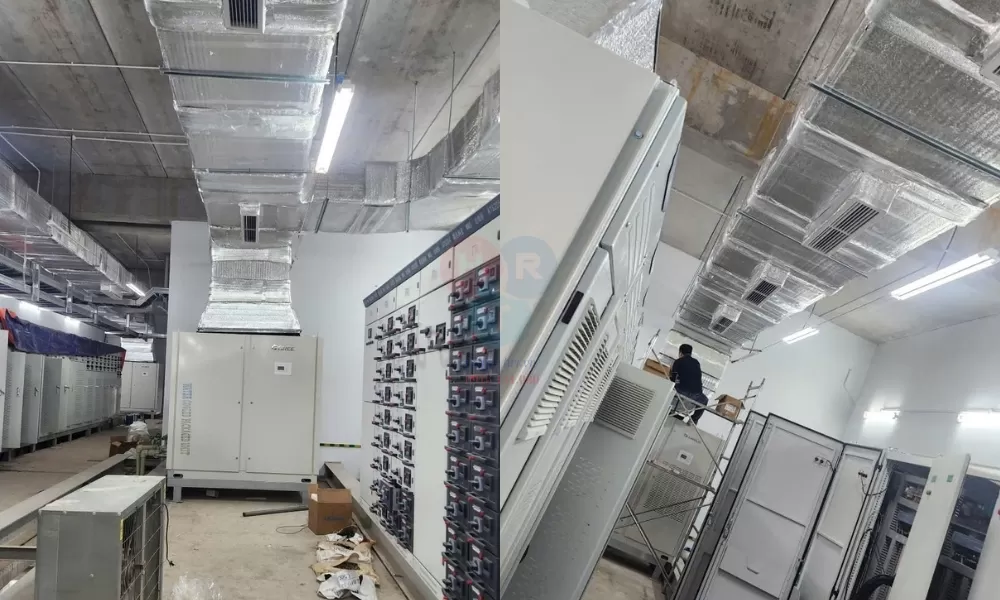
Don't pick the engine first and then navigate the air duct.
I asked a question during my HVAC evaluation: If the unit is full, why are some areas still not reaching the required temperature?
The answer may lie in the ability to distribute wind.
With a Packaged or Rooftop system using air duct, the entire network should be assessed from the outlet of the unit to the air outlets and return lines.
Important parameters include:
-
Airflow rate design, unit m3/h.
-
External static pressure (ESP), Pa unit.
-
Pressure drop on pipes, fittings and terminals.
-
Losses through filters are within the calculation range.
-
Wind speed and noise level.
-
Ability to balance flow rate between branches.
-
Requires insulation, condensation resistance and airtightness of air duct.
If the fan pressure is not consistent with the total pressure loss of the system, increasing cooling capacity does not solve the cause of lack of wind.
Evaluate both wind return and outdoor air
Some projects have paid much attention to wind supply lines but have not properly evaluated the wind return line.
Inappropriate return lines can affect flow rate, pressure and heat exchange efficiency at the indoor unit.
In addition, the outdoor air level is a requirement that should be independently designed according to the ventilation needs of the building, it is impossible to default to air conditioning equipment will respond by itself.
With Rooftop with wind mixer or economizer function, these features must be confirmed according to the actual model and configuration.
Points to latch: Before ordering equipment, there must be a drawing of the wind line and calculation of external static pressure at the design flow rate to compare with the fan characteristics of the selected model.
Decision 4: Is performance consistent with the actual operation schedule?
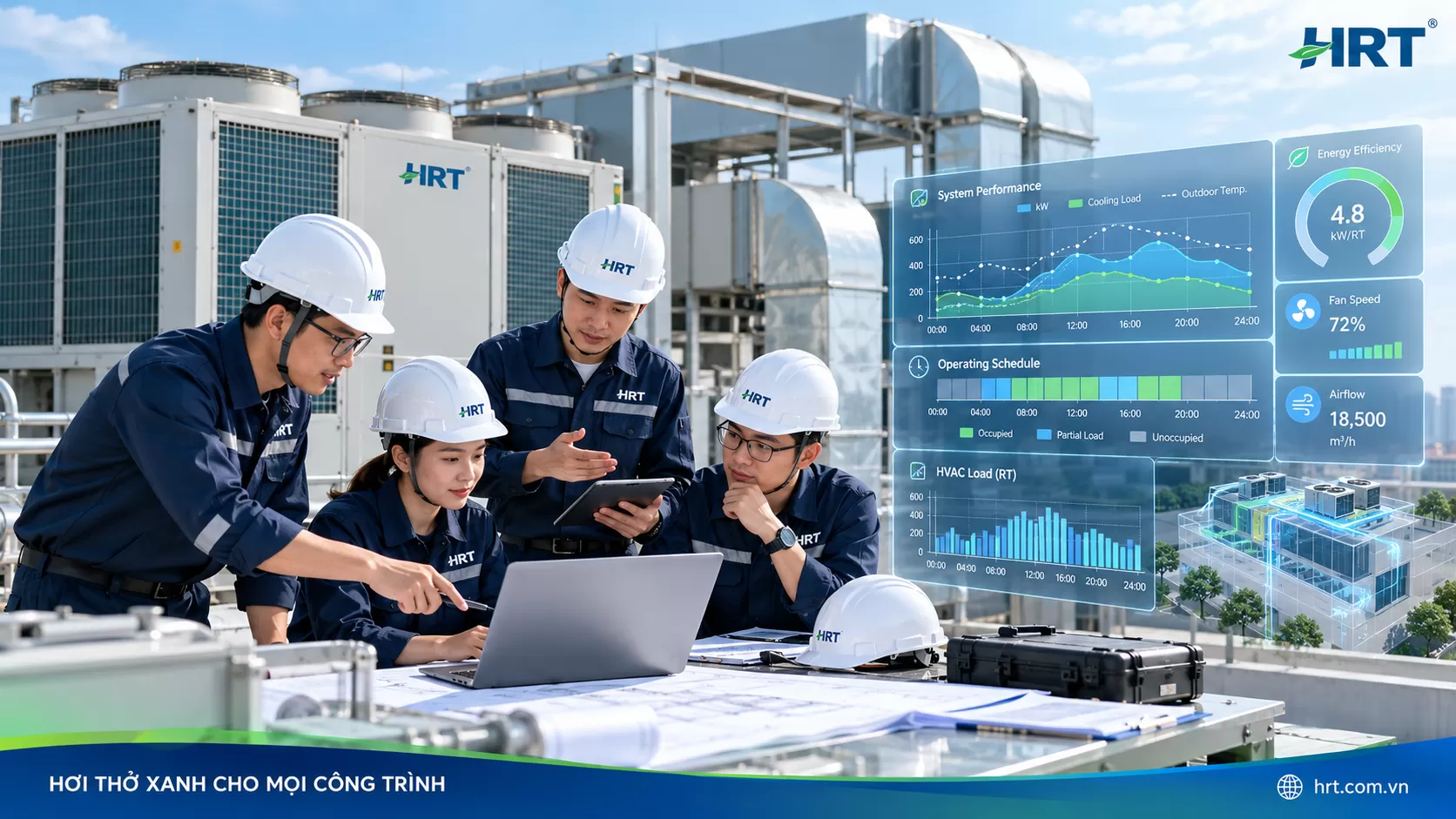
Do not use a performance parameter to conclude the total power
When considering the two HVAC options, I didn't want the project team to just put cooling capacity and nominal power capacity on the table to choose from.
Actual conditions are more complicated.
A factory can operate three shifts. A showroom can be crowded at some time frames but the load is drastically reduced at the rest of the time.
Therefore, it is necessary to assess the responsiveness at different load levels.
Depending on the device, factors to consider may include:
-
EER or seasonal performance index such as IEER when appropriate data and the same method of assessment are available.
-
Compressor power hierarchy capability.
-
Fan speed control.
-
Power supply fan and return fan, if any.
-
History operation mode.
-
Regional control function.
-
Ability to integrate BMS when the project requires.
Many Rooftop devices now have multi-zone or variable power control options. Therefore, it is not recommended to default Rooftop to serve only one zone or operate only at fixed power.
No default economizer always generates power savings
Some Rooftops support the use of outdoor air to reduce mechanical cooling loads under suitable conditions.
But actual efficiency also depends on temperature, humidity, external air quality and control strategy.
In hot and humid areas, improperly increasing outdoor wind volume can increase moisture load.
Therefore, both air condition and operational logic should be evaluated rather than just confirming the device has an economizer function.
Points to latch: Comparison of power should be based on the same assumptions about load, operation time, ventilation requirements and range of equipment power consumption.
Decision 5: Total investment cost has reflected fully the work to be deployed yet?
Machine purchase price is not the whole HVAC budget
One of the risks when choosing Packaged or Rooftop is evaluating options from two quotes that do not have the same range.
For example, one option already includes a support, windway and controls, while the other option quotes equipment.
Without standardizing the range, conclusions about costs are easily falsified.
I want the budget divided into three groups.
Group 1 – Initial investment costs
Including equipment, transportation, installation, air duct system, electrical, control, supporting structures and related construction items.
With Rooftop, it is necessary to clarify the responsibility for crane mounting, roof opening, waterproofing and finish restoration.
Group 2 – Operational costs
Including electricity, periodic maintenance, filter replacement, cleaning, repair and necessary supplies.
The operation value should be considered during the expected lifetime, rather than only during the warranty period.
Group 3 – Costs incurred due to interruption
For operating production or business facilities, cost of line stoppages, restricted operation areas or overtime construction should also be taken into account when significant.
A low - cost option that requires a long production shutdown is not economically optimal.
Must agree on the range before comparing prices
Before approving the investment, I request that the plans be compared on the same basis of:
-
Conditions of use and responsiveness.
-
Expected operation time.
-
Scope of equipment and supplies.
-
Scope of construction and auxiliary construction.
-
Testing, acceptance testing.
-
Warranty and maintenance conditions.
Points to latch: Only compare budgets after clarifying items included, not included and responsibilities of each party.
Decision 6: acceptance testing by what parameters to protect the investment efficiency?
Just because the machine is running does not mean that the system has reached
I always consider acceptance testing as part of the investment decision, not just the work that appears at the end of the project.
If acceptance testing criteria are not clearly defined at the beginning, it will be difficult for the construction team to fully demonstrate the effectiveness of the system after installation.
For Packaged and Rooftop, the inspection should be carried out according to the scope of design, manufacturer instructions and approved criteria.
Items may include:
-
Electrical, protective and interlock safety test.
-
Confirm the device's operating parameters.
-
Measure airflow rate at required positions.
-
Measure and balance the wind system (TAB).
-
Test temperature and humidity under acceptance testing conditions.
-
Check condensate drainage and leakage hazardous sites.
-
Check the control sequence and fault status.
-
Check for connections to the BMS, if any.
The measured values must be compared with the corresponding acceptance criteria, not only recording that the device is working properly.
Commissioning must generate operational proof
Commissioning helps verify the system is installed and functioning according to project requirements.
The point I want to emphasize is that we need to examine not just individual devices but how the components work together.
For example, when switching operation mode, do damper and fan react in control sequence?
When the filter increases pressure loss, will the system still meet the required flow rate within the design range?
When an error occurs, does the warning signal and protection mechanism perform its function correctly?
These are real questions that need to be turned into test subjects.
Points to latch: Acceptance testing must have a measuring record, functional test results and handover documents sufficient for the operation team to take over the system.
Three situations help guide the choice of Packaged or Rooftop
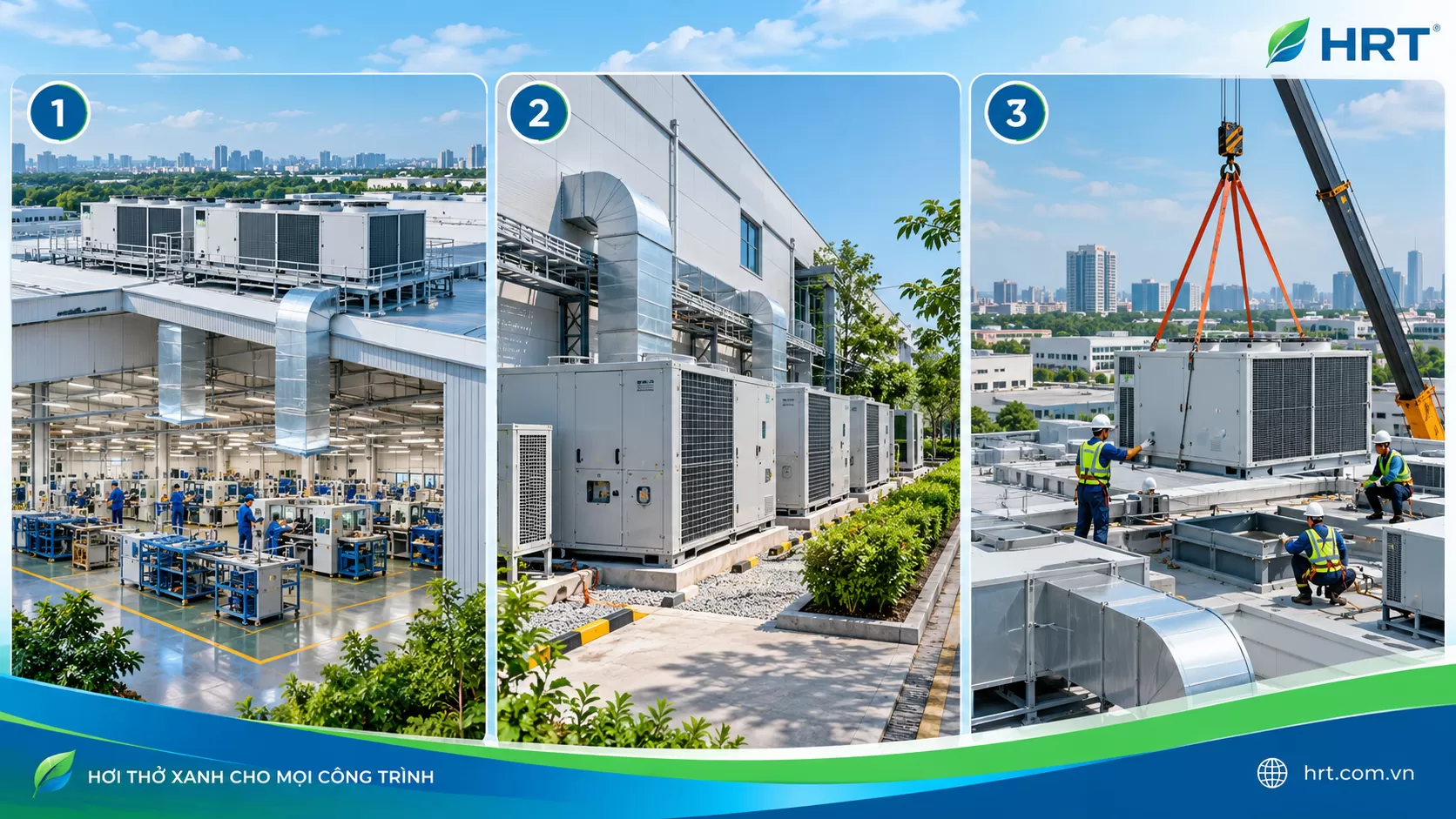
Situation 1: The factory needs to prioritize the area for production
If the internal area needs to be given maximum space for machines and lines, Rooftop can be included in the list of options.
However, the roof load capacity, the location of air duct to the area of use and maintenance plan must be checked.
If these conditions are not proven feasible, the installation of the device on the roof only to save space is not yet appropriate decision.
Situation 2: The project has a convenient off-site technical area
With the right engineering site and a well-organized windway, off-site Packaged can be a worthwhile option.
I will prioritize the assessment of heat exchange capacity, wind line length, noise in the vicinity and convenience when servicing.
No need to choose Rooftop at all costs if other options are better able to meet.
Situation 3: The renovation works are in continuous operation
This is a case where special attention should be paid to the progress and construction risks.
If you replace your existing equipment with a new Rooftop, check for compatibility with the base, wind line, power supply and control system.
Don't assume that the new device will be able to use all of the old structures and accessories.
In the case of switching from floor to roof installation, the scope of survey and construction can change significantly.
I request the contractor to clearly state the plan for conversion, the time of stopping the system and measures to maintain the conditions of use if necessary.
What documents are required before signing the investment approval?
Instead of making decisions from a catalog and quotation, I suggest that the project team prepare at least the following documents:
-
Report on demand for use: Function, temperature, humidity, operating time and partition.
-
Cooling load calculation result: Capacity required according to design conditions.
-
Equipment layout drawing: Location, size, heat exchange and maintenance conditions.
-
Drawing principle and air duct system: Flow rate, pressure drop and fan configuration.
-
Confirm Structural Conditions: Especially if it's on the roof.
-
Economic Comparison Table: Total investment, expected operation and cost range.
-
Implementation measures: Lifting, construction, safety and interruption restriction plans.
-
Acceptance testing plan: Measurement parameters, test functions and acceptance criteria.
Each document should have a unit responsible for formulation, inspection and approval according to the project's organization.
This document does not replace the full technical design but helps project owner have a basis to make decisions before incurring procurement commitments.
CEO's perspective Đoàn Văn Hoàng: I choose the one that can prove it.
In running HRT, I always want the team to start from the customer's actual problem.
It's not that bigger capacity is better.
It's not just the rooftop that optimizes the area and the cost.
It's not like every appliance with a good performance index will automatically save electricity.
An HVAC system only creates value when it is designed properly, constructed properly, operates stably and has the ability to test its effectiveness.
That's how I see the three values of HRT:
Understand Correctly: - To clearly distinguish the nature of equipment, use requirements and conditions of works.
Clear: Each parameter, scope of work, acceptance testing criteria and implementation responsibility must be determined.
Dedicated: Not only interested in today's installation, but also take into account the operation, maintenance and future upgrade capabilities.
For me, the right decision to invest in HVAC is not to buy the best equipment on paper, but to build a system that meets the use goals and demonstrates the results after deployment.
HRT companion from survey to acceptance testing system Packaged and Rooftop
For industrial and commercial buildings, HRT orients services according to the entire process of implementing HVAC systems.
Depending on the scope of the project, the work may include:
-
Survey of current status and demand for use.
-
Calculate cooling load and propose system configuration.
-
Advise on choosing the right Packaged, Rooftop or HVAC solution.
-
Design and construction of air duct system.
-
Coordination of electrical, control and related structures.
-
Testing, commissioning and acceptance testing.
-
Maintenance, renovation and operation optimization.
We aim to achieve the following throughout: Solutions must have technical basis, have a clear scope of work and have operationally validated results.
Frequently Asked Questions When Choosing Packaged and Rooftop
Is Rooftop always a Packaged device?
Many commercial Rooftop Units are packaged units. However, actual configuration should be checked as product terminology and classification may vary from manufacturer to manufacturer.
Can Packaged Air Conditioners be installed on the roof?
It is possible if the model is permitted by the manufacturer to be installed at that location and the conditions of structure, heat exchange, support, maintenance, safety are met. It should not be inferred the possibility of installation only from the name Packaged.
Is Rooftop suitable for the working workshop?
It may be appropriate, but it is necessary to survey the current status and work out specific construction measures. Especially, it is necessary to assess the roof load, crane location, windway and affect production activities.
Packaged or Rooftop save more electricity?
There is no general conclusion for every project. Efficiency depends on model, load condition, wind distribution, control strategy and operation schedule. It is recommended to compare on the same technical conditions and the same power consumption range.
Conclusion: Fastening needs and evidence before fixing the device
The choice of Packaged or Rooftop must start from the requirements and conditions of the work, not from the comparison of two names on the quotation.
The six decisions I recommend project owners focus on are:
-
Determine the air and cooling load conditions to meet.
-
Confirm device location and deployability.
-
Check the wind line design and fan characteristics.
-
Performance evaluation according to actual operation mode.
-
Clarify total investment cost and construction risk.
-
Unified acceptance testing criteria and operation proof.
When these six items are controlled, the selection of model and new contractor has sufficient grounds to proceed to approval.
CEO Đoàn Văn Hoàng – HRT
HRT – Green Breath for All Buildings
Website: https://hrt.com.vn
Source: Publisher’s English edition · Vietnamese original on doanvanhoang.com