
VRV/VRF installation standards: 6 control points | HRT
Machine-translated from Vietnamese. Read the original in Vietnamese

CEO Đoàn Văn Hoàng – HRT sharing 6 controlling milestones of VRV/VRF installation, from technical documentation to commissioning and handover. The article helps project owners clarify responsibilities, construction quality control and acceptance testing have grounds.
VRV/VRF installation standards: 6 quality control milestones

At the ceiling close, the project owner needs to know which areas have been tested, where the results are located and who is responsible for confirmation. At the handover time, the operation team needs sufficient information to take over the system.
That's my approach. VRV/VRF mounting standard From the perspective of project management: turning technical requirements into specific jobs with implementers and grounds for evaluation.
For each system, I want the project team to answer three questions: What should be checked? When is the test taken? What results allow to move on to the next job?
The six milestones below are the management framework I propose for project owners, consultants and contractors to control construction quality.
Level 1: Unifying technical bases before implementation

Prepare application files for each system
Before putting the materials into installation, the engineer in charge should gather dossiers for use at the site: approved design, technical instructions, list of equipment, installation documents of the manufacturer, construction measures and regulations and standards within the scope of application of the project.
I suggest that the list of documents must specify the version, date of issue and scope of use. The construction team needs to know which drawings are in effect, which documents have been replaced.
Any inconsistency between the design, equipment and the site must be handled by the contact point before the relevant tasks are performed.
A technical requirement can only be explicitly controlled when the performer knows which material he or she is following.
Convert requests to acceptance testing criteria
In a test plan, each item should have four pieces of information:
-
Content to confirm.
-
Documents used as grounds.
-
How to check and records to save.
-
- The performer, the examiner and the certifier as assigned.
For example, with a pipeline of chemicals, the project team needs to determine in advance how the pipeline should be compared, how changes should be recorded, and the form of test results.
For condensate, it is necessary to unify the testing range, time of performance and responsibility for coordination with the ceiling team.
This preparation helps the parties understand the conditions of completion from the beginning.
Milestone 2: Locking the equipment location with the same conditions of use and maintenance
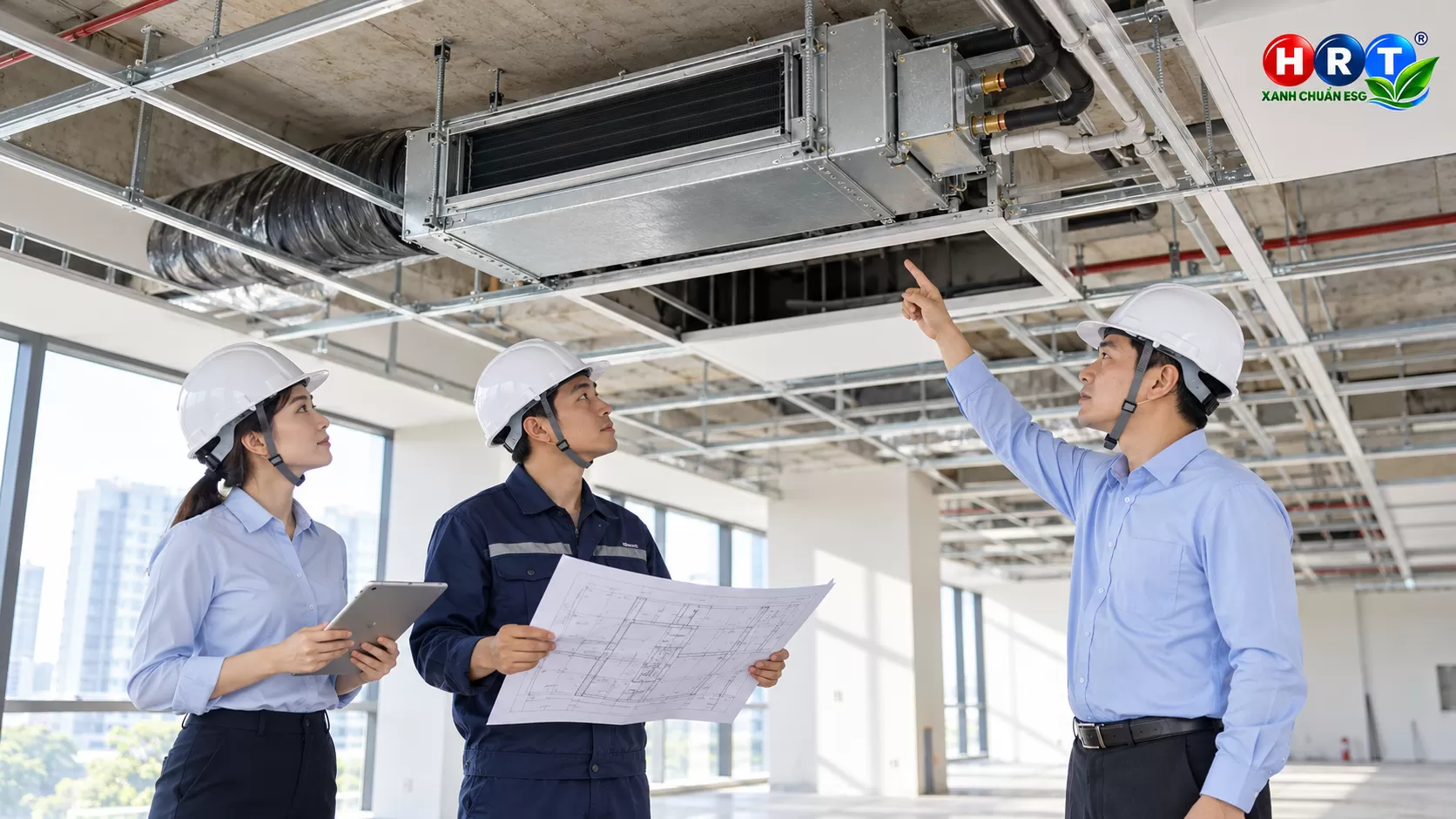
Confirm the function before site inspection
Cooling load needs to take into account the user, heat generating equipment, cover structure, solar radiation, outdoor air and operating time of each area. The division of control area should also be suitable for the needs of exploitation.
At this step, I want to have the representative of the building participate in the review. Which rooms operate outside the hours? Which areas are crowded? Is there any space expected to change the functions?
Those answers need to be confirmed before the project team can finalize the equipment.
The ventilation section must also have a clear scope. Indoor unit circulating air in the room does not automatically meet the demand for outdoor air grade; the project needs to determine the right ventilation solution to the design.
Check both wind and approach lines
With outdoor air-cooled unit, check the intake direction, exhaust direction, obstructions and the ability of hot air to return to the intake. With indoor unit, check the position of the wind supply, return wind and accessibility of servicing parts. Installation clearance must compare the documents of the correct equipment.
For indoor unit connecting air duct, flow rate and external static pressure settings need to match the actual installed wind system.
I suggest organizing a site review coordination between HVAC, electricity, water supply and drainage, structure, architecture and interior. On the same drawing, the parties need to peg machine location, technical routes, altitude and door visits.
Check the maintenance operation as soon as you browse your device's location. The operator will need to be able to open the electrical box, clean the filter and access the parts to be tested.
Milestone 3: Control the fluid pipeline and any changes at the scene

Configuration reconciliation before mounting
Pipe diameters, allowable lengths, height differences and media splitters should be selected according to the system configuration and manufacturer's instructions. These limits should be checked for the correct model and equipment combination.
I suggest the engineer in charge to compare materials with the pipeline diagram before deploying each area. When conflicts arise with other structures or systems, the construction team should record the proposal for change for consideration.
A route change option should clarify:
-
What paragraphs change and why.
-
The length, pitch or splitter position is affected.
-
Contents to be calculated and rechecked.
-
Updated drawings and approval person.
As-built documentation needs to reflect what is installed at the site. I want the update to be on the same schedule so that the following checks use the right data.
Monitor the quality of joints right during construction
The end of the pipe should be protected from water and impurities while it is waiting for connection. For welds, Daikin installation instructions require the use of nitrogen during welding to limit the formation of oxide layers inside the pipe.
For this work, I propose that the inspection plan clearly state the time of supervision, scope of work and way to store evidence of implementation.
If a stage is found to fail to meet the approved measure, the engineer in charge should assess the scope of influence, provide a handling method and determine the requirement for re-inspection.
The deviation must be handled at the right stage, with verified corrective results.
Mileage 4: Confirm the occult work before closing ceiling
Check the insulation and drainage in each area
The insulation must be completed continuously at the pipeline and connections. Condensate lines must be arranged according to the instructions of the equipment, have appropriate drainage plans and be tested for water drainage and leakage after installation. With the indoor unit using condensate pump, the lifting height and pipe way must be within the permissible limits.
I suggest dividing the inspection scope by room, floor or construction area, tied to specific indoor unit code.
The record should indicate the inspected location, results, scene photos and tasks to be completed. Testing parts which cannot be performed at that time must be clearly stated with the conditions and the next schedule of performance.
The ceiling team should receive specific conclusions for the scope of deployment allowed.
Coordinate by a clear decision
Illustration situation: Ceiling crews recommend closing the corridor while condensate lines up ahead are not tested.
In this case, I suggest the person in charge to immediately determine the relevant route, arrange personnel to inspect and agree on the time of ground clearance.
If the location is found to be repaired, it must be re-checked by a person who handles and inspects the work. The area to be completed should be confirmed according to the acceptance testing plan of the project.
At the same time, the engineering team should review the wiring, identification labels and visible gate positions.
The confirmation before closing ceiling must help the next team know exactly which parts of the job are eligible for transition.
5th step: Complete the technical conditions before filling the solvent and running the machine

Save leak testing and vacuum evacuation results separately
Leak testing and vacuum evacuation are works with different purposes. Leak testing leaks; vacuum evacuation serves to remove air and moisture in the circuit. The assessment must follow the procedure, level requirements and test time of the correct system.
I suggest that the profile of each job show:
-
System code and implementation scope.
-
Documents and processes applied.
-
Measuring equipment used.
-
Time of implementation and relevant conditions.
-
Results, comments and validators.
For vacuum evacuation, the same results of the vacuum retention test should be recorded according to applicable instructions. The pump run time alone is not enough to replace these results.
When the results are unsatisfactory, the engineer in charge shall work out a handling plan and arrange another inspection before proposing a change of steps.
Compare the amount of solvent with the actual pipeline
The amount of additional solvent should be determined according to the size, pipe length and formula of the manufacturer for the respective configuration. The actual loading volume must be controlled, recorded and saved with the system records.
I want the spreadsheet to use updated data from the scene, have someone check it and have a reconciliation with the volume of execution.
If the tube gland has changed, the person in charge should review the input data before closing the loading.
Confirm power and control before commissioning power supply
The inspection must include the power supply, connection, grounding and control wires according to the diagram of the equipment. The company's instructions also specify separate requirements for power cords and communication wires.
I propose to issue a commissioning condition confirmation, assigning responsibilities between the electrical team, HVAC team and the person in charge of control.
Professional operations should be performed by qualified personnel according to measures and guidance applicable to the system.
Step 6: acceptance testing according to operation results and takeover ability
Scripting checks before commissioning date
Before commissioning, I would like to ask all parties to agree on a list of equipment, areas and functions to be tested.
The script should answer specific questions:
-
What area is each controller affecting?
-
Have the indoor units in the inspection range been fully identified?
-
What usage modes need confirmation?
-
Which interlocking or centralized management connection functions are within the scope of handover?
-
Where will the results be recorded and who will rate them?
In the record, it is necessary to record simultaneously the test conditions and measurement results. Factors such as room finishing level, door status, number of people or equipment in operation should be recorded when having an effect on the assessment.
If an exploitation condition cannot be verified, the report should clearly state the uncertified scope and plan for additional inspection.
Organize records by system code
I want the operation team to be able to start from the label on the device to find the right drawings, test data and related instructions.
The handover documentation should be organized according to the system code, including equipment list, as-built drawings, connection diagrams, test results, environmental data, commissioning results and operation instructions. These are also the groups of technical documents mentioned in the HRT's VRV construction process.
The handover session should have a section of direct guidance for the recipient: identifying the equipment, using the controller, looking up records and contacting the supporting focal point.
The remaining open problems must be managed by a separate list, with scope of influence, persons to handle, time limit and re - examiner. The acceptance of handover should be based on the project requirements and the actual state of each item.
Working table according to 6 controlling landmarks of VRV/VRF installation
I recommend using the table below during the implementation meeting. Specific leads should be filled in according to the organization of each project.
| Controlling Mark | Output required | Responsibilities to be clearly assigned |
|---|---|---|
| Unified technical base | Applicable Documents List and Inspection Plan | Synthetic person, reviewer |
| Device layout latch | Coordination drawings and agreed contents | Coordinating units of the Department |
| Pipe Control | Inspection records and updated drawings | Followers of construction, handling changes |
| Pre-closed Ceiling Inspection | Conclusion by region | Step-by-Step Checker and Confirmer |
| Prepare to load the solvent, run the machine | Test result and condition confirmation slip | Engineer in charge of each system |
| Acceptance testing, handover | Operation results, takeover records, existence list | Organizer acceptance testing and follow-up completed |
CEO's view Đoàn Văn Hoàng: Quality needs followers to the end
From an executive perspective, I want every site meeting to end with something that can be deployed immediately.
An unsatisfactory content needs to be handled. A change needs to be updated in the dossier. An inspection result needs to specify the scope of certification. A commitment to handover needs specific conditions for completion.
That's how I want to be spiritually concrete. True – Clear – Dedicated in the workplace.
Understand correctly requirements of the work and equipment.
Clearly on grounds, responsibilities and results.
Dedicated tracking work until the user can take over.
For me, quality management of VRV/VRF installations starts from such decisions: the right time, the right people and enough evidence to confirm.
Together HRT reviewed the requirements of VRV/VRF installation for the project
If the project is preparing for construction or entering acceptance testing stage, the project owner can provide premises, equipment and scope of work to exchange with HRT.
The contents to be clarified from the beginning are the technical bases, responsibility for coordination, inspection schedule and handover dossier.
CEO Đoàn Văn Hoàng | HRT
Right from the beginning – Clear to the end – Sustainable Green.
Hotline: 0909.326.888
Email: CEO@hrt.vn
Website: hrt.com.vn | doanvanhoang.com
HRT – Green Breath for All Buildings
Post Tags: Standards of VRV/VRF installation, VRV installation techniques, central air conditioning construction, HVAC quality control, acceptance testing VRV, pipeline solvent, leak testing, vacuum evacuation, CEO Đoàn Văn Hoàng, HRT.
Source: Publisher’s English edition · Vietnamese original on doanvanhoang.com