
What is the level of fresh air? When Are Constructions Needed?
Machine-translated from Vietnamese. Read the original in Vietnamese

WHAT IS outdoor air level? WHEN DO WORKS NEED TO USE HVAC outdoor air level system?
1. Why do you need outdoor air supply system?
In modern buildings such as offices, apartment buildings, hotels, hospitals, factories, and shopping malls, people spend most of their time in enclosed spaces.
Air conditioning systems can maintain temperature and humidity, but do not always guarantee the amount of oxygen needed without an outdoor air supplement solution.
This is why the system outdoor air HVAC level is used to bring a clean air from the outside into the building, while supporting indoor air quality improvement.
A properly designed outdoor air supply system helps:
- Add oxygen to the space.
- Reduced levels of human - generated CO2.
- Minimize unpleasant odors and feelings of insecurity.
- Support indoor air quality control.
- Increase the comfort of users.
2. What is the outdoor air level?
Outdoor air level is the process of bringing a treated amount of outdoor air into the interior of the building through ventilation system.
Air before being supplied to the room can often go through processing steps such as:
- Dust filter.
- Adjust the temperature.
- Control the humidity.
- Filtering pollutants depending on the requirements of the work.
Unlike return air circulation in the room, outdoor air supply system helps to add new air sources continuously, creating a more ventilated environment.
3. How does the HVAC outdoor air supply system work?
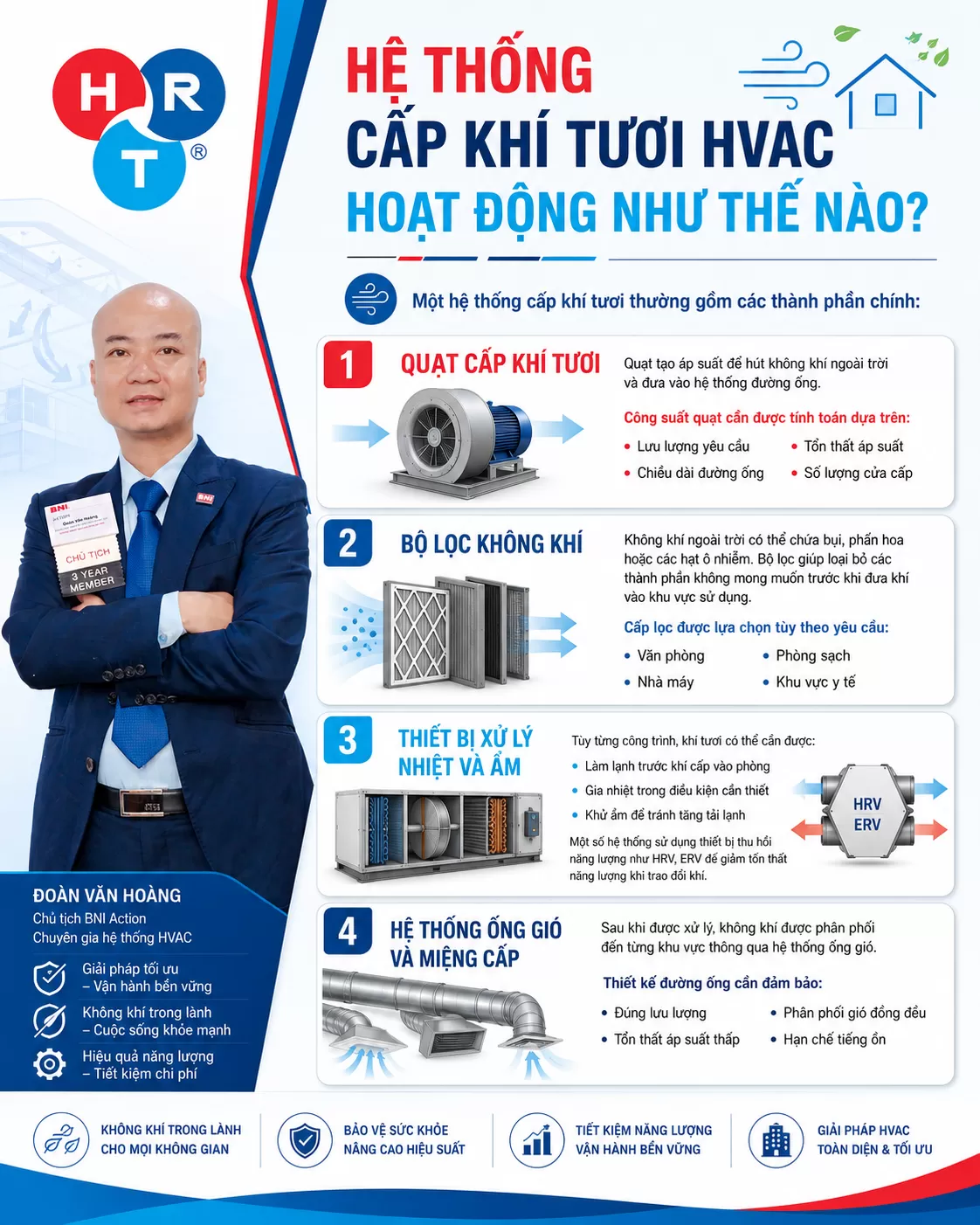
An outdoor air supply system usually consists of the main components:
Outdoor air supply fan
Fan creates pressure to suck up outdoor air and put it into the piping system.
Fan power should be calculated based on:
- Flow rate required.
- Pipe length.
- Pressure drop.
- Number of Level Doors.
Air Filters
Outdoor air can contain dust, pollen, or particulates that are contaminated.
The filter helps remove unwanted components before introducing the gas into the area of use.
Filter grades are selected according to requirements:
- The office.
- The factory.
- Cleanroom.
- Medical area.
Heat and Humidity Treatment Equipment
Depending on the project, outdoor air may need to be:
- Cooling before granting into the room.
- Heat the area as needed.
- Dehumidification to avoid increasing cooling load.
Some systems use energy recovery devices such as HRV, ERV to reduce energy losses when exchanging gases.
Air duct system and mouth level
After being treated, air is distributed to each area through the air duct system.
The pipe design should ensure:
- Right flow rate.
- low pressure drop.
- Uniform wind distribution.
- Limit noise.
4. When does the building need to use outdoor air supply system?
Not every building has the same needs. The choice of outdoor air supply system depends on the characteristics of use and air quality requirements.
High density building
Areas that are crowded for long periods of time need larger amounts of fresh air.
For example:
- Meeting room.
- Hall.
- Training center.
- Office work.
Without additional outdoor air, users easily feel:
- Suffocating.
- Sleepy.
- Lack of comfort.
Buildings using central air conditioning
VRV/VRF, Chiller, AHU systems often need to be combined with outdoor air supply solutions to ensure a balance between:
- The temperature.
- Moisture.
- Airflow rate.
- Air quality.
Works requiring odor and pollution control
Some areas require outdoor air supply to support environmental control:
- The restaurant.
- The hotel.
- The clinic.
- The lab.
- Production area.
5. The popular outdoor air level solutions today
Independent outdoor air level
Use outdoor air supply fan combined filter and separate air duct system.
Advantages:
- Easy to deploy.
- Flexible for each area.
- Suitable for many kinds of construction.
Outdoor air level combined AHU
AHUs both process circulating air and replenish outdoor air.
This solution usually applies to:
- Office building.
- The mall.
- The factory.
HRV/ERV System
HRV and ERV use heat exchangers to take advantage of the energy from the exhaust airflow.
Benefits:
- Reduce the load on the air conditioning system.
- Save energy.
- Improve air quality.
6. Notes when designing outdoor air supply systems
For the system to work effectively, attention should be paid to:
Calculate the correct flow rate outdoor air
Air deficits are ineffective.
Too much gas intake increases cooling load and operational costs.
Reasonable positioning of the air intake
Air intake doors to avoid:
- Smell area.
- Pollution sources.
- Exhaust gas discharge area.
Combined with control system
CO2, temperature and humidity sensors can help the system adjust the amount of gas according to actual needs.
7. HRT – Solution for designing and deploying outdoor air supply system HVAC
An effective outdoor air supply system depends not only on the equipment but also on the right design from the beginning.
HRT provides total solutions:
- Survey of the needs of the project.
- Calculate the outdoor air flow rate.
- Design of air duct system.
- Select an air handling device.
- Execution, calibration and acceptance testing.
With Orientation “HRT – Green Breath for All Buildings”, HRT focuses on optimal HVAC solutions, saving energy and improving the quality of indoor environment.
Source: Publisher’s English edition · Vietnamese original on doanvanhoang.com