
What is Water Chiller? 6 decisions to make the right investment | HRT
Machine-translated from Vietnamese. Read the original in Vietnamese

CEO Đoàn Văn Hoàng – HRT Share 6 decisions when investing in Water Chiller systems, from determining the needs, selecting the configuration to acceptance testing and operation. The article helps project owners understand the right principles, control costs and evaluate system efficiency by actual results.
What is Water Chiller? 6 Decisions to Invest in the Right System
Water Chiller is a water cooling machine or cooling load to serve air conditioning and technology cooling needs. The cold water is distributed to the equipment used, receives heat and then returns to the Chiller to continue cooling.
When considering a Water Chiller option, I wanted the project team to clarify three issues: what needs the system serves, what conditions it needs to operate under, and how the results would be validated.
From an executive perspective, investment decisions need to be accompanied by exploitation plans. The project owner needs to know how the system meets peak hours, serves when low load, maintains operation at maintenance and is managed after handover.
In this article, I propose six pivotal decisions to make to move from a portfolio of devices to a well-deployed HVAC alternative.
Understand Water Chiller properly before choosing equipment
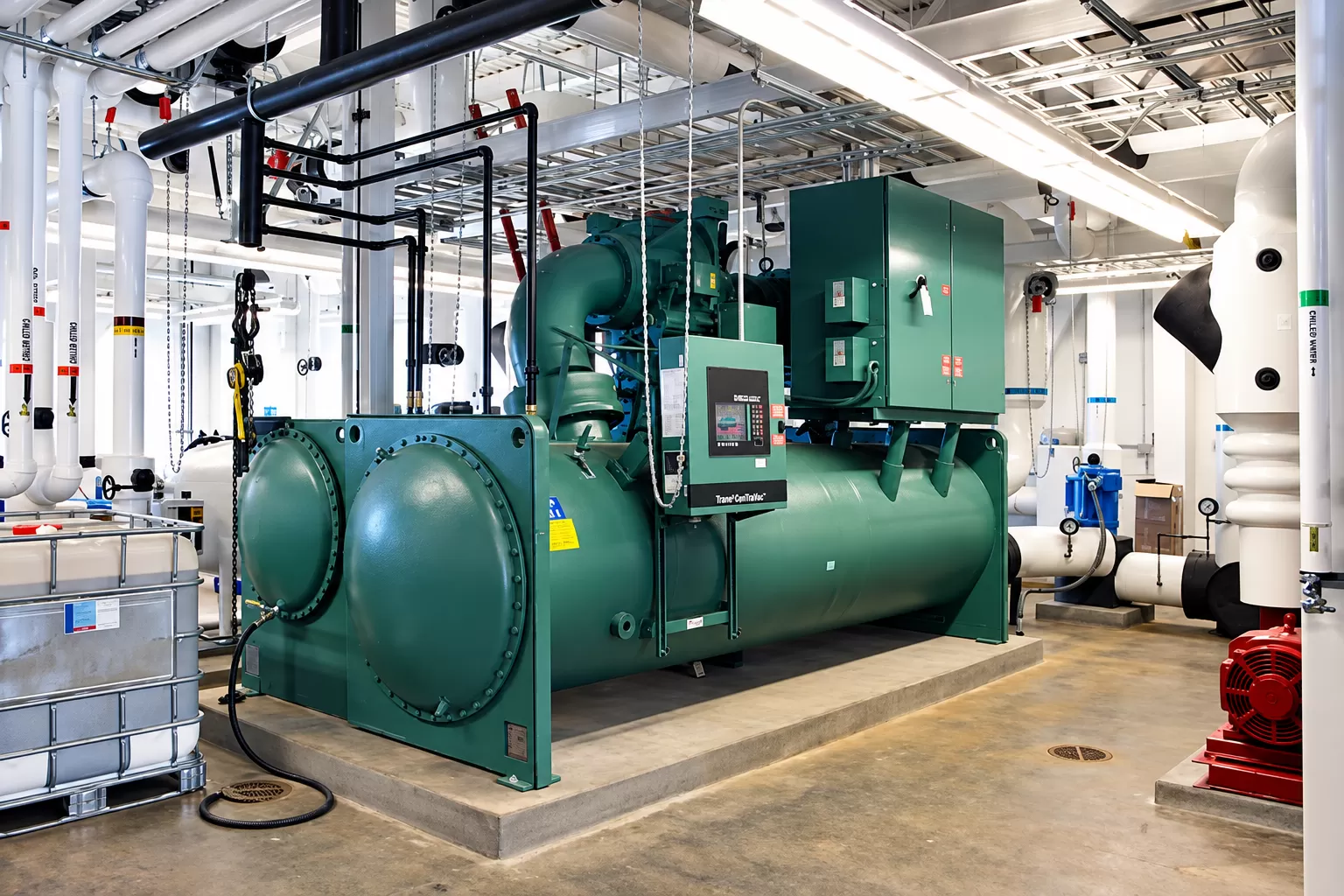
Distinguish water cooling task from the method of heating
Name of the Water Chiller refers to water cooling equipment. Also Water-cooled Chiller describes the method of heat transfer from the condenser to a ring of condenser water.
So water cooling machine can use air-cooled or water-cooled option. With water-cooled configuration, the heat is either fed to the cooling tower, other heat waste device or recovered as designed.
When requesting a quote, I suggest to write the type of equipment, working conditions and scope of auxiliary systems. A clear call helps parties understand the object being selected.
Look at Chiller structure according to the path of heat
In the Steam Compressor Chiller, four main parts coordinate to transport heat from water to the place of heat discharge:
| Parts | Role in the cycle |
|---|---|
| Evaporator Tank | Refrigerant receives heat from water, which reduces the water temperature. |
| Compressor | Compression of the liquid vapor, lifting pressure and temperature. |
| Condenser | The fluid transfers heat to air or condenser water and then condenses. |
| Throttle Parts | Reduce the pressure before returning to the evaporator. |
On the using side, the pump delivers cold water to the heat exchanger. With AHU or FCU using cold water coils, air transfers heat to the water through the coil; the water increases in temperature and returns to the Chiller.
The solvent circuit, cold water ring and condenser water ring are separate circuits that exchange heat through heat exchangers.
Outside the Chiller there are also water distribution networks, pumps, valves, terminals, sensors and control systems. These components should be considered together when designing the system.
Decision 1: Close the demand before determining capacity
Set requirements with the person directly exploiting the work
Before choosing Water Chiller, I suggest that project owner, design unit and representative use the same input requirements.
The information to be clarified includes:
-
The function of each area and the temperature and humidity conditions to meet.
-
Number of people, heat generating equipment and associated heat sources.
-
Hours of operation, number of shifts and overtime demand.
-
Requires outdoor air, air purification or specific air conditions.
-
Acceptable level of interruption when maintenance or breakdown occurs.
For factories, it is necessary to separate the needs of space conditioning and cooling machinery. The technology person must confirm the requirements of production equipment before the HVAC team completes the plan.
An unsubstantiated data should be noted as assumed, with a person responsible for verification and deadline for updating.
Clarify current loads, common loads and expansion needs
I want the spreadsheet and the choice explanation to show the demand over time.
Which area is only operated during daytime? Which part needs continuous refrigeration? When the newly-operated part is built, how is the system expected to operate?
The capacity for current needs, the reserve and the expansion must be explained separately. The approver must see the reason of each proposed capacity.
The final output for this step is a validated set of design requirements, along with a list of additional data.
Decision 2: Choose the method of heating suitable for the work
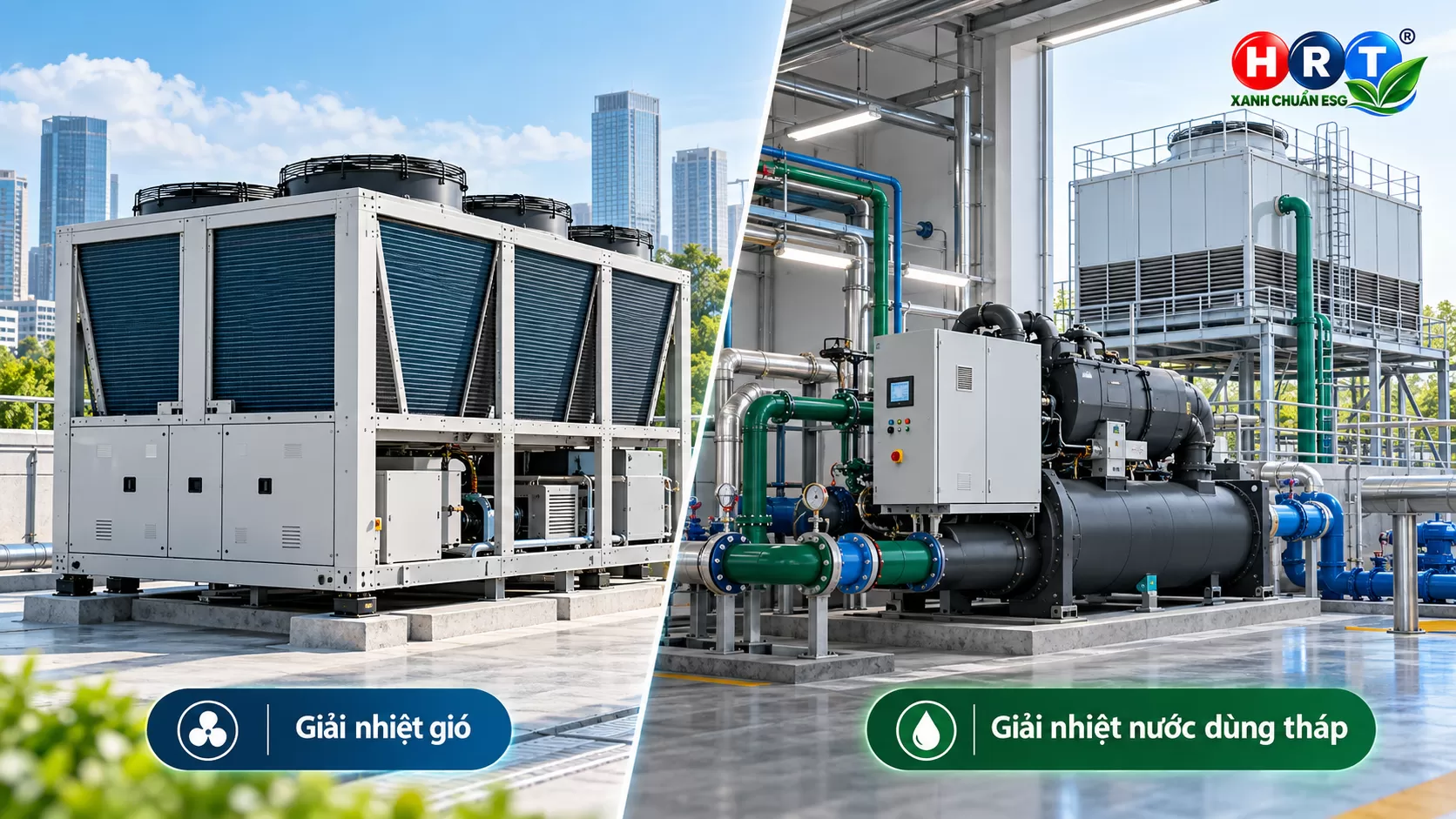
Set the premises and operation conditions to the same comparison table
The heating solution should be evaluated with the equipment layout, water source, noise and maintenance.
With two configurations commonly considered, the main contents of comparison include:
| Content | Air-cooled chiller | Water-cooled chiller used tower |
|---|---|---|
| Heat exhaust insulation | Heat transfer to air through condenser coil and fan. | Heat transfer to condenser water and then tower. |
| Auxiliary system | No need ring condenser water and cooling tower. | There are additional pump, water condenser pipeline, tower and related controls. |
| Conditions of layout | The suction, air discharge and noise effects should be evaluated. | Machine stations, towers, water lines and maintenance access roads should be arranged. |
| Work operation | Monitor the coil condenser, fan and air circulation condition. | Further monitor water quality, tower status and water side heat exchanger. |
These differences should be included in the design, installation and maintenance assessment of each option.
Request the plan to explain the conditions that must be met
I suggest that the proposal answers specifically: where the equipment is located, how the transportation route is, who manages the backend and what conditions the project owner must prepare.
If the cooling tower is selected, it is necessary to determine the responsibility for water management and maintenance of the tower. If air-cooled, it is necessary To review the location of the machine and architectural changes that may affect the windway.
Conclusion should specify the reasons and conditions. This is the basis for the detailed design, construction and operation team to continue unified implementation.
Decision 3: Fasten the synchronous configuration from the machine station to the cold use place
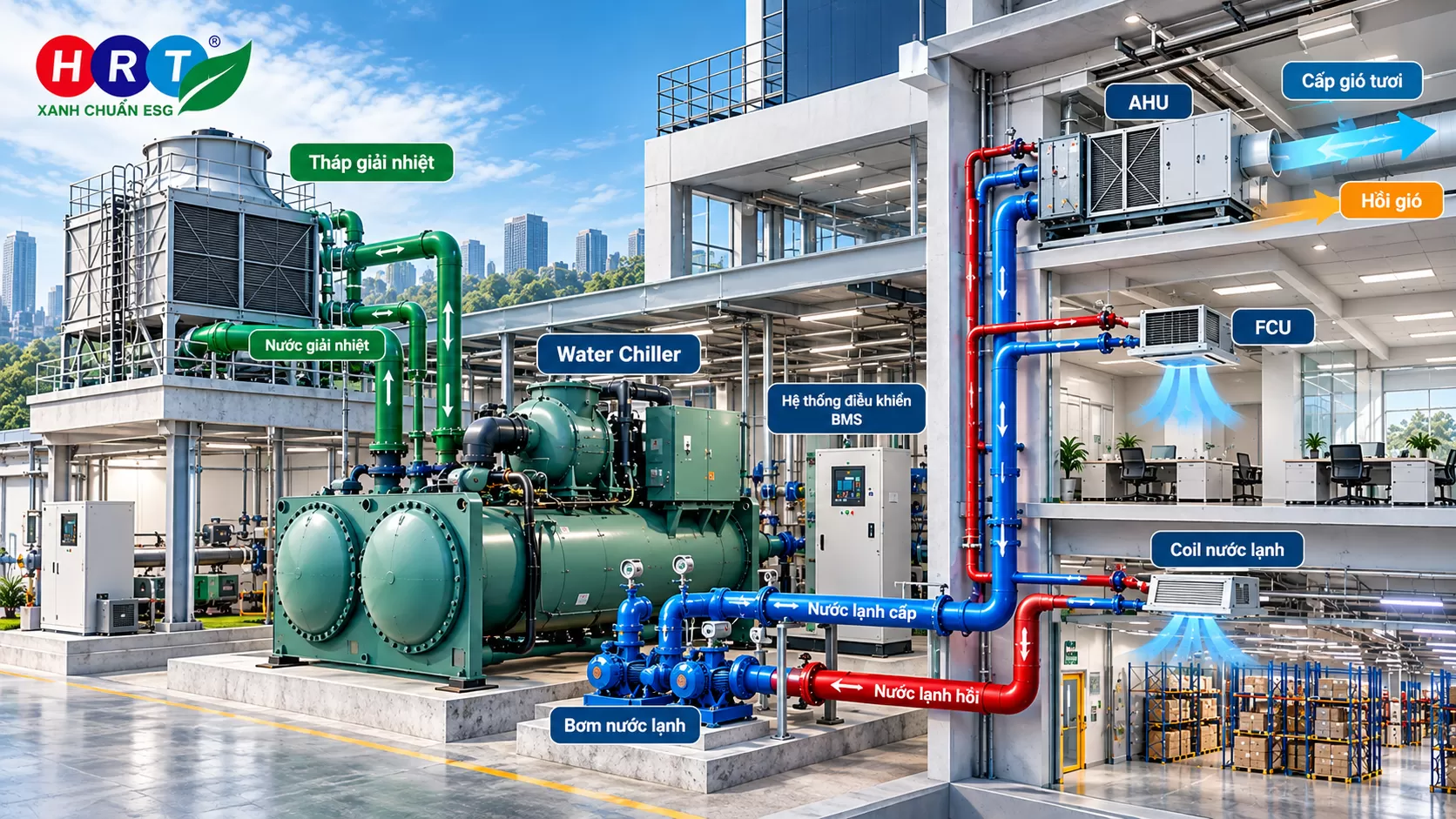
Determine how the system works when loads change
The number of machines and the way to divide the capacity should be considered together with the mining mode.
I proposed the plan to clarify how to serve low load, high load, operating overtime and when a device must stop maintenance. Systems with many Chillers need a coordinated strategy, putting the machine in or out of operation according to the needs and conditions of the system.
Illustration situation: a factory with production area only working daytime, while a group of technology machine need constant cooling.
In this case, I want the design team to analyze the load overtime separately, then propose the appropriate service configuration. The options should be compared in terms of responsiveness, expected power and operational convenience.
If redundancy is required, both pumping, power, and controls related to maintaining the priority load should be considered.
Unified water parameters, terminals and control
Water temperature, flow rate, heat exchanger coil, pump and valve should be selected synchronously. With variable flow rate configuration, the design and control must maintain consistent flow rate condition through the equipment, including minimum limits as required by applicable requirements.
I recommend that the design documentation clearly demonstrates the tasks of each AHU, FCU and outdoor air handling equipment. The wind line, condensate drainage, power supply and control must be coordinated with the chilled-water system.
Before site inspection, the parties also need to check maintenance: access to equipment, location of filter removal, open space and the ability to replace components.
The selected configuration must have a clear and conditional operation way for maintenance in practice.
Decision 4: Assessment of costs and electricity within the entire system
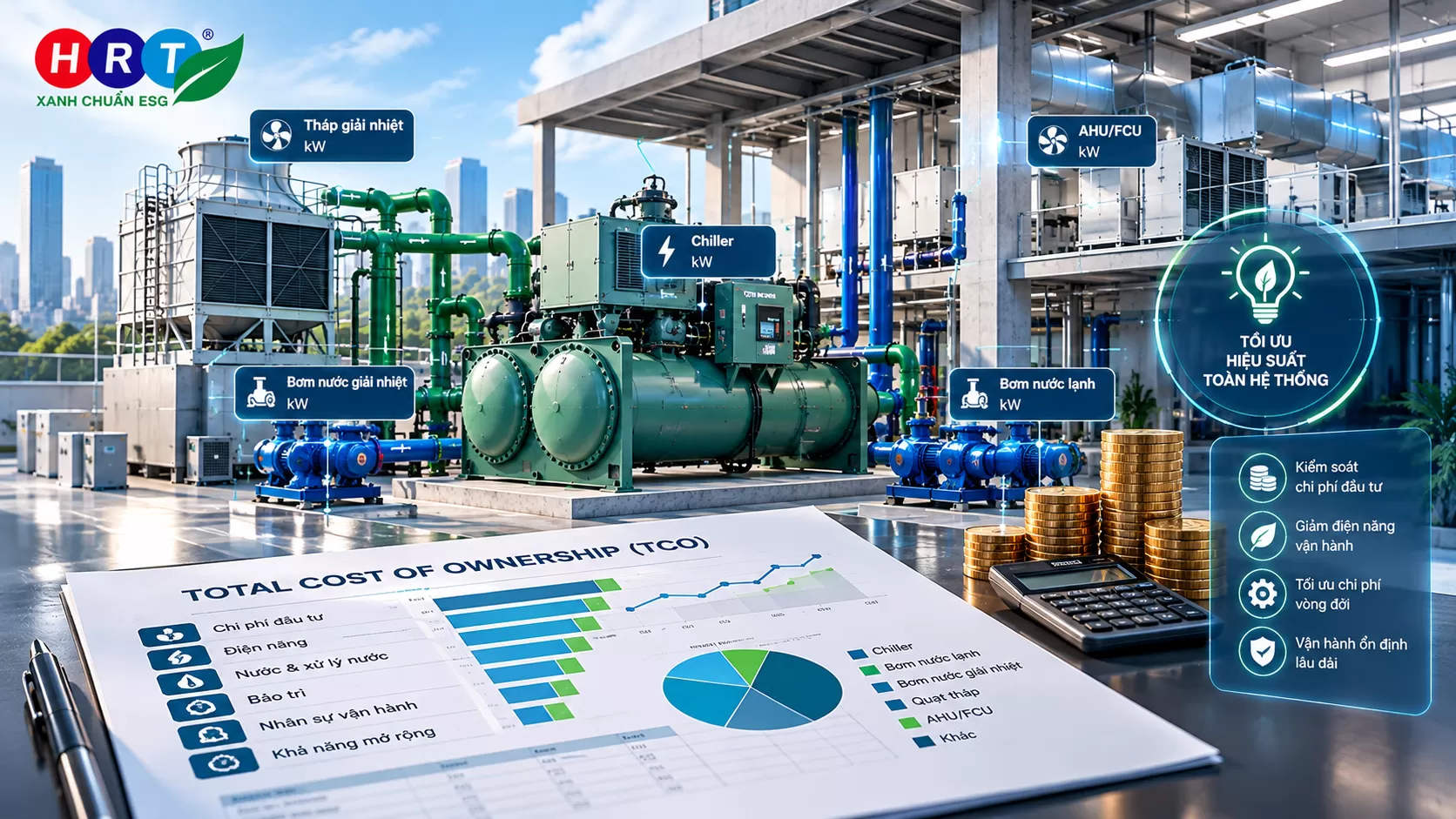
Unified performance calculation range
Chiller machine performance and full-station performance have different range of evaluation.
With water-cooled station, it is necessary to consider the power of Chiller, chilled-water pump, water condenser pump and tower fan. Adjusting one device may alter the power of another, so the optimal should be evaluated overall.
If the assessment is broad to the entire HVAC system, I suggest specifying additional loads to be calculated, such as AHU fans, FCU and ventilation systems within the survey scope.
The boundary of assessment must be agreed before comparing options or making operation commitments.
Compare the above options under assumptions of exploitation
I want the investment comparison table to show the full range of cost groups:
-
Main equipment, auxiliary equipment and installation work.
-
Power by time and expected operation mode.
-
Water and water treatment, when available.
-
Maintenance, replacement supplies and personnel management.
-
Scalability and impact when the system has to stop.
Assumes of running hours, loads, energy costs and maintenance range should be written next to the calculation results.
When a plan proposes savings, the writer needs to specify which plan is being compared, under what conditions, and based on what data.
The approver should understand the basis of the investment and factors that may change costs later.
Decision 5: Finalize the measurement before acceptance testing
Prepare data to evaluate the system
Right from the design stage, I suggest identifying what parameters to monitor and where to measure accordingly.
Depending on the scope of assessment, data may include supply-water temperature and return, flow rate, differential pressure, power capacity, equipment status and conditions in the area in use.
Measurements should have clear methods, time of data collection and implementation responsibilities. When using data from BMS, it is necessary to check the signal and storage before using for conclusion.
The cold water heat difference should be considered in the same way as the load, flow rate and terminal conditions. The treatment of low heat difference may involve sensors, valves, coils, connection or control of the system.
When an abnormal parameter appears, the engineer in charge needs to determine the scope of inspection and diagnostic grounds before proposing adjustments.
Acceptance testing according to agreed operational situations
I recommend commissioning plan with a list of situations to confirm, suitable for the project scope:
-
Start, stop and coordinate devices.
-
Meet at each load group or area of use.
-
Work when needs change.
-
Switch between devices according to the approved scenario.
-
Alert, interlock and related protection functions.
Before commissioning, the installation work, pipeline inspection, system cleaning, electrical and control should be confirmed according to applicable records.
The result must be accompanied by the implementation conditions. The parts that cannot be verified at the time of acceptance testing should be clearly stated and planned for additional inspection.
This will help your conclusion reflect the scope of your claim.
Decision 6: Assign effective post-delivery supervisors
Organize the profile so that the operation team can use it
I want the recipient to be able to quickly look up which area the system is serving, how the device is installed and what to do when it appears abnormal.
The handover dossier should be arranged according to the system code, including:
-
As-built drawing and schematic diagram.
-
List of equipment, identification information and relevant documents.
-
Installation parameters and operation sequence description.
-
Results of inspection, calibration and commissioning.
-
User manual, maintenance and support.
-
List of existing cases, handling time limit and re - examiners.
The handover session should have a direct guide on the actual system. The operator must know how to read warnings, find records and contact the right contact when needed support.
Track fluctuations and record each adjustment
Chiller station control system can collect data, monitor operation and coordinate equipment according to demand. The value of data use depends on how the organization monitors and processes information in the operation.
I recommend assigning a contact to manage operation data and update important changes. Each adjustment should specify the objectives, contents of implementation, parameters before and after, and test results.
With open cooling tower systems, water management programs should be maintained. Dirt and corrosion on the heat exchanger side can affect the performance and reliability of the unit.
The maintenance schedule should be associated with equipment instructions, conditions of use and recorded signs. The existence affecting the exploitation must be monitored until the corrective results are confirmed.
CEO's view Đoàn Văn Hoàng: Chiller investment needs a verifiable alternative
I would like a Water Chiller proposal that helps project owners understand the system they are about to receive.
What data is the capacity selected based on? Is the auxiliary equipment in sufficient range? When the load changes, how does the system work? How is the efficiency measured? Who is responsible for monitoring after handover?
These questions should have answers in the records and in the implementation organization.
That's how I define the spirit. True – Clear – Dedicated:
Understand correctly needs and conditions of the building.
Clearly on the plan, scope of expenses and evaluation criteria.
Dedicated Monitor the results until the operation team takes over and uses the system.
Right from the beginning – Clear to the end – Sustainable Green.
Exchange Water Chiller with HRT
To begin reviewing the plan, the project owner should prepare the premises, functions, operating hours, environmental requirements and existing thermal load information.
For the work in operation, power data, water parameters, maintenance history and problems will help clarify the content to be surveyed.
From these inputs, the parties can agree on the scope of design, implementation plan and results to be verified.
CEO Đoàn Văn Hoàng | HRT
Hotline: 0909.326.888
Email: CEO@hrt.vn
Website: hrt.com.vn | doanvanhoang.com
HRT – Green Breath for All Buildings
Source: Publisher’s English edition · Vietnamese original on doanvanhoang.com